Agarwal Divyansh, Schmader Kenneth E, Kossenkov Andrew V, Doyle Susan, Kurupati Raj, Ertl Hildegund C J
1Genomics and Computational Biology, Perelman School of Medicine, University of Pennsylvania, Philadelphia, PA 19104 USA.
2Division of Geriatrics, Duke University Medical Center; Geriatric Research, Education, and Clinical Center, Durham VA Medical Center, Durham, NC 27705 USA.
Immun Ageing. 2018 Aug 31;15:19. doi: 10.1186/s12979-018-0124-9. eCollection 2018.
The elderly patient population is the most susceptible to influenza virus infection and its associated complications. Polypharmacy is common in the aged, who often have multiple co-morbidities. Previous studies have demonstrated that commonly used prescription drugs can have extensive impact on immune defenses and responses to vaccination. In this study, we examined how the dynamics of immune responses to the two influenza A virus strains of the trivalent inactivated influenza vaccine (TIV) can be affected by patient's history of using the prescription drugs Metformin, NSAIDs or Statins.
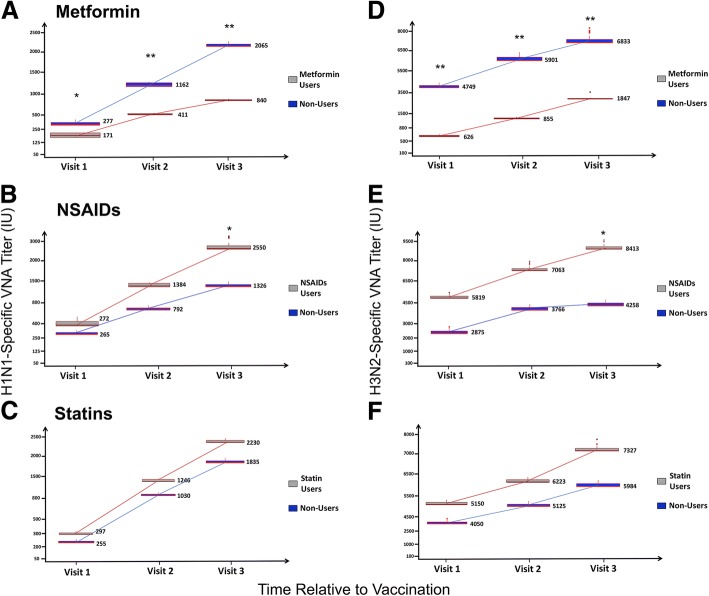
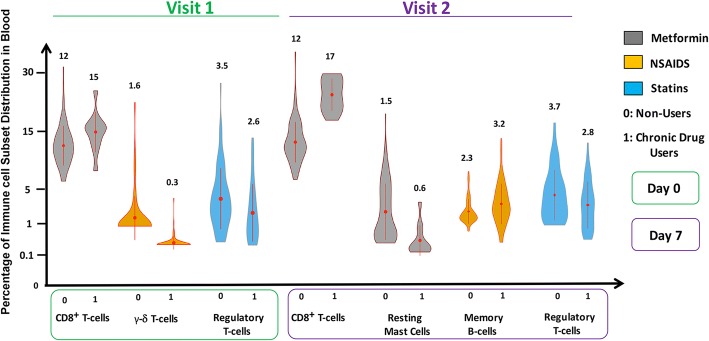
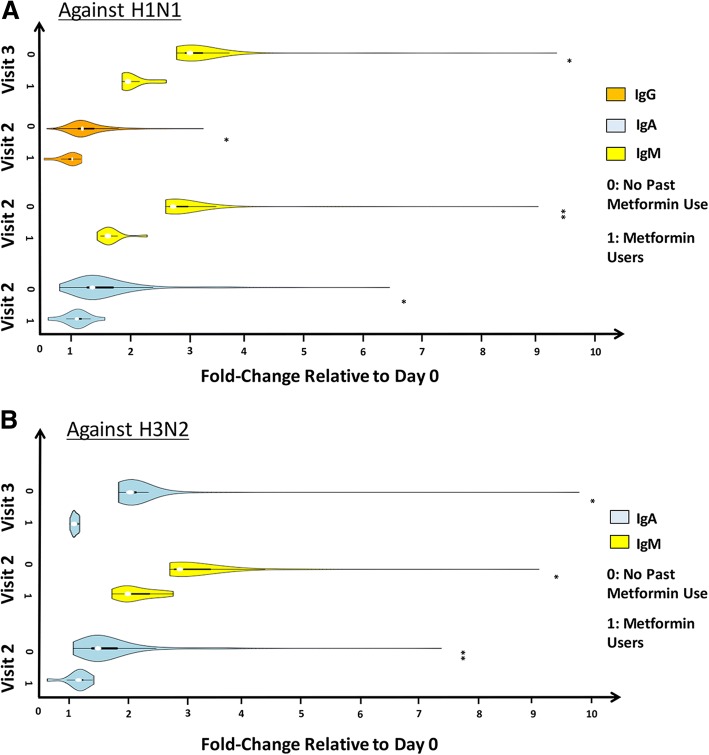
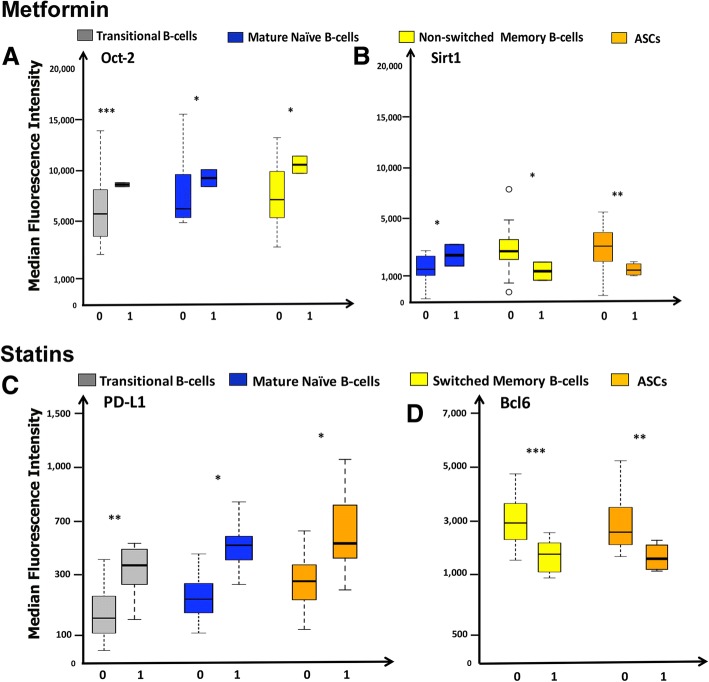
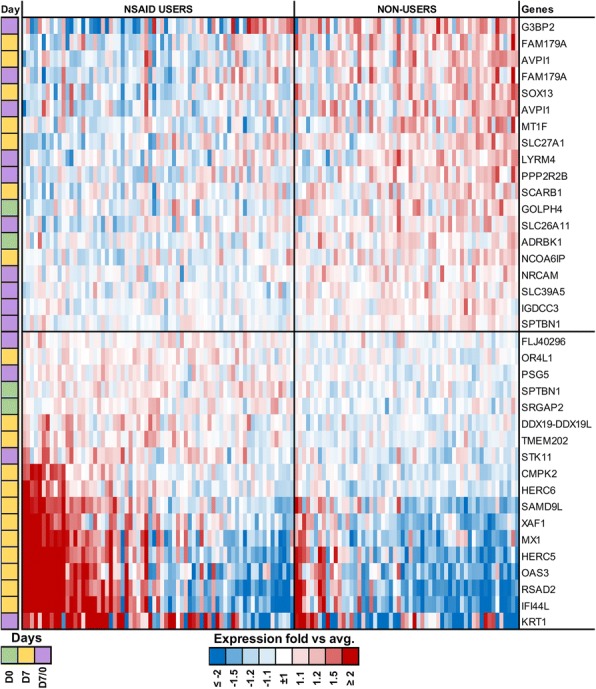
We provide evidence for differential antibody (Ab) production, B-cell phenotypic changes, alteration in immune cell proportions and transcriptome-wide perturbation in individuals with a history of long-term medication use, compared with non-users. We noted a diminished response to TIV in the elderly on Metformin, whereas those on NSAIDs or Statins had higher baseline responses but reduced relative increases in virus-neutralizing Abs (VNAs) or Abs detected by an enzyme-linked immunosorbent assay (ELISA) following vaccination.
Collectively, our findings suggest novel pathways that might underlie how long-term medication use impacts immune response to influenza vaccination in the elderly. They provide a strong rationale for targeting the medication-immunity interaction in the aged population to improve vaccination responses.
老年患者群体最易感染流感病毒及其相关并发症。多重用药在老年人中很常见,他们往往患有多种合并症。先前的研究表明,常用处方药会对免疫防御和疫苗接种反应产生广泛影响。在本研究中,我们研究了使用处方药二甲双胍、非甾体抗炎药(NSAIDs)或他汀类药物的患者病史如何影响对三价灭活流感疫苗(TIV)中两种甲型流感病毒株的免疫反应动态。
与未用药者相比,我们提供了证据表明长期用药史的个体存在抗体(Ab)产生差异、B细胞表型变化、免疫细胞比例改变以及全转录组扰动。我们注意到服用二甲双胍的老年人对TIV的反应减弱,而服用NSAIDs或他汀类药物的老年人基线反应较高,但接种疫苗后病毒中和抗体(VNA)或酶联免疫吸附测定(ELISA)检测到的抗体相对增加减少。
总体而言,我们的研究结果表明了长期用药可能影响老年人流感疫苗接种免疫反应的新途径。它们为针对老年人群中的药物 - 免疫相互作用以改善疫苗接种反应提供了有力的理论依据。