Qu Miaomiao, Zhu Yongning, Jin Meng
Department of Obstetrics, The Affiliated Hospital of Jining Medical University, Jining, Shandong 272100, P.R. China.
Department of Gastrointestinal Surgery, The Affiliated Hospital of Jining Medical University, Jining, Shandong 272100, P.R. China.
Exp Ther Med. 2018 Sep;16(3):1629-1638. doi: 10.3892/etm.2018.6375. Epub 2018 Jun 29.
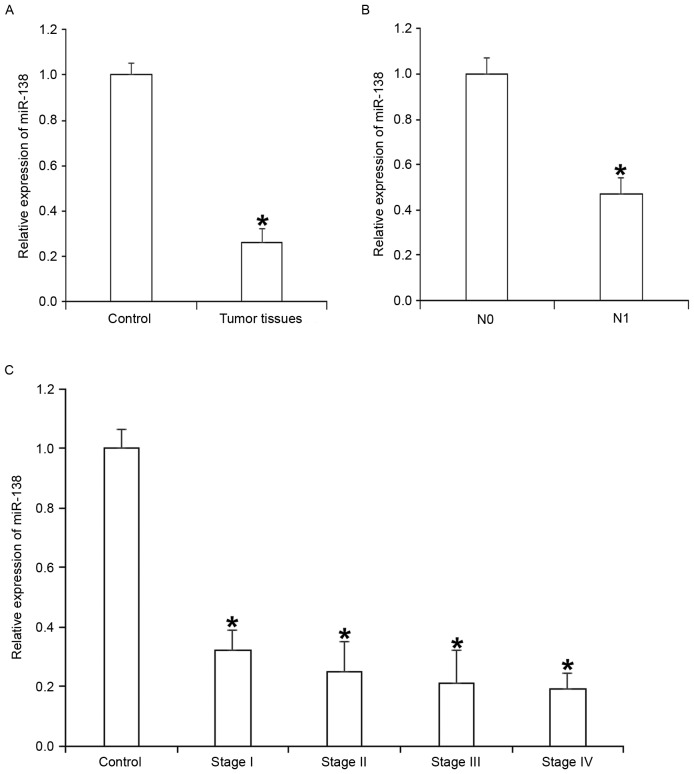
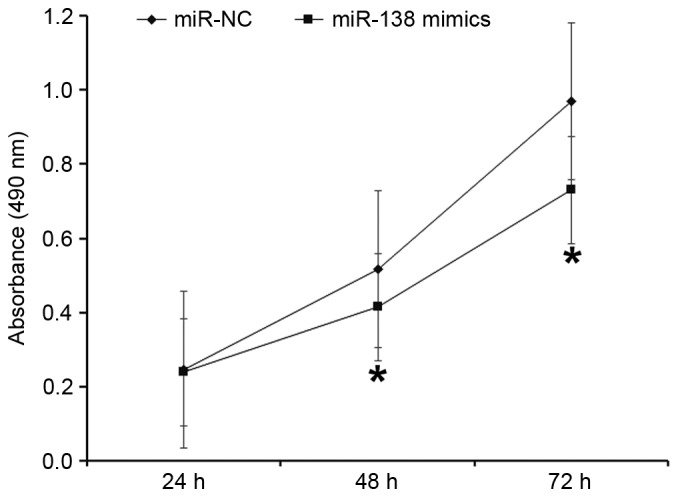
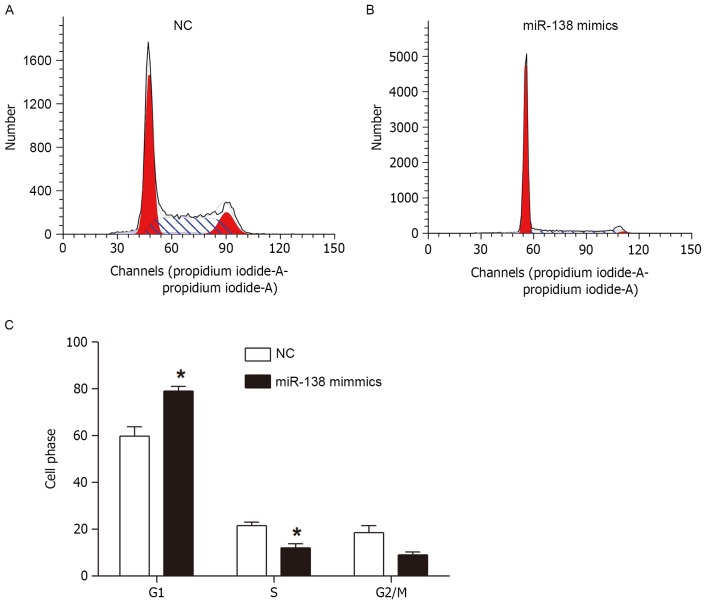
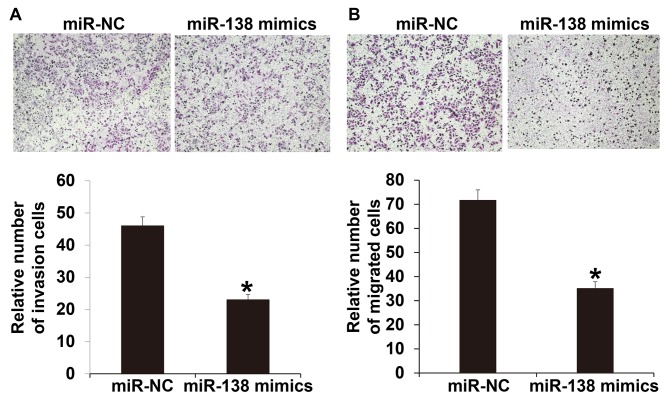
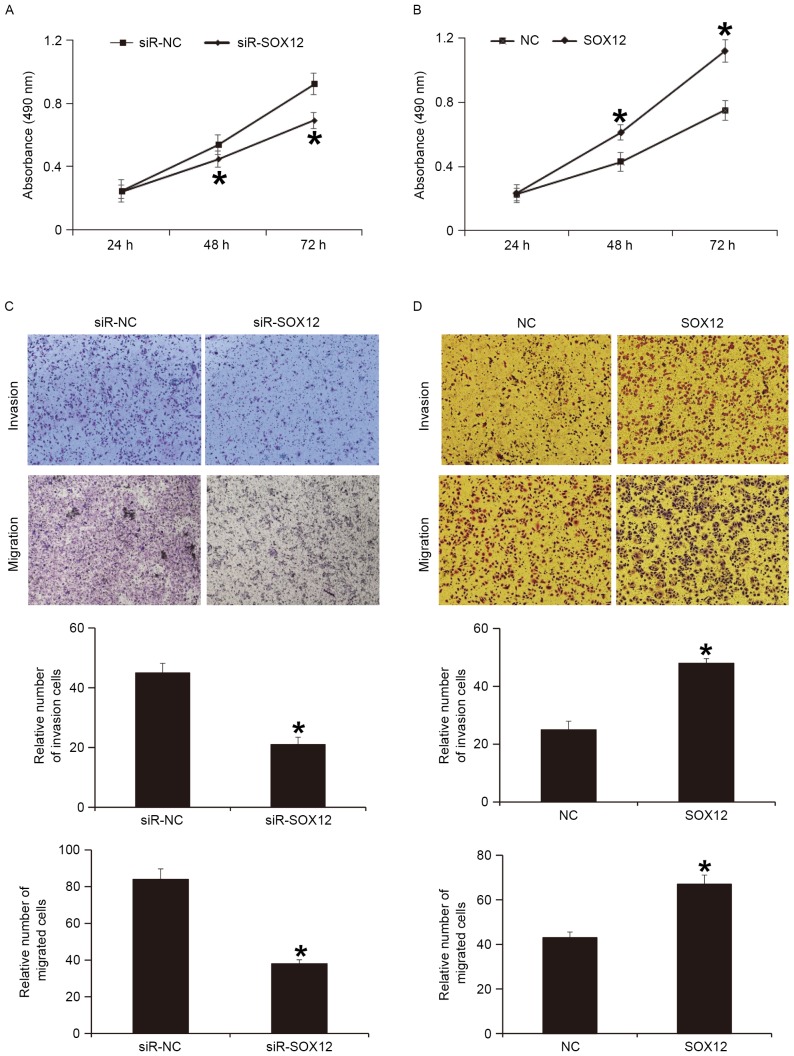
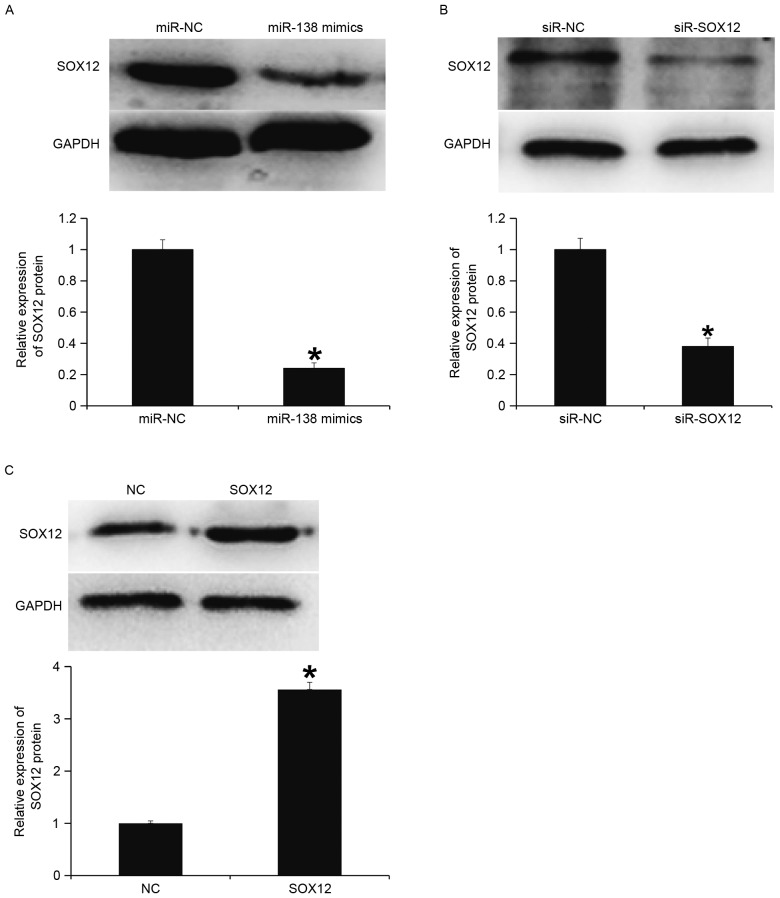
The aim of the present study was to investigate the expression and biological functions of microRNA (miR)-138 in ovarian cancer at the tissue and cellular levels, as well as its underlying mechanisms. A total of 47 patients with ovarian cancer were included in the present study. Ovarian cancer tissues were subjected to staging classification according to the FIGO 2000 criteria. Lymphatic metastasis was also examined. Ovarian cancer A2780 cells were transfected using liposomes. Reverse transcription-quantitative polymerase chain reaction was used to measure the expression of miR-138. A Cell-Counting Kit 8 assay was used to examine cell viability, while a Transwell assay was employed to study cell invasion and migration. The effects of miR-138 on SOX12 protein expression were examined by western blot analysis. A dual luciferase reporter assay was performed to identify the direct interaction between miR-138 and SOX12 gene. Expression of miR-138 was downregulated in ovarian cancer tissues. The level of miR-138 in patients with ovarian cancer with lymphatic metastasis was significantly lower compared with patients without lymphatic metastasis. However, expression of miR-138 was not associated with the stage of ovarian cancer. Upregulation of miR-138 inhibited the proliferation and suppressed the invasion and migration of A2780 cells. SOX12 promoted the proliferation, invasion and migration of A2780 cells. In addition, miR-138 downregulated the expression of SOX12 via binding with the 3'-UTR of SOX12 gene. The present study demonstrates that miR-138 expression is downregulated in ovarian cancer tissues and miR-138 acts as a tumor suppressor gene by inhibiting SOX12 expression and the proliferation, invasion and migration of ovarian cancer cells.
本研究旨在从组织和细胞水平探究微小RNA(miR)-138在卵巢癌中的表达、生物学功能及其潜在机制。本研究共纳入47例卵巢癌患者。根据国际妇产科联盟(FIGO)2000标准对卵巢癌组织进行分期分类。同时检查淋巴转移情况。采用脂质体转染卵巢癌A2780细胞。运用逆转录-定量聚合酶链反应检测miR-138的表达。采用细胞计数试剂盒8检测法检测细胞活力,运用Transwell检测法研究细胞侵袭和迁移能力。通过蛋白质印迹分析检测miR-138对SOX12蛋白表达的影响。进行双荧光素酶报告基因检测以确定miR-138与SOX12基因之间的直接相互作用。miR-138在卵巢癌组织中的表达下调。有淋巴转移的卵巢癌患者中miR-138水平显著低于无淋巴转移的患者。然而,miR-138的表达与卵巢癌分期无关。miR-138的上调抑制了A2780细胞的增殖,并抑制了其侵袭和迁移能力。SOX12促进了A2780细胞的增殖、侵袭和迁移。此外,miR-138通过与SOX12基因的3'-非翻译区结合下调SOX12的表达。本研究表明,miR-138在卵巢癌组织中的表达下调,并且miR-138通过抑制SOX12表达以及卵巢癌细胞的增殖、侵袭和迁移发挥肿瘤抑制基因的作用。