Pisoni Alice, Strawbridge Rebecca, Hodsoll John, Powell Timothy R, Breen Gerome, Hatch Stephani, Hotopf Matthew, Young Allan H, Cleare Anthony J
Department of Psychological Medicine, Institute of Psychiatry, Psychology and Neuroscience, King's College London, London, United Kingdom.
Department of Biostatistics, Institute of Psychiatry, Psychology and Neuroscience, King's College London, London, United Kingdom.
Front Psychiatry. 2018 Aug 23;9:386. doi: 10.3389/fpsyt.2018.00386. eCollection 2018.
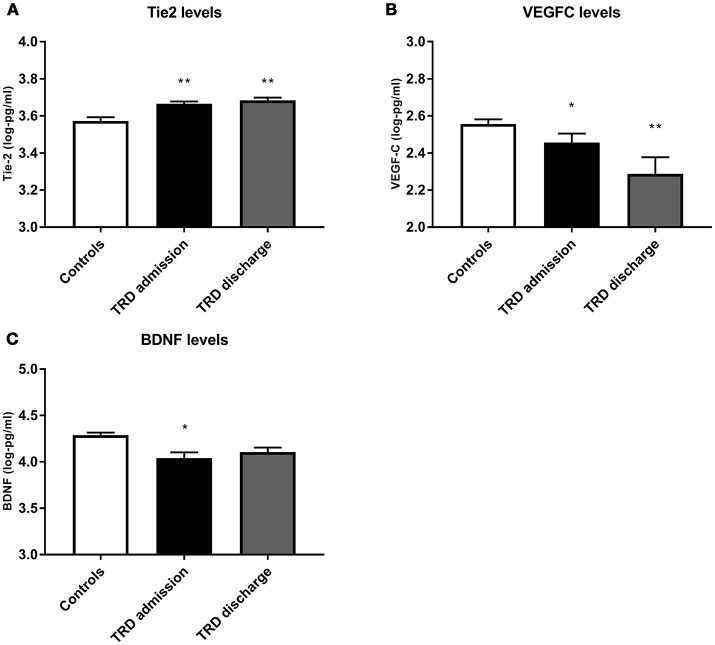
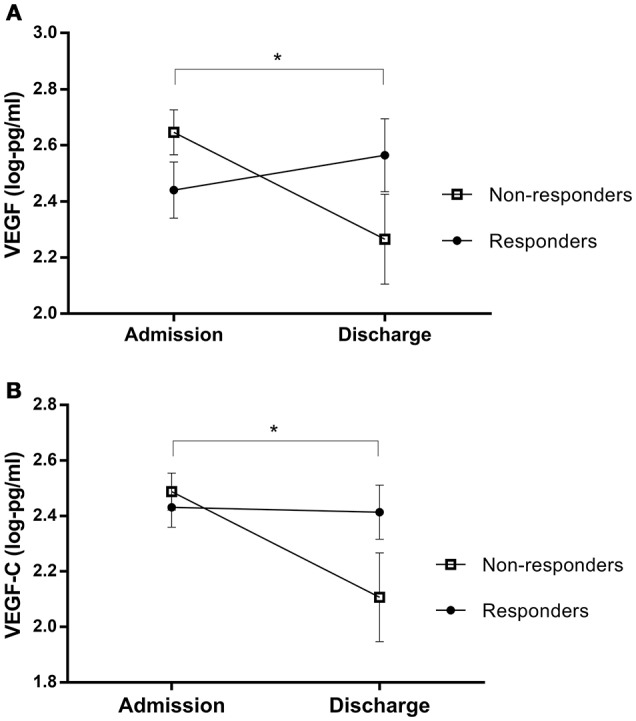
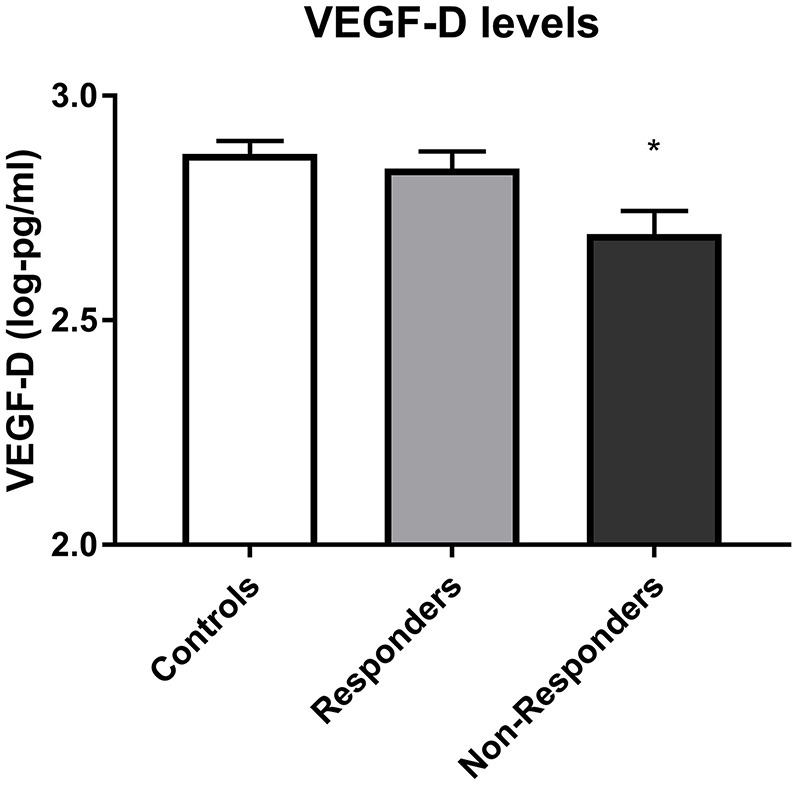
Since the neurotrophic hypothesis of depression was formulated, conflicting results have been reported regarding the role of growth factor proteins in depressed patients, including whether there are state or trait alterations found in patients compared to controls and whether they represent predictors of treatment response. Recently it has been hypothesized that heterogeneity of findings within this literature might be partly explained by participants' history of treatment-resistant depression. This study aimed to investigate the role of growth factor proteins in patients with treatment-resistant depression (TRD) undergoing an inpatient intervention. Blood samples were collected from 36 patients with TRD and 36 matched controls. Patients were assessed both at admission and discharge from a specialist inpatient program. We examined serum biomarker differences between patients and non-depressed matched controls, longitudinal changes after inpatient treatment and relationship to clinical outcomes. Additionally, the influence of potential covariates on biomarker levels were assessed. Patients displayed lower serum levels of brain-derived neurotrophic factor (OR = 0.025; 95% CI = 0.001, 0.500) and vascular endothelial growth factor-C (VEGFC; OR = 0.083, 95% CI = 0.008, 0.839) as well as higher angiopoietin-1 receptor (Tie2; OR = 2.651, 95% CI = 1.325, 5.303) compared to controls. Patients were stratified into responders (56%) and non-responders (44%). Lower VEGFD levels at admission predicted subsequent non-response (OR = 4.817, 95% CI = 1.247, 11.674). During treatment, non-responders showed a decrease in VEGF and VEGFC levels, while responders showed no significant changes. TRD patients demonstrate a deficit of peripheral growth factors and our results suggest that markers of the VEGF family might decline over time in chronically depressed patients in spite of multidisciplinary treatment. The action of angiogenic proteins may play an important role in the pathophysiology of TRD, and pending comprehensive investigation may provide important insights for the future of precision psychiatry.
自从抑郁症的神经营养假说提出以来,关于生长因子蛋白在抑郁症患者中的作用,已有相互矛盾的研究结果报道,包括与对照组相比,患者是否存在状态或特质改变,以及它们是否代表治疗反应的预测指标。最近有人提出,该文献中研究结果的异质性可能部分归因于参与者难治性抑郁症的病史。本研究旨在调查生长因子蛋白在接受住院干预的难治性抑郁症(TRD)患者中的作用。采集了36例TRD患者和36例匹配对照的血样。患者在专科住院项目入院时和出院时均接受评估。我们检查了患者与非抑郁匹配对照之间的血清生物标志物差异、住院治疗后的纵向变化以及与临床结局的关系。此外,还评估了潜在协变量对生物标志物水平的影响。与对照组相比,患者的血清脑源性神经营养因子水平较低(OR = 0.025;95% CI = 0.001,0.500),血管内皮生长因子-C(VEGFC;OR = 0.083,95% CI = 0.008,0.839)水平较低,而血管生成素-1受体(Tie2;OR = 2.651,95% CI = 1.325,5.303)水平较高。患者被分为反应者(56%)和无反应者(44%)。入院时较低的VEGFD水平预示着随后的无反应(OR = 4.817,95% CI = 1.247,11.674)。在治疗期间,无反应者的VEGF和VEGFC水平下降,而反应者则无显著变化。TRD患者表现出外周生长因子缺乏,我们的结果表明,尽管进行了多学科治疗,但慢性抑郁症患者中VEGF家族的标志物可能会随着时间的推移而下降。血管生成蛋白的作用可能在TRD的病理生理学中起重要作用,有待全面研究,这可能为精准精神病学的未来提供重要见解。