Zhang Yang, Gao Xu, Wang Shuai, Zhu Chengzhi, Li Rong, Shen Qirong
Jiangsu Provincial Key Lab for Organic Solid Waste Utilization, National Engineering Research Center for Organic-based Fertilizers, Jiangsu Collaborative Innovation Center for Solid Organic Waste Resource Utilization, Nanjing Agricultural University, Nanjing, 210095, China.
Ecology and Biodiversity Group, Department of Biology, Institute of Environmental Biology, Utrecht University, 3584 CH, Utrecht, The Netherlands.
Curr Microbiol. 2018 Dec;75(12):1574-1583. doi: 10.1007/s00284-018-1563-4. Epub 2018 Sep 7.
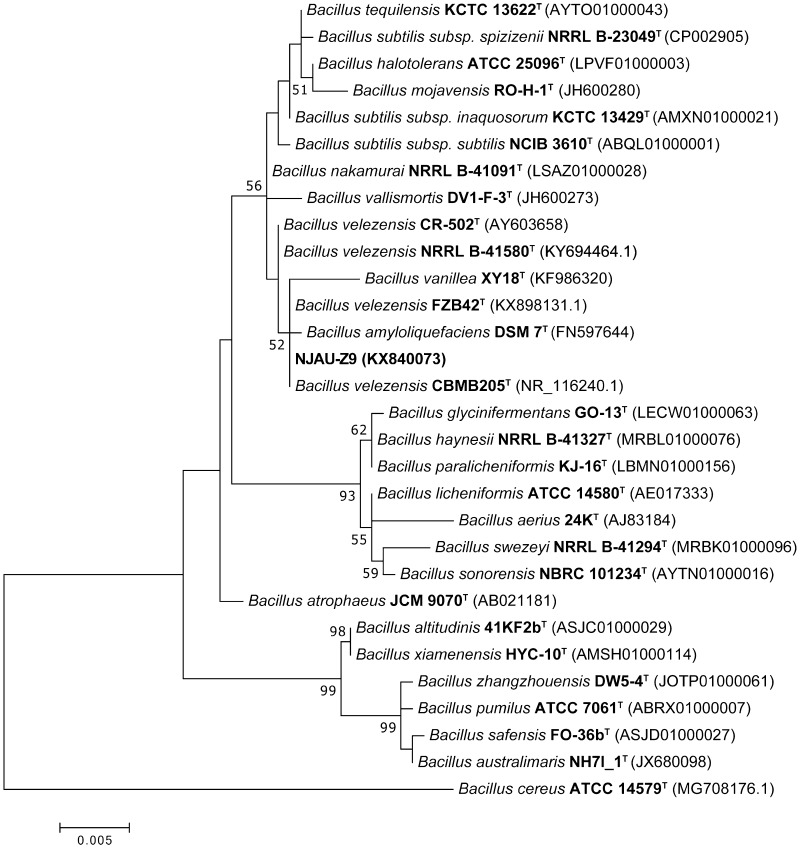
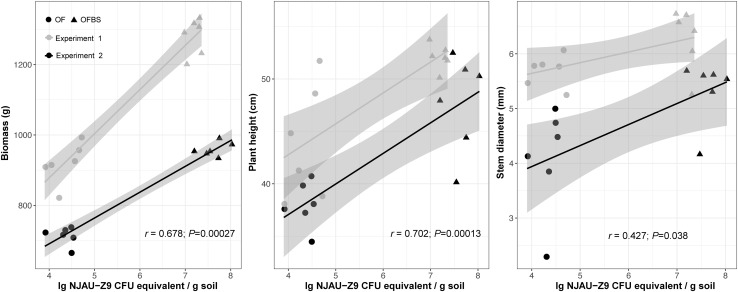
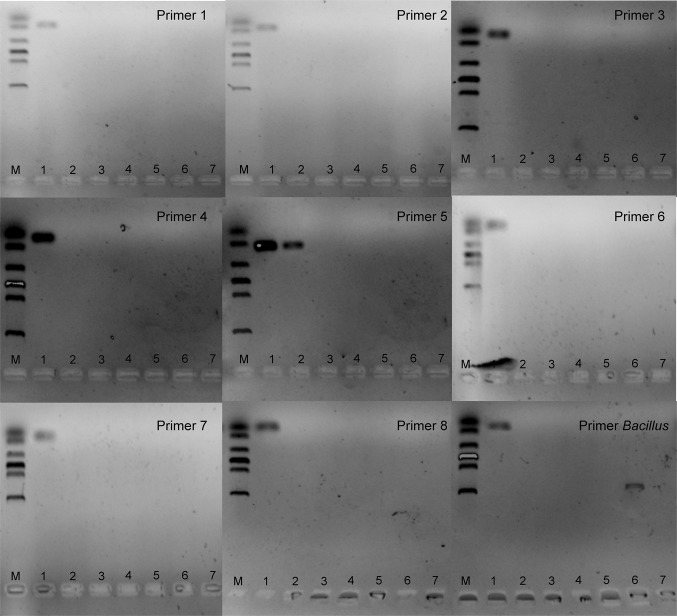
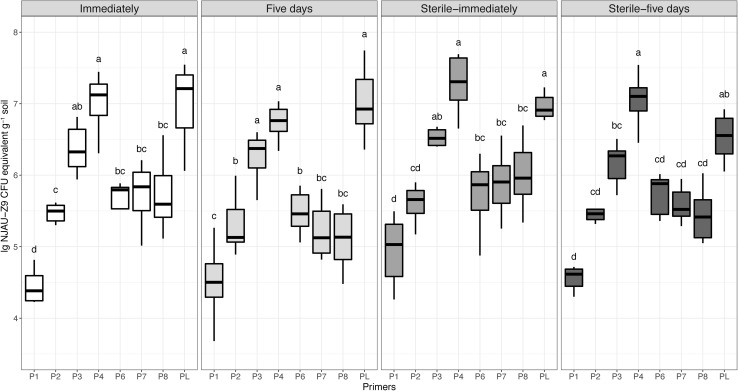
Plant growth-promoting rhizobacteria (PGPR) have been reported to influence plant growth, yield, and nutrient uptake by an array of mechanisms. Uncovering the behavioral dynamics of PGPR is one of the most important issues necessary for understanding their functional performances. In this study, strain NJAU-Z9 which was found to possess complex functions and efficient rhizospheric colonization ability was selected from plenty of bacterial strains isolated randomly from the pepper rhizosphere soil and identified as Bacillus velezensis. Repeated seedling nursing tests performed absolute growth-promoting advantage for the novel isolated strain. After that, primers for the quantitative detection were designed based on its whole genome sequence (WGS), and a real-time PCR method was utilized to explore strategies for monitoring the strain in natural soil and in the pepper rhizosphere. Results showed based on the whole genome, two primers were identified as NJAU-Z9-specific quantitative PCR primers. Two seasonal pot experiments demonstrated that strain NJAU-Z9 effectively colonized the rhizosphere measured by the novel abundance detecting strategy, improved plant growth, and showed a positive correlation between bacterial number and biomass. This study offers a strategy based on a real-time PCR method for directly monitoring B. velezensis strain NJAU-Z9 in the soil and the rhizosphere and provides a reference for the quantitative study of other PGPR strains based on WGSs.
据报道,植物促生根际细菌(PGPR)可通过一系列机制影响植物生长、产量和养分吸收。揭示PGPR的行为动态是理解其功能表现所需的最重要问题之一。在本研究中,从辣椒根际土壤中随机分离的大量细菌菌株中筛选出具有复杂功能和高效根际定殖能力的菌株NJAU-Z9,并鉴定为贝莱斯芽孢杆菌。重复的育苗试验表明该新分离菌株具有绝对的促生长优势。之后,基于其全基因组序列(WGS)设计了定量检测引物,并利用实时荧光定量PCR方法探索在天然土壤和辣椒根际中监测该菌株的策略。结果表明,基于全基因组,鉴定出两条引物为NJAU-Z9特异性定量PCR引物。两个季节性盆栽试验表明,通过新的丰度检测策略测定,菌株NJAU-Z9能有效定殖于根际,促进植物生长,且细菌数量与生物量呈正相关。本研究提供了一种基于实时荧光定量PCR方法直接监测土壤和根际中贝莱斯芽孢杆菌菌株NJAU-Z9的策略,并为基于全基因组序列对其他PGPR菌株进行定量研究提供参考。