Movsesyan Liana, Maijenburg Albert Wouter, Goethals Noel, Sigle Wilfried, Spende Anne, Yang Florent, Kaiser Bernhard, Jaegermann Wolfram, Park Sun-Young, Mul Guido, Trautmann Christina, Toimil-Molares Maria Eugenia
Materials Research Department, GSI Helmholtz Centre for Heavy Ion Research, Planckstr. 1, 64291 Darmstadt, Germany.
Material- und Geowissenschaften, Technische Universität Darmstadt, Alarich-Weiss-Str. 2, 64287 Darmstadt, Germany.
Nanomaterials (Basel). 2018 Sep 6;8(9):693. doi: 10.3390/nano8090693.
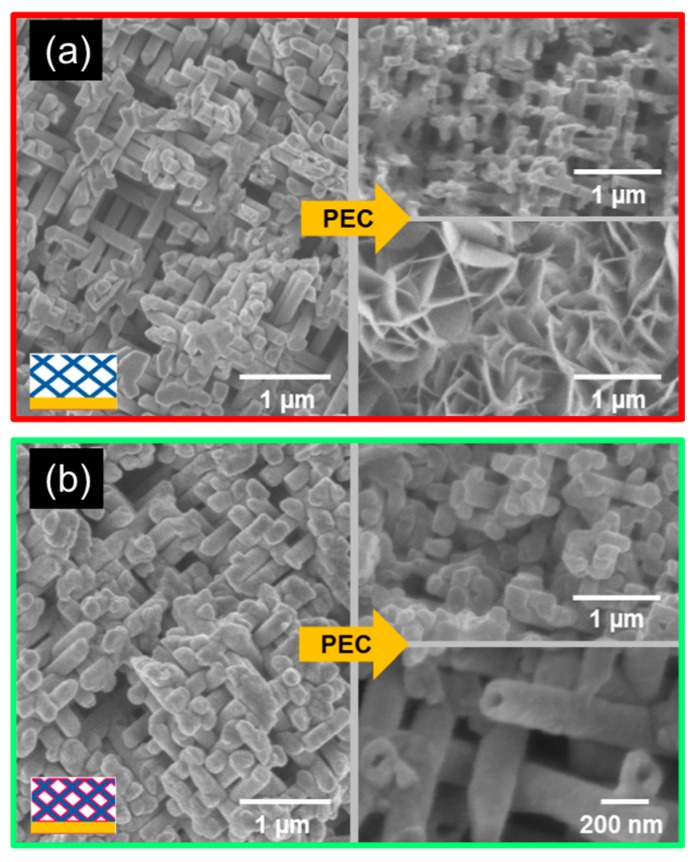
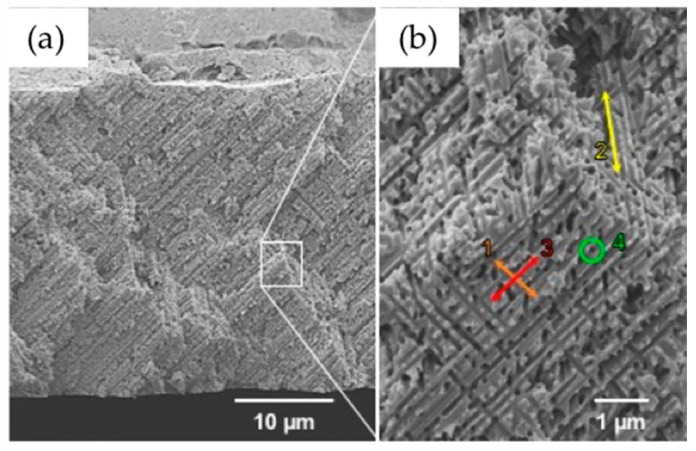
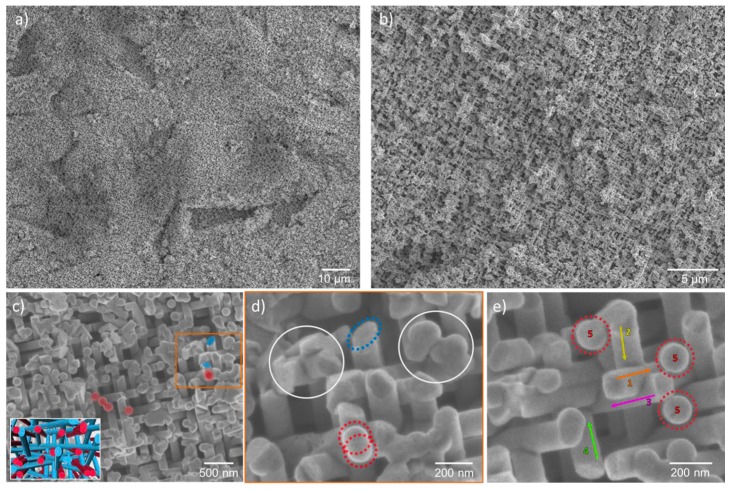
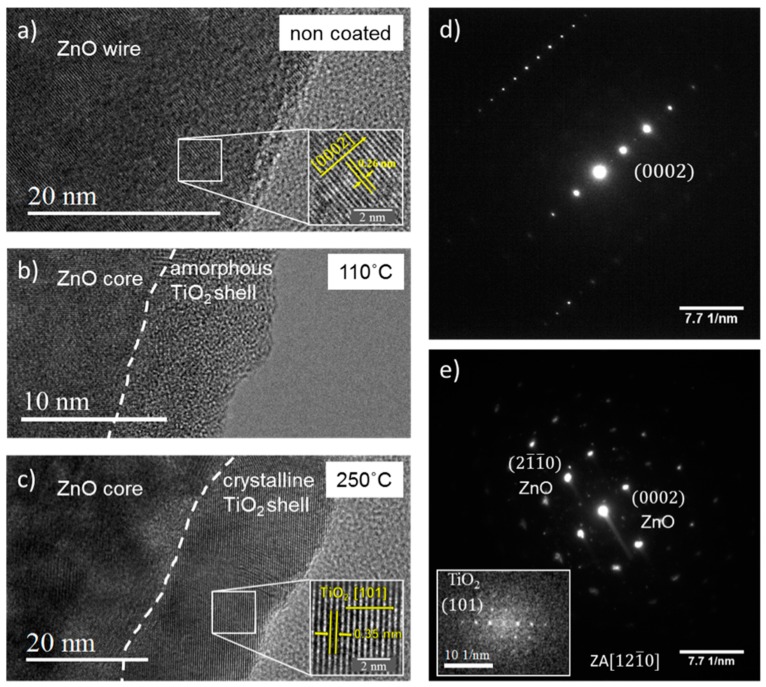
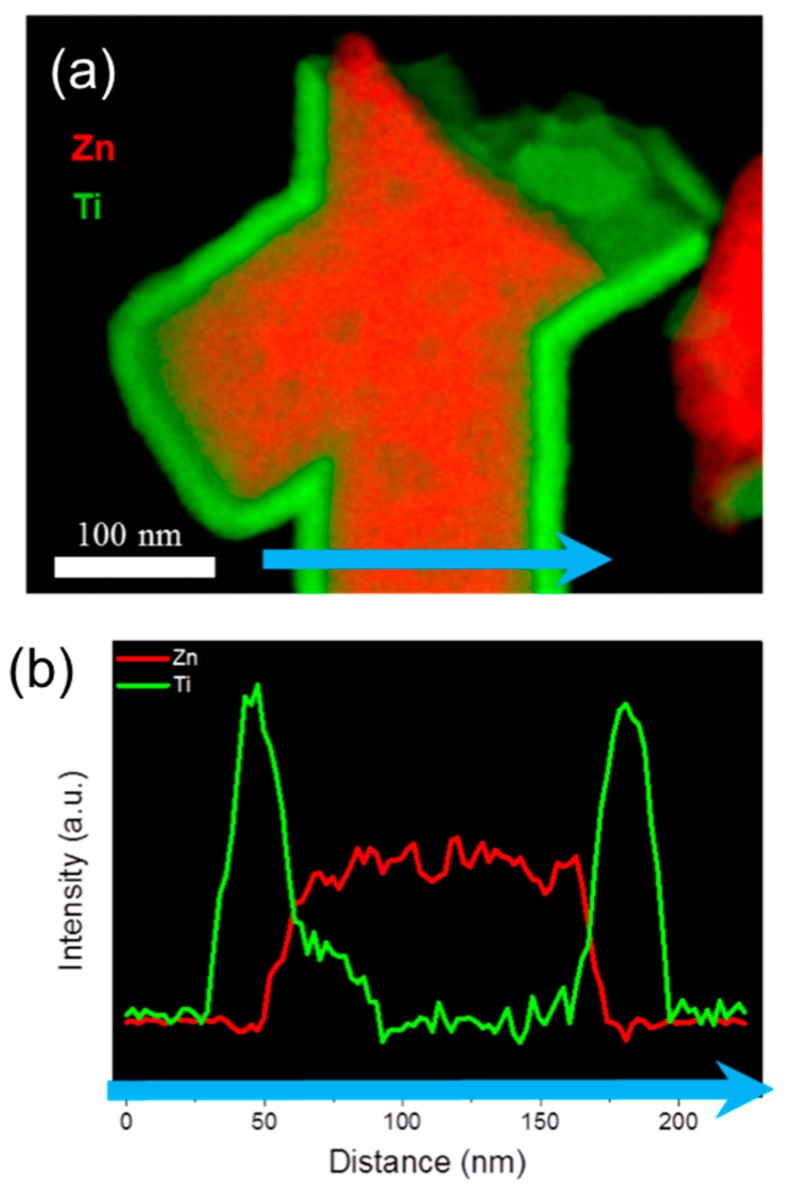
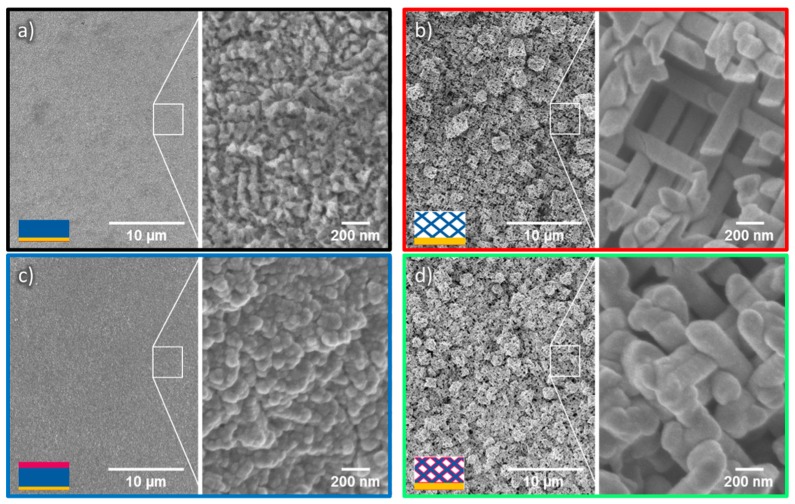
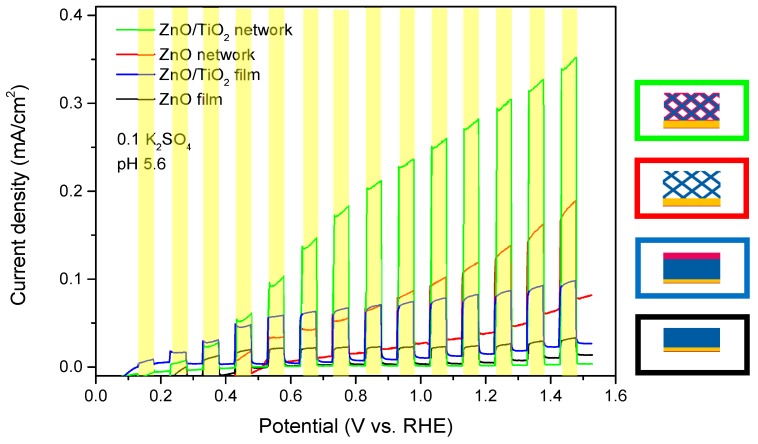
In this work, the fabrication of zinc oxide (ZnO) nanowire networks is presented. By combining ion-track technology, electrochemical deposition, and atomic layer deposition, hierarchical and self-supporting three-dimensional (3D) networks of pure ZnO- and TiO₂-coated ZnO nanowires were synthesized. Analysis by means of high-resolution transmission electron microscopy revealed a highly crystalline structure of the electrodeposited ZnO wires and the anatase phase of the TiO₂ coating. In photoelectrochemical measurements, the ZnO and ZnO/TiO₂ nanowire networks, used as anodes, generated higher photocurrents compared to those produced by their film counterparts. The ZnO/TiO₂ nanowire network exhibited the highest photocurrents. However, the protection by the TiO₂ coatings against chemical corrosion still needs improvement. The one-dimensionality of the nanowires and the large electrolyte-accessible area make these 3D networks promising photoelectrodes, due to the improved transport properties of photogenerated charge carriers and faster redox reactions at the surface. Moreover, they can find further applications in e.g., sensing, catalytical, and piezoelectric devices.
在这项工作中,展示了氧化锌(ZnO)纳米线网络的制备。通过结合离子径迹技术、电化学沉积和原子层沉积,合成了由纯ZnO和TiO₂包覆的ZnO纳米线组成的分层且自支撑的三维(3D)网络。通过高分辨率透射电子显微镜分析表明,电沉积的ZnO线具有高度结晶结构,且TiO₂涂层为锐钛矿相。在光电化学测量中,用作阳极的ZnO和ZnO/TiO₂纳米线网络产生的光电流比其薄膜对应物产生的光电流更高。ZnO/TiO₂纳米线网络表现出最高的光电流。然而,TiO₂涂层对化学腐蚀的防护仍需改进。纳米线的一维性和较大的电解质可及面积使这些3D网络成为有前景的光电极,这是由于光生电荷载流子的传输性能得到改善以及表面氧化还原反应更快。此外,它们还可在例如传感、催化和压电器件等方面找到进一步的应用。