Fundación para el Desarrollo Sostenible de la Amazonía Baja del Perú, Universidad Nacional de la Amazonía Peruana, Iquitos, Perú.
Laboratorio de Investigación de Productos Naturales Antiparasitarios de la Amazonía Peruana, Centro de Investigación de Recursos Naturales de la Amazonía, Universidad Nacional de la Amazonía Peruana, Iquitos, Perú.
Malar J. 2018 Sep 11;17(1):328. doi: 10.1186/s12936-018-2471-6.
Malaria in Peru is concentrated in the Amazon region, especially in Loreto, and transmission is focused in rural and peri-urban communities. The government has approved a malaria elimination plan with a community approach and seeks to reduce the risk of transmission through preventive interventions, but asymptomatic and low-parasite-density infections are challenges for disease control and elimination. IgG antibodies play a critical role in combating infection through their ability to reduce parasitaemia and clinical symptoms. In particular, IgG subclasses have important roles in controlling malaria disease and may provide new insight into the development of malaria control strategies and understanding of malaria transmission. Through the use of excreted-secreted antigens from Plasmodium falciparum, were evaluated the responses of the four IgG subclasses in symptomatic and asymptomatic malarial infections.
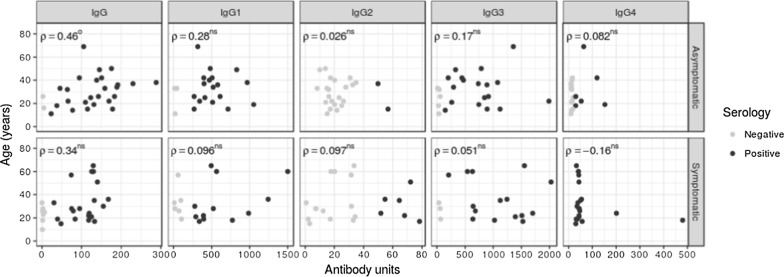
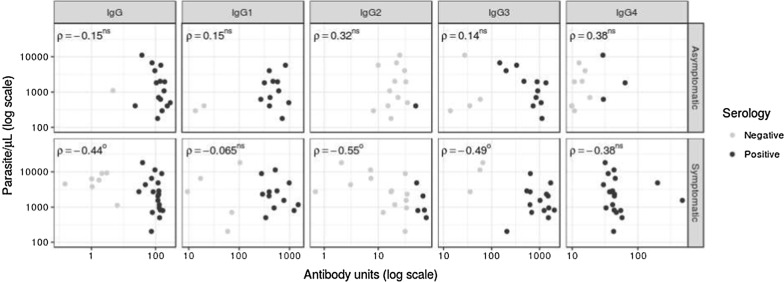
Higher levels of whole IgG were observed in asymptomatic carriers (P < 0.05). IgG3 and IgG1 were the most prevalent subclasses and did not show differences in their antibody levels in either type of carrier. All symptomatic carriers were positive for IgG4, and the presence of IgG3 and IgG2 were correlated with protection against parasitaemia. IgG2 showed lower prevalence and antibody titers in comparison to other subclasses.
This is the first study that characterizes the IgG subclass response in the Peruvian Amazon, and these results show that even in populations from regions with low malaria transmission, a certain degree of naturally acquired immunity can develop when the right antibody subclasses are produced. This provides important insight into the potential mechanisms regulating protective immunity.
秘鲁的疟疾集中在亚马逊地区,特别是洛雷托,传播主要集中在农村和城郊社区。政府已经批准了一项以社区为基础的消除疟疾计划,旨在通过预防干预措施降低传播风险,但无症状和低寄生虫密度感染是控制和消除疾病的挑战。IgG 抗体通过减少寄生虫血症和临床症状在对抗感染方面发挥着关键作用。特别是,IgG 亚类在控制疟疾疾病方面发挥着重要作用,可能为疟疾控制策略的制定和疟疾传播的理解提供新的见解。通过使用恶性疟原虫的分泌-排泄抗原,评估了在有症状和无症状疟疾病例中四种 IgG 亚类的反应。
无症状携带者中观察到更高水平的全 IgG(P<0.05)。IgG3 和 IgG1 是最常见的亚类,在两种携带者中其抗体水平没有差异。所有有症状的携带者均为 IgG4 阳性,IgG3 和 IgG2 的存在与抗寄生虫血症有关。与其他亚类相比,IgG2 的流行率和抗体滴度较低。
这是第一项描述秘鲁亚马逊地区 IgG 亚类反应的研究,这些结果表明,即使在疟疾传播水平较低的人群中,当产生正确的抗体亚类时,也能在一定程度上产生自然获得的免疫力。这为调节保护性免疫的潜在机制提供了重要的见解。