Departments of Internal Medicine and Epidemiology, Erasmus MC University Medical Center, Rotterdam, The Netherlands.
Curr Osteoporos Rep. 2018 Oct;16(5):531-540. doi: 10.1007/s11914-018-0467-3.
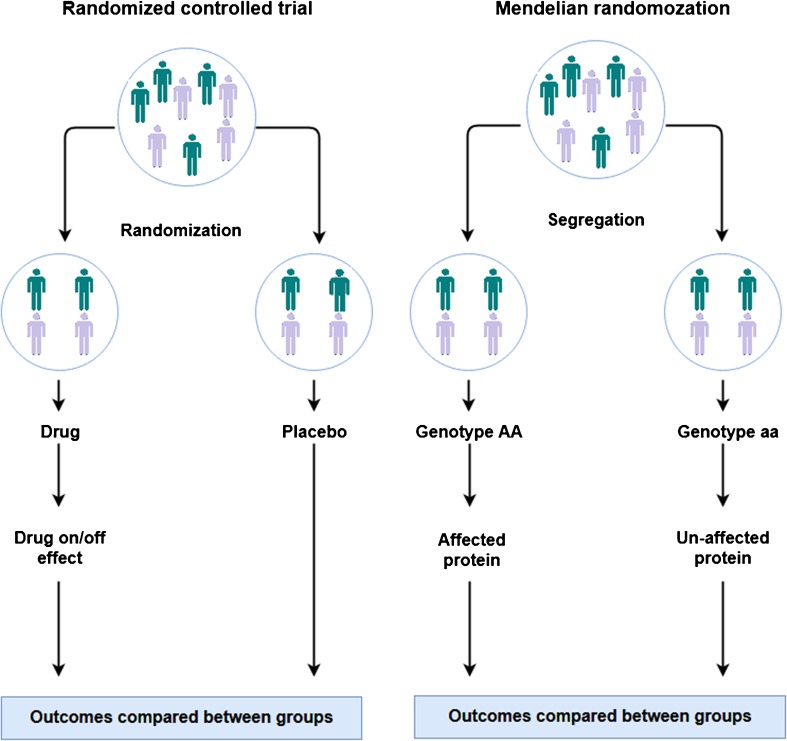
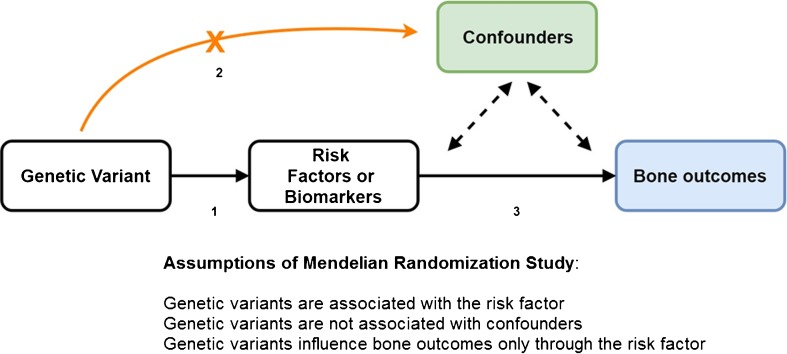
This review summarizes the basic principles of Mendelian randomization (MR) and provides evidence for the causal effect of multiple modifiable factors on bone outcomes.
Several studies using MR approach have provided support for the causal effect of obesity on bone mineral density (BMD). Strikingly, studies have failed to prove a causal association between elevated 25(OH) D concentrations and higher BMD in community-dwelling individuals. The MR approach has been successfully used to evaluate multiple factors related to bone mineral density variation and/or fracture risk. The MR approach avoids some of the classical observational study limitations and provides more robust causal evidence, ensuring bigger success of the clinical trials. The selection of interventions based on genetic evidence could have a substantial impact on clinical practice.
本文总结了孟德尔随机化(Mendelian randomization,MR)的基本原理,并为多种可调节因素对骨骼结局的因果效应提供了证据。
多项采用 MR 方法的研究为肥胖对骨密度(bone mineral density,BMD)的因果效应提供了支持。引人注目的是,研究未能证明在社区居住人群中,25(OH)D 浓度升高与更高的 BMD 之间存在因果关联。MR 方法已成功用于评估与骨密度变化和/或骨折风险相关的多种因素。MR 方法避免了一些经典的观察性研究的局限性,并提供了更稳健的因果证据,确保了临床试验的更大成功。基于遗传证据选择干预措施可能对临床实践产生重大影响。