Johns Hopkins University Bloomberg School of Public Health, Department of International Health, Baltimore, Maryland, USA.
The Nepal Nutrition Intervention Project-Sarlahi, Lalitpur, Nepal.
J Glob Health. 2018 Dec;8(2):020801. doi: 10.7189/jogh.08.020801.
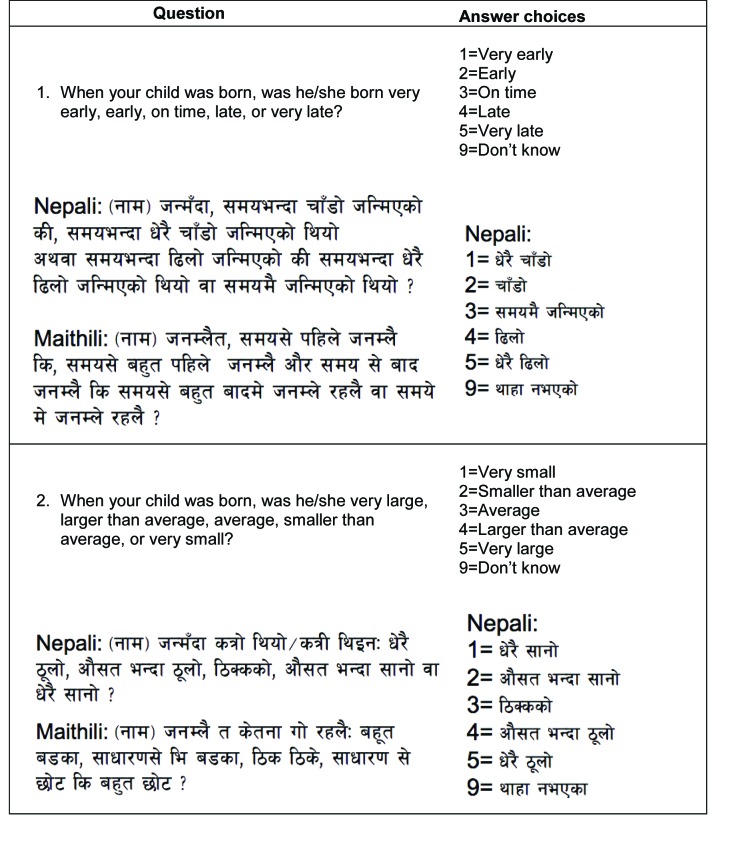
Quantitative validation studies alone may not be able to distinguish between instances when participants did not accurately report an event vs when participants did not understand a question. We used an explanatory qualitative study design to acquire an in-depth understanding of why some mothers in rural Nepal overestimate birth size of their newborn and their length of pregnancy.
We conducted two focus group discussions (FGDs) with study staff who administered a quantitative questionnaire and 12 in-depth interviews (IDIs) with mothers who had participated in a quantitative validation study. Transcripts were coded and analyzed for themes in patterns of meaning within and across FGDs and IDIs. Using this thematic map, we synthesized our data into common and divergent responses from participants to facilitate our interpretation of the quantitative findings.
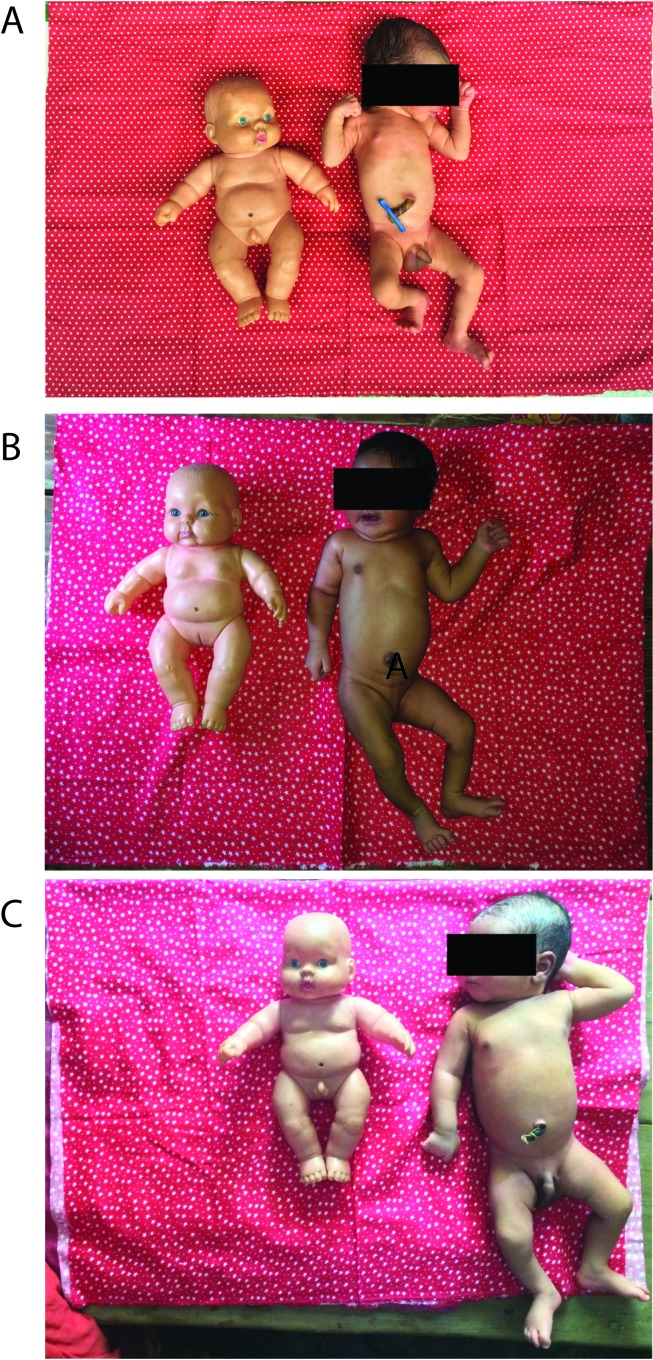
We identified five themes specific to this analysis: difficulties with the length of pregnancy question, challenges in administering the birth size question, the perceived effect of time since birth on mothers' ability to remember information, the language and style differences specific to this setting, and the study context shaping the relationship between study staff and mothers who participated and how this may have influenced mothers' responses. Visual aids may help to scale the question about birth size within a cultural frame of reference for maternal reports to be more interpretable. Among both study staff and mothers, a longer period of time since the birth of a child was thought to be associated with diminished accuracy of maternal reports, a perception not supported by our previously published quantitative findings.
Poor validity of low birth weight (LBW) and preterm birth indicators based on maternal reports may be partly attributed to challenges in maternal understanding of questions assessing birth size and length of pregnancy. Additional research is needed to confirm these findings regarding maternal comprehension and to further evaluate the utility of visual aids developed for this study.
单纯进行定量验证研究可能无法区分参与者未能准确报告事件与未能理解问题这两种情况。我们采用解释性定性研究设计,深入了解尼泊尔农村地区的一些母亲为何会高估新生儿的出生体重和孕期长度。
我们对参与定量验证研究的研究人员进行了两次焦点小组讨论(FGD),并对 12 名母亲进行了深入访谈(IDI)。对 FGD 和 IDI 的转录本进行编码和分析,以获取主题模式内和主题模式间的意义。使用这个主题图,我们将数据综合为参与者的共同和不同反应,以帮助我们解释定量研究结果。
我们确定了五个特定于此分析的主题:孕期长度问题的困难,出生体重问题的管理挑战,出生后时间对母亲记忆信息能力的感知影响,特定于这种环境的语言和风格差异,以及研究背景塑造了研究人员与参与的母亲之间的关系,以及这种关系如何影响母亲的反应。视觉辅助工具可能有助于根据母体报告的文化参考框架来衡量出生体重问题,从而使其更具可解释性。在研究人员和母亲中,都认为孩子出生后时间越长,母亲报告的准确性就越低,但这一观点与我们之前发表的定量研究结果并不相符。
基于母体报告的低出生体重(LBW)和早产指标的有效性较差,部分原因可能是母体在理解评估出生体重和孕期长度的问题上存在困难。需要进一步研究来确认这些关于母体理解的发现,并进一步评估为这项研究开发的视觉辅助工具的实用性。