Division of Hematology and Oncology, Beth Israel Deaconess Medical Center, Boston, MA, USA.
Department of Medical Oncology, Dana-Farber Cancer Institute, 330 Brookline Avenue, Boston, MA, 02215, USA.
J Immunother Cancer. 2018 Sep 12;6(1):89. doi: 10.1186/s40425-018-0394-y.
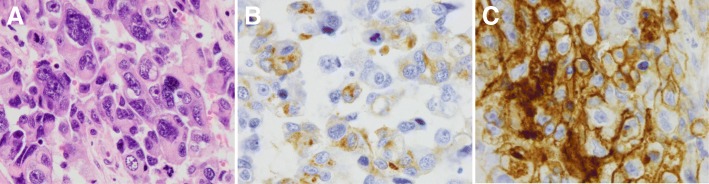
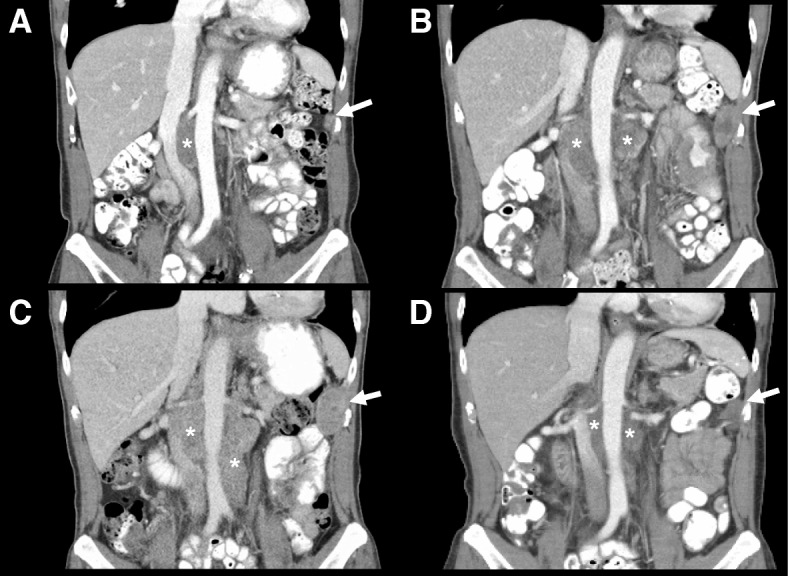
The development of a new lesion in a patient with a complete remission to anti-PD-1 therapy is highly concerning for a drug resistant escape lesion. Here, we present a case of a 62-year-old patient with chemotherapy-resistant metastatic urothelial cancer who had a complete remission to pembrolizumab. The patient's disease burden tracked closely to serum levels of alpha-fetoprotein (AFP) expressed by the tumor and served as an accurate tumor marker. Surveillance imaging revealed a solitary growing pulmonary nodule mimicking an escape lesion in the absence of an increase in AFP levels. Biopsy of this lesion revealed a benign intraparenchymal lymph node with no evidence of metastatic carcinoma. This case indicates that in some patients, biomarkers aberrantly expressed by their tumors, such as AFP in this patient, may be used as a tumor marker for response to anti-PD-1 therapy and emphasizes the importance of confirming potential escape lesions by pathologic examination.
在接受抗 PD-1 治疗完全缓解的患者中出现新病灶,高度提示出现耐药逃逸病灶。在此,我们报告了一例化疗耐药转移性尿路上皮癌患者,其接受 pembrolizumab 治疗后完全缓解。该患者的疾病负担与肿瘤表达的甲胎蛋白 (AFP) 血清水平密切相关,并作为一种准确的肿瘤标志物。监测影像学显示孤立性生长的肺结节,类似于 AFP 水平未升高时的逃逸病灶。该病灶的活检显示为良性肺内淋巴结,无转移性癌的证据。该病例表明,在某些患者中,其肿瘤异常表达的生物标志物,如该患者的 AFP,可作为抗 PD-1 治疗反应的肿瘤标志物,并强调通过病理检查确认潜在逃逸病灶的重要性。