Pan Weihuai, Shen Jinqiu, Zheng Zhongzhong, Yan Xu, Shou Jianxin, Wang Wenxiang, Jiang Lixi, Pan Jianwei
MOE Key Laboratory of Cell Activities and Stress Adaptations, School of Life Sciences, Lanzhou University, Lanzhou, 730000, China.
College of Life Sciences, Shaoxing University, Shaoxing, 312000, Zhejiang, China.
Rice (N Y). 2018 Sep 12;11(1):51. doi: 10.1186/s12284-018-0242-1.
The calcineurin B-like protein (CBL) and CBL-interacting protein kinase (CIPK) signaling system plays a key regulatory role in plant stress signaling. The roles of plant-specific CIPKs, essential for CBL-CIPK functions, in the response to various abiotic stresses have been extensively studied so far. However, until now, the possible roles of the CIPKs in the plant response to heavy metal toxicities are largely unknown.
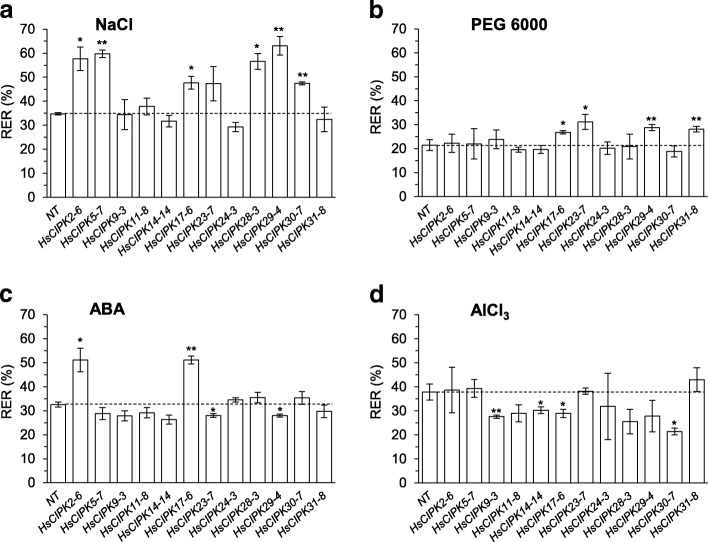
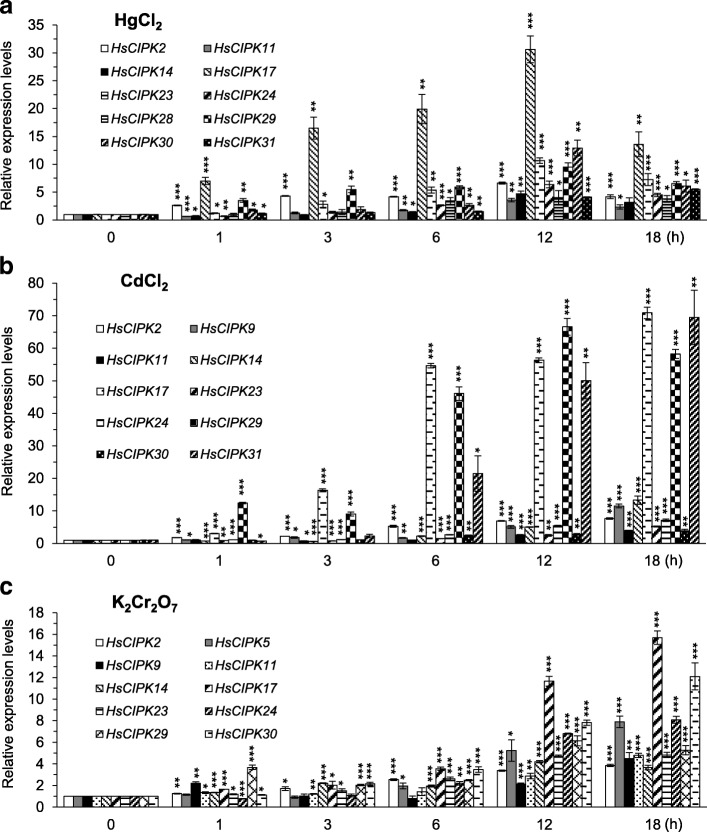
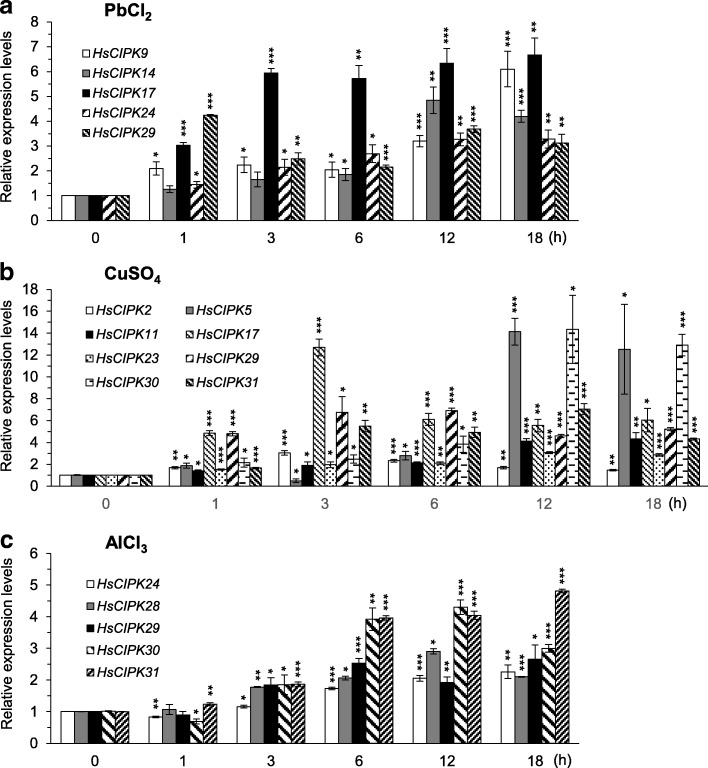
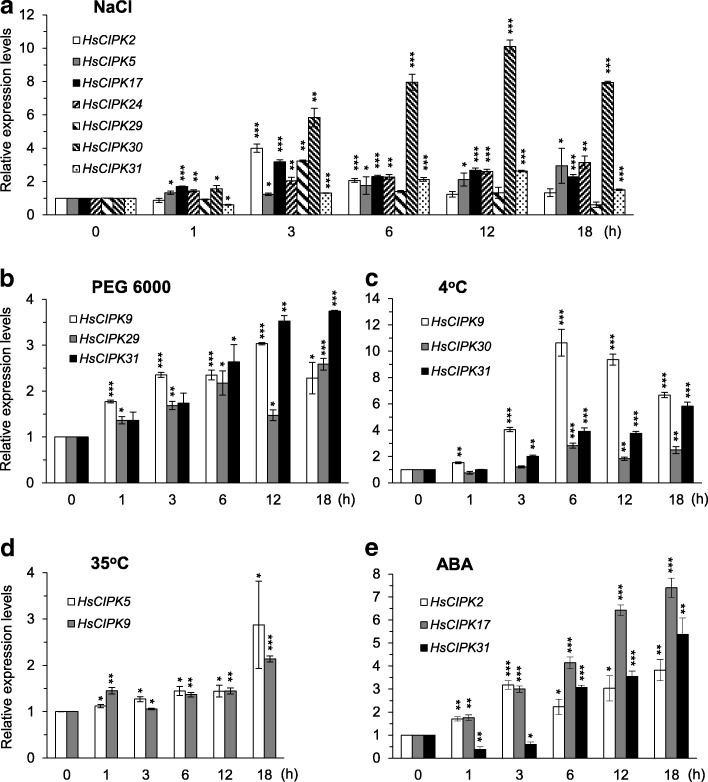
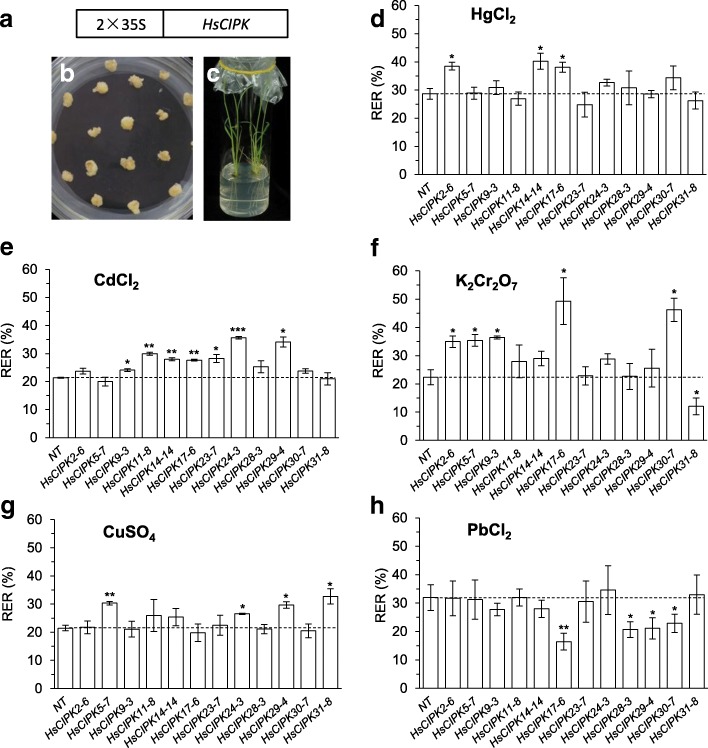
In this study, we used bioinformatic and molecular strategies to isolate 12 HsCIPK genes in Tibetan Plateau annual wild barley (Hordeum spontaneum C. Koch) and subsequently identified their functional roles in the response to heavy metal toxicities. The results showed that multiple HsCIPKs were transcriptionally regulated by heavy metal toxicities (e.g., Hg, Cd, Cr, Pb, and Cu) and other abiotic stresses (e.g., salt, drought, aluminum, low and high temperature, and abscisic acid). Furthermore, the ectopic overexpression of each HsCIPK in rice (Oryza sativa L. cv Nipponbare) showed that transgenic plants of multiple HsCIPKs displayed enhanced tolerance of root growth to heavy metal toxicities (Hg, Cd, Cr, and Cu), salt and drought stresses. These results suggest that HsCIPKs are involved in the response to heavy metal toxicities and other abiotic stresses.
Tibetan Plateau annual wild barley HsCIPKs possess broad applications in genetically engineering of rice with tolerance to heavy metal toxicities and other abiotic stresses.
类钙调神经磷酸酶B蛋白(CBL)和CBL相互作用蛋白激酶(CIPK)信号系统在植物胁迫信号传导中起关键调节作用。迄今为止,对CBL-CIPK功能所必需的植物特异性CIPKs在应对各种非生物胁迫中的作用进行了广泛研究。然而,到目前为止,CIPKs在植物对重金属毒性响应中的可能作用在很大程度上尚不清楚。
在本研究中,我们使用生物信息学和分子策略从青藏高原一年生野生大麦(Hordeum spontaneum C. Koch)中分离出12个HsCIPK基因,随后确定了它们在应对重金属毒性中的功能作用。结果表明,多个HsCIPKs受重金属毒性(如汞、镉、铬、铅和铜)和其他非生物胁迫(如盐、干旱、铝、低温和高温以及脱落酸)的转录调控。此外,每个HsCIPK在水稻(Oryza sativa L. cv Nipponbare)中的异位过表达表明,多个HsCIPKs的转基因植物对重金属毒性(汞、镉、铬和铜)、盐和干旱胁迫表现出增强的根系生长耐受性。这些结果表明,HsCIPKs参与了对重金属毒性和其他非生物胁迫的响应。
青藏高原一年生野生大麦HsCIPKs在对重金属毒性和其他非生物胁迫具有耐受性的水稻基因工程中具有广泛应用。