Spinelli Maria, Fasolo Mirco, Shah Prachi E, Genovese Giuliana, Aureli Tiziana
Department of Neuroscience, Imaging and Clinical Sciences, University "G. d'Annunzio" Chieti - Pescara, Chieti, Italy.
Department of Pediatrics, University of Michigan, Ann Arbor, MI, United States.
Front Psychol. 2018 Aug 28;9:1527. doi: 10.3389/fpsyg.2018.01527. eCollection 2018.
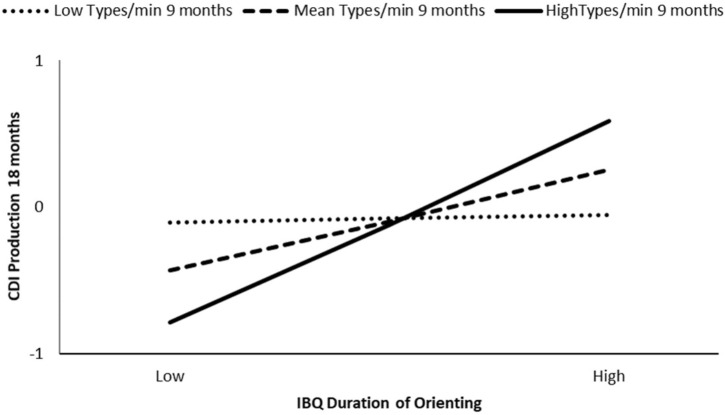
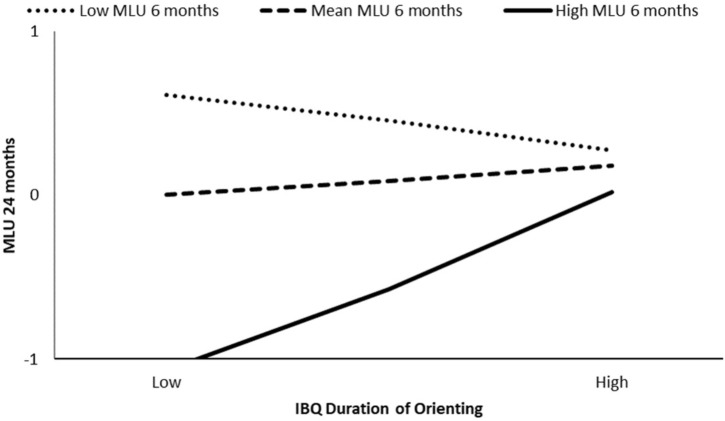
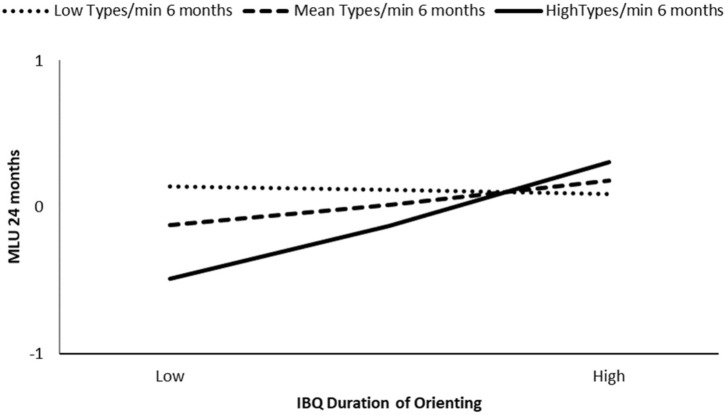
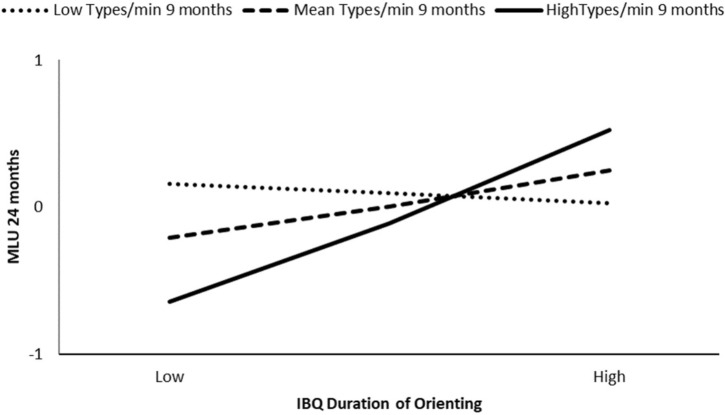
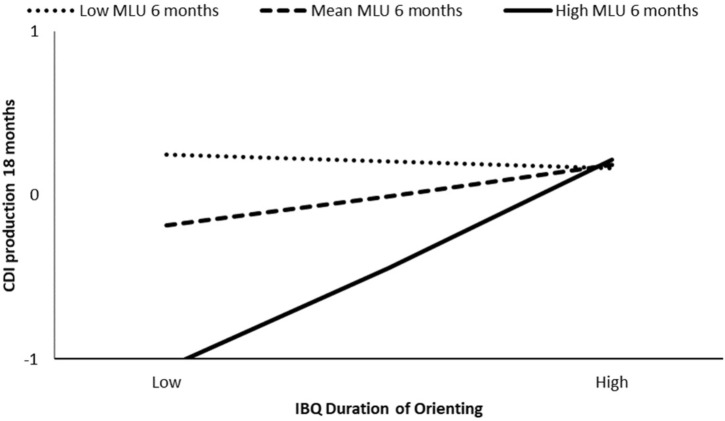
Temperament is an individual aspect that strictly affects infants and children engagement with the environment and it is supposed to play a role in the acquiring of new competences. Several studies focused on the possible influence of temperament in the process of language acquisition in early childhood reporting not consistent findings. Since maternal input is a variable that has been widely associated with infant language development this longitudinal study aimed to explore the role of the quality of maternal input in the temperament-language association. We hypothesized that the longitudinal association between early infant temperament and language production is moderated by the quality of maternal input during the first year of life. Infant temperament at 3 months and maternal linguistic input (lexical diversity and syntactic complexity) during spontaneous mother-infant interactions at 6, 9, and 12 months were assessed. Language competences were evaluated at the end of the second year: language production at 18 months with the CDI and child syntactic complexity at 24 months during spontaneous speech. Results showed significant moderating effects of syntactic complexity and lexical variability of maternal input at 6 and 9 months on the association of duration of orienting abilities and later language production. Infants with greater attentional abilities and with mothers who spoke to them with a more complex and variable input showed the better language outcomes. The association between infant distress to limitations and child language was not moderated by maternal input. No effects were found when considering the temperamental scale smile and laugher. Attentional control temperamental characteristics could help the infant to be more focus on maternal input throughout the first year of life and could consequently facilitate language development. Our findings underlined the necessity to explore infant development considering the interaction between individual and contextual factors.
气质是一个严格影响婴幼儿与环境互动的个体因素,并且它被认为在获得新能力的过程中发挥作用。多项研究聚焦于气质在幼儿语言习得过程中的可能影响,但报告的结果并不一致。由于母亲的语言输入是一个与婴儿语言发展广泛相关的变量,这项纵向研究旨在探讨母亲语言输入质量在气质与语言关联中的作用。我们假设,婴儿早期气质与语言产出之间的纵向关联受到生命第一年母亲语言输入质量的调节。对3个月大婴儿的气质以及6个月、9个月和12个月时母婴自然互动中母亲的语言输入(词汇多样性和句法复杂性)进行了评估。在第二年结束时评估语言能力:18个月时用儿童语言发展量表评估语言产出,24个月时在自然言语中评估儿童的句法复杂性。结果显示,6个月和9个月时母亲语言输入的句法复杂性和词汇变异性对定向能力持续时间与后期语言产出之间的关联有显著的调节作用。注意力能力较强且母亲与他们交流时语言输入更复杂多样的婴儿,语言发展结果更好。婴儿对限制的苦恼与儿童语言之间的关联未受到母亲语言输入的调节。在考虑气质量表中的微笑和大笑时未发现影响。注意力控制气质特征有助于婴儿在生命的第一年更专注于母亲的语言输入,从而促进语言发展。我们的研究结果强调了在考虑个体因素与环境因素相互作用的情况下探索婴儿发展的必要性。