Li Ye, Wang Xinxin, Ren Jiali, Wu Xiaoshan, Li Guoqing, Fan Zhipeng, Zhang Chunmei, Li Ang, Wang Songlin
1Molecular Laboratory for Gene Therapy and Tooth Regeneration, Beijing Key Laboratory of Tooth Regeneration and Function Reconstruction, School of Stomatology, Capital Medical University, Beijing, China.
2Key Laboratory of Shaanxi Province for Craniofacial Precision Medicine Research, College of Stomatology, Xi'an Jiaotong University, Xi'an, China.
Bone Res. 2018 Sep 11;6:28. doi: 10.1038/s41413-018-0028-5. eCollection 2018.
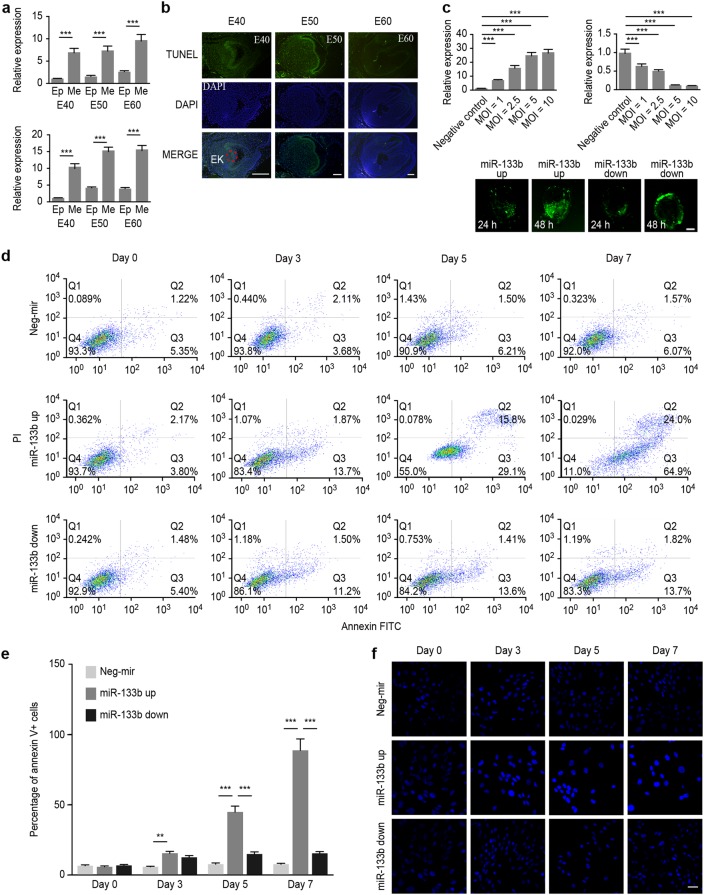
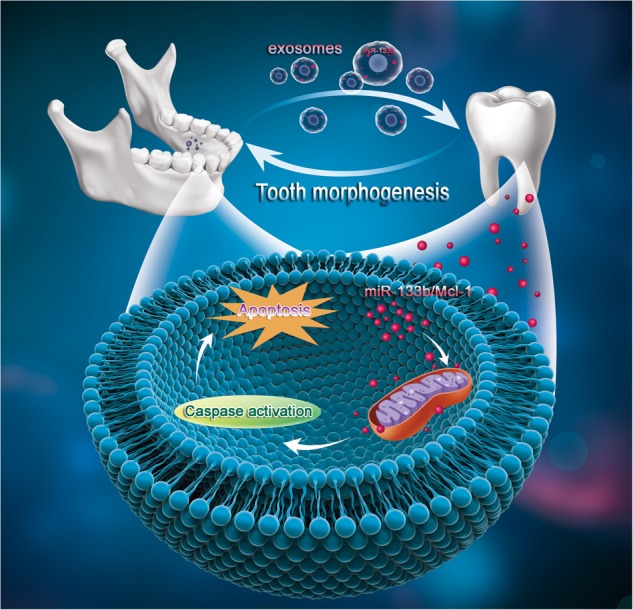
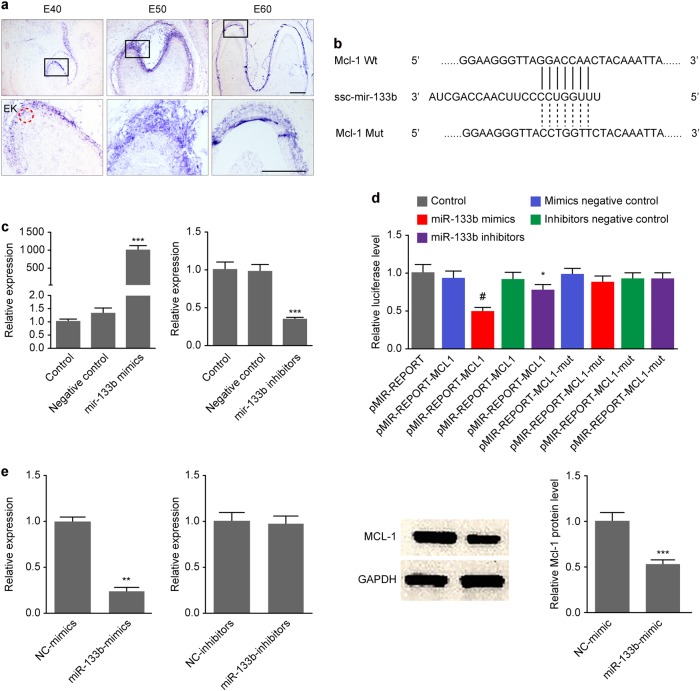
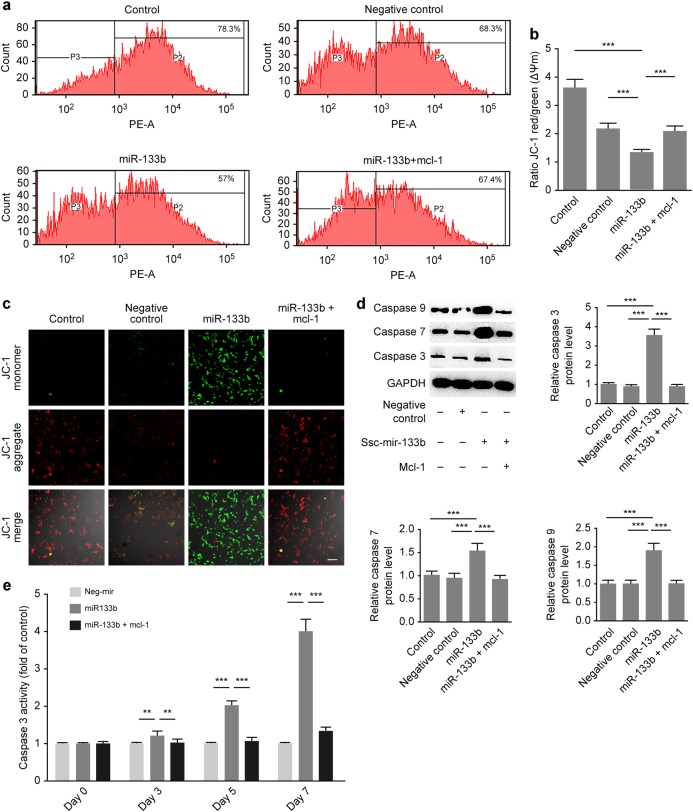
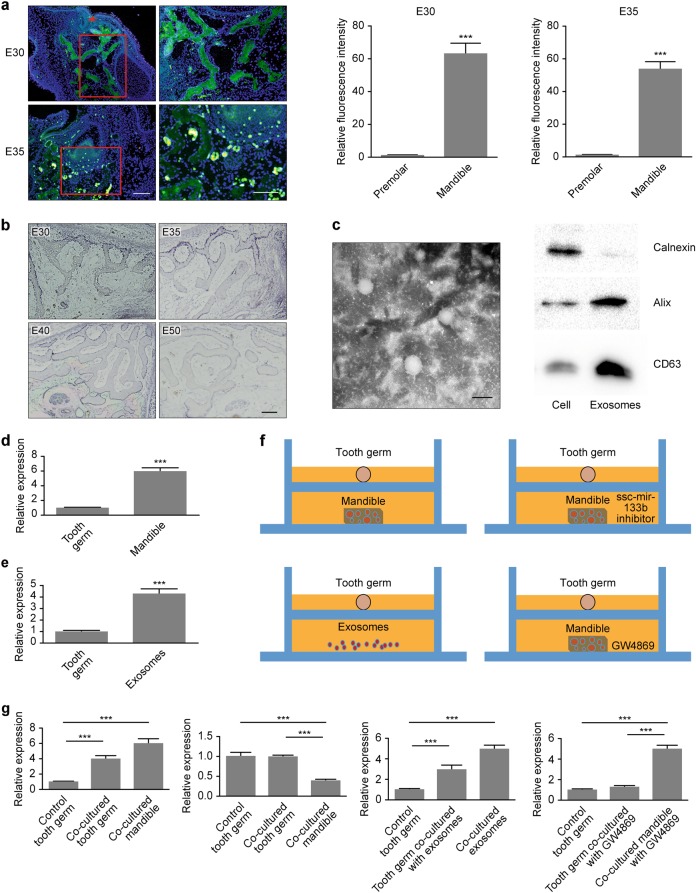
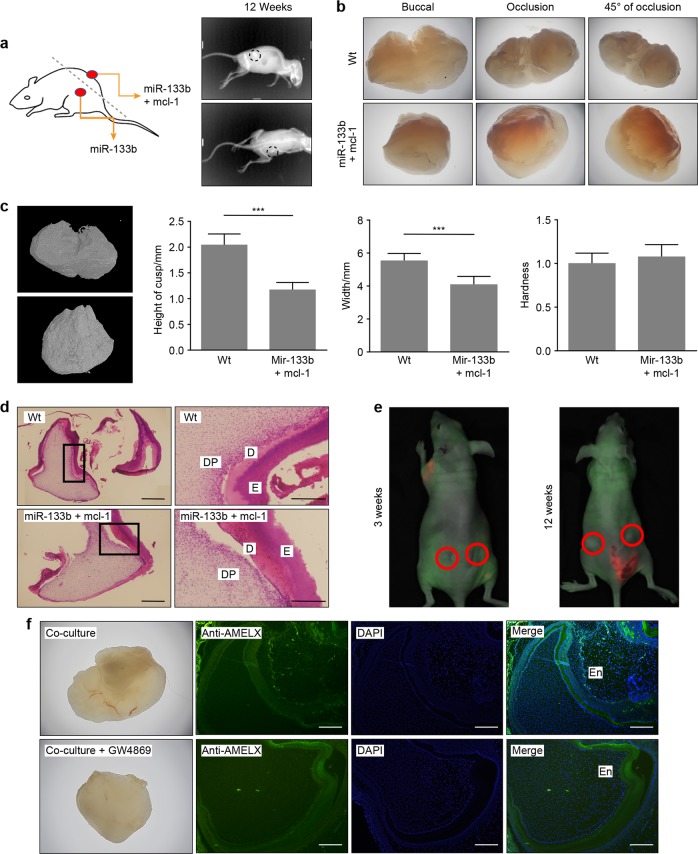
Signal transduction between different organs is crucial in the normal development of the human body. As an important medium for signal communication, exosomes can transfer important information, such as microRNAs (miRNAs), from donors to receptors. MiRNAs are known to fine-tune a variety of biological processes, including maxillofacial development; however, the underlying mechanism remains largely unknown. In the present study, transient apoptosis was found to be due to the expression of a miniature swine maxillofacial-specific miRNA, ssc-mir-133b. Upregulation of ssc-mir-133b resulted in robust apoptosis in primary dental mesenchymal cells in the maxillofacial region. Cell leukemia myeloid 1 (Mcl-1) was verified as the functional target, which triggered further downstream activation of endogenous mitochondria-related apoptotic processes during tooth development. More importantly, mandible exosomes were responsible for the initial apoptosis signal. An animal study demonstrated that ectopic expression of ssc-mir-133b resulted in failed tooth formation after 12 weeks of subcutaneous transplantation in nude mice. The tooth germ developed abnormally without the indispensable exosomal signals from the mandible.
不同器官之间的信号转导对人体的正常发育至关重要。作为信号通讯的重要介质,外泌体可以将重要信息(如微小RNA,即miRNA)从供体传递至受体。已知miRNA可微调包括颌面发育在内的多种生物学过程;然而,其潜在机制仍 largely未知。在本研究中,发现短暂性凋亡是由小型猪颌面特异性miRNA,即ssc-mir-133b的表达所致。ssc-mir-133b的上调导致颌面区域原代牙间充质细胞中出现强烈凋亡。细胞白血病髓样1(Mcl-1)被证实为功能靶点,其在牙齿发育过程中触发了内源性线粒体相关凋亡过程的进一步下游激活。更重要的是,下颌外泌体是初始凋亡信号的来源。一项动物研究表明,在裸鼠皮下移植12周后,ssc-mir-133b的异位表达导致牙齿形成失败。牙胚发育异常,缺乏来自下颌的不可或缺的外泌体信号。