Chen Xinhua, Pei Zhe, Peng Hao, Zheng Zhihong
Department of Medical Oncology, Fujian Cancer Hospital & Fujian Medical University Cancer Hospital, Fuzhou, Fujian, China Duke University Medical School, Durham, NC Guangxi Key Laboratory of Veterinary Biotechnology, Guangxi, China Department of Hematology, Fujian Provincial Key Laboratory of Hematology, Fujian Medical University Union Hospital, Fuzhou, Fujian, China.
Medicine (Baltimore). 2018 Sep;97(37):e12032. doi: 10.1097/MD.0000000000012032.
Bone metastases are common in advanced breast cancer patients and frequently leading to skeletal-related morbidity and deterioration in the quality of life. Although chemotherapy and hormone therapy are able to control the symptoms caused by bone destruction, the underlying molecular mechanisms for the affinity of breast cancer cells towards skeletal bones are still not completely understood.
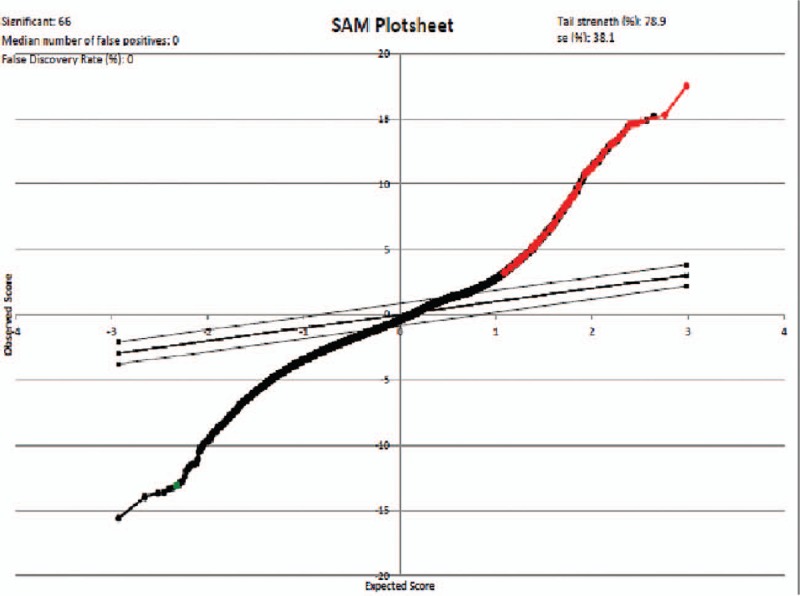
In this study, bioinformatic analysis was performed on patients' microarray gene expression data to explore the molecular mechanism associated with breast cancer bone metastasis. Microarray gene expression profile regarding patients with breast cancer and disseminated tumor cells was downloaded from Gene Expression Omnibus (GEO) database (NCBI, NIH). Raw data were normalized and differently expressed genes were identified by using Significance Analysis of Microarrays (SAM) methods. Protein interaction networks were expanded using String. Moreover, molecular functions, biological processes and signaling pathway enrichment analysis were performed using Gene Ontology (GO) and Kyoto Encyclopedia of Genes and Genomes (KEGG).
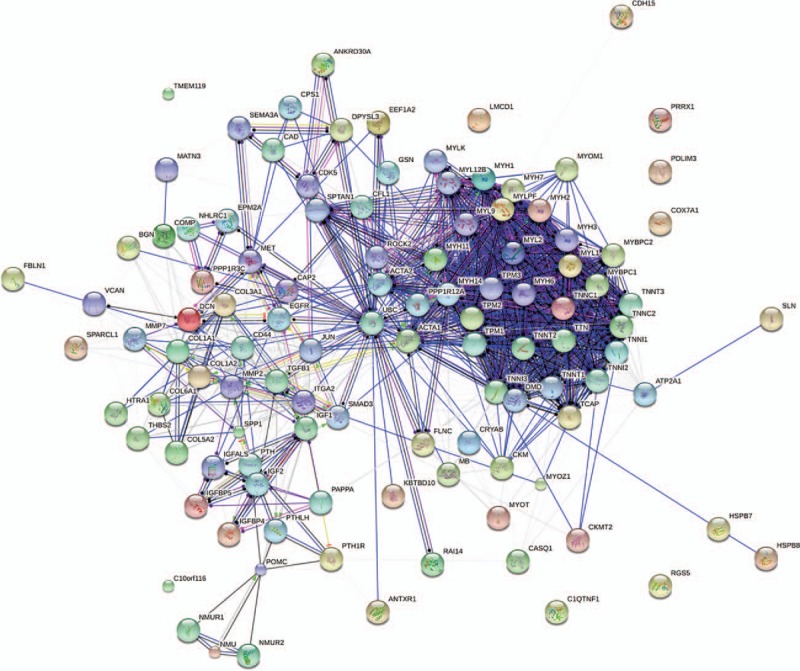
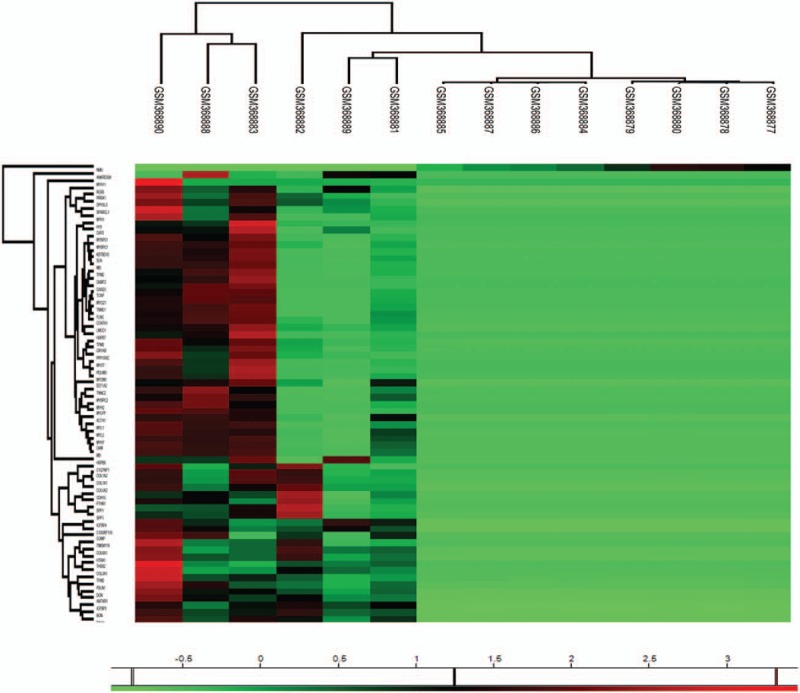
We identified 66 differentially expressed genes. After submitting the set of genes to String, genetic interaction network was expanded, which consisted of 110 nodes and 869 edges. Pathway enrichment analysis suggested that adhesion kinase, ECM-receptor interaction, calcium signaling, Wnt pathways, and PI3K/AKT signaling pathway are highly associated with breast cancer bone metastasis.
In this study, we established a microarray genetic interaction network associated with breast cancer bone metastasis. This information provides some potential molecular therapeutic targets for breast cancer initiation and progression.
骨转移在晚期乳腺癌患者中很常见,常导致骨骼相关的发病率和生活质量下降。尽管化疗和激素疗法能够控制骨破坏引起的症状,但乳腺癌细胞对骨骼亲和力的潜在分子机制仍未完全了解。
在本研究中,对患者的微阵列基因表达数据进行生物信息学分析,以探索与乳腺癌骨转移相关的分子机制。从基因表达综合数据库(GEO,美国国立医学图书馆,美国国立卫生研究院)下载有关乳腺癌和播散肿瘤细胞患者的微阵列基因表达谱。使用微阵列显著性分析(SAM)方法对原始数据进行标准化并鉴定差异表达基因。使用String扩展蛋白质相互作用网络。此外,使用基因本体论(GO)和京都基因与基因组百科全书(KEGG)进行分子功能、生物学过程和信号通路富集分析。
我们鉴定出66个差异表达基因。将该基因集提交给String后,扩展了遗传相互作用网络,该网络由110个节点和869条边组成。通路富集分析表明,黏附激酶、细胞外基质受体相互作用、钙信号、Wnt通路和PI3K/AKT信号通路与乳腺癌骨转移高度相关。
在本研究中,我们建立了一个与乳腺癌骨转移相关的微阵列遗传相互作用网络。该信息为乳腺癌的发生和发展提供了一些潜在的分子治疗靶点。