• 文献检索
  • 文档翻译
  • 深度研究
  • 学术资讯
  • Suppr Zotero 插件Zotero 插件
  • 邀请有礼
  • 套餐&价格
  • 历史记录
应用&插件
Suppr Zotero 插件Zotero 插件浏览器插件Mac 客户端Windows 客户端微信小程序
定价
高级版会员购买积分包购买API积分包
服务
文献检索文档翻译深度研究API 文档MCP 服务
关于我们
关于 Suppr公司介绍联系我们用户协议隐私条款
关注我们

Suppr 超能文献

核心技术专利:CN118964589B侵权必究
粤ICP备2023148730 号-1Suppr @ 2026

文献检索

告别复杂PubMed语法,用中文像聊天一样搜索,搜遍4000万医学文献。AI智能推荐,让科研检索更轻松。

立即免费搜索

文件翻译

保留排版,准确专业,支持PDF/Word/PPT等文件格式,支持 12+语言互译。

免费翻译文档

深度研究

AI帮你快速写综述,25分钟生成高质量综述,智能提取关键信息,辅助科研写作。

立即免费体验

早全新世人类在马达加斯加的存在证据来自于对鸟类巨型动物群的开发利用。

Early Holocene human presence in Madagascar evidenced by exploitation of avian megafauna.

机构信息

Institute of Zoology, Zoological Society of London, Regent's Park, London NW1 4RY, UK.

Ocean and Earth Science, National Oceanography Centre Southampton, University of Southampton, Waterfront Campus, European Way, Southampton SO14 3ZH, UK.

出版信息

Sci Adv. 2018 Sep 12;4(9):eaat6925. doi: 10.1126/sciadv.aat6925. eCollection 2018 Sep.

DOI:10.1126/sciadv.aat6925
PMID:30214938
原文链接:https://pmc.ncbi.nlm.nih.gov/articles/PMC6135541/
Abstract

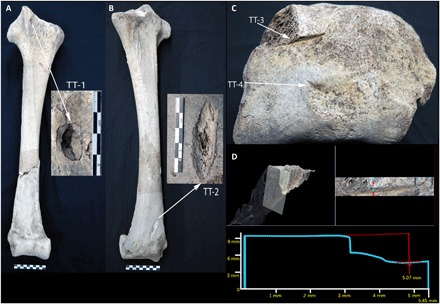
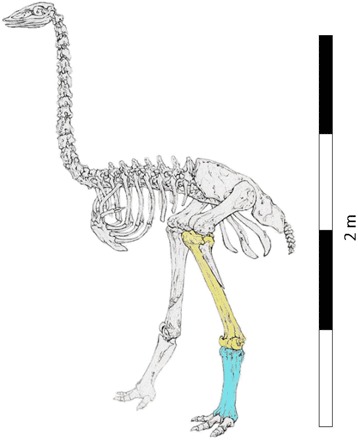
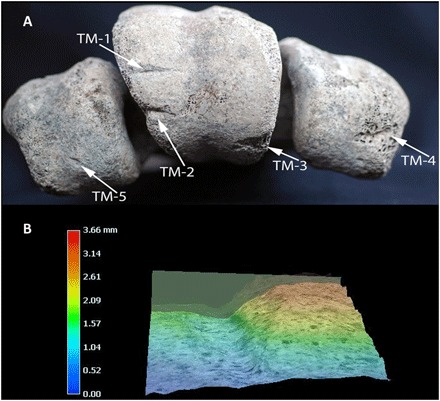
Previous research suggests that people first arrived on Madagascar by ~2500 years before present (years B.P.). This hypothesis is consistent with butchery marks on extinct lemur bones from ~2400 years B.P. and perhaps with archaeological evidence of human presence from ~4000 years B.P. We report >10,500-year-old human-modified bones for the extinct elephant birds and , which show perimortem chop marks, cut marks, and depression fractures consistent with immobilization and dismemberment. Our evidence for anthropogenic perimortem modification of directly dated bones represents the earliest indication of humans in Madagascar, predating all other archaeological and genetic evidence by >6000 years and changing our understanding of the history of human colonization of Madagascar. This revision of Madagascar's prehistory suggests prolonged human-faunal coexistence with limited biodiversity loss.

摘要

先前的研究表明,人类大约在 2500 年前(公元前)首次抵达马达加斯加。这一假说与来自公元前 2400 年的灭绝狐猴骨骼上的屠宰痕迹一致,也许与公元前 4000 年左右的人类存在的考古证据一致。我们报告了 >10500 年前人类对已灭绝的象鸟和 进行了修饰的骨骼,这些骨骼显示出濒死期的砍痕、切割痕迹和凹陷性骨折,与固定和肢解一致。我们有证据表明,直接定年的骨骼经历了人为的濒死期修饰,这代表了人类在马达加斯加最早的存在迹象,比其他所有考古学和遗传学证据早了 >6000 年,改变了我们对人类殖民马达加斯加历史的理解。马达加斯加史前史的这一修订表明,人类与有限的生物多样性丧失的动物群长期共存。
https://cdn.ncbi.nlm.nih.gov/pmc/blobs/e707/6135541/1f28773ccfbf/aat6925-F4.jpg
https://cdn.ncbi.nlm.nih.gov/pmc/blobs/e707/6135541/6a1590457b4e/aat6925-F1.jpg
https://cdn.ncbi.nlm.nih.gov/pmc/blobs/e707/6135541/923b7231c93d/aat6925-F2.jpg
https://cdn.ncbi.nlm.nih.gov/pmc/blobs/e707/6135541/9682a78b9057/aat6925-F3.jpg
https://cdn.ncbi.nlm.nih.gov/pmc/blobs/e707/6135541/1f28773ccfbf/aat6925-F4.jpg
https://cdn.ncbi.nlm.nih.gov/pmc/blobs/e707/6135541/6a1590457b4e/aat6925-F1.jpg
https://cdn.ncbi.nlm.nih.gov/pmc/blobs/e707/6135541/923b7231c93d/aat6925-F2.jpg
https://cdn.ncbi.nlm.nih.gov/pmc/blobs/e707/6135541/9682a78b9057/aat6925-F3.jpg
https://cdn.ncbi.nlm.nih.gov/pmc/blobs/e707/6135541/1f28773ccfbf/aat6925-F4.jpg

相似文献

1
Early Holocene human presence in Madagascar evidenced by exploitation of avian megafauna.早全新世人类在马达加斯加的存在证据来自于对鸟类巨型动物群的开发利用。
Sci Adv. 2018 Sep 12;4(9):eaat6925. doi: 10.1126/sciadv.aat6925. eCollection 2018 Sep.
2
Evidence of early butchery of giant lemurs in Madagascar.马达加斯加早期对巨狐猴进行屠宰的证据。
J Hum Evol. 2005 Dec;49(6):722-42. doi: 10.1016/j.jhevol.2005.08.004. Epub 2005 Oct 12.
3
A chronology for late prehistoric Madagascar.马达加斯加史前晚期年表。
J Hum Evol. 2004 Jul-Aug;47(1-2):25-63. doi: 10.1016/j.jhevol.2004.05.005.
4
Molecular exploration of fossil eggshell uncovers hidden lineage of giant extinct bird.对化石蛋壳的分子探索揭示了巨型灭绝鸟类的隐藏谱系。
Nat Commun. 2023 Feb 28;14(1):914. doi: 10.1038/s41467-023-36405-3.
5
New evidence of megafaunal bone damage indicates late colonization of Madagascar.新的巨型动物骨骼损伤证据表明马达加斯加的晚期殖民化。
PLoS One. 2018 Oct 10;13(10):e0204368. doi: 10.1371/journal.pone.0204368. eCollection 2018.
6
A new interpretation of Madagascar's megafaunal decline: The "Subsistence Shift Hypothesis".马达加斯加巨型动物群衰落的新解释:“生存方式转变假说”。
J Hum Evol. 2019 May;130:126-140. doi: 10.1016/j.jhevol.2019.03.002. Epub 2019 Mar 29.
7
Dietary isotopes of Madagascar's extinct megafauna reveal holocene browsing and grazing guilds.马达加斯加已灭绝巨型动物的饮食同位素揭示了全新世的啃食和放牧群体。
Biol Lett. 2022 Apr;18(4):20220094. doi: 10.1098/rsbl.2022.0094. Epub 2022 Apr 13.
8
Bird fossils from Ankilitelo Cave: inference about Holocene environmental changes in southwestern Madagascar.来自安基利特洛洞穴的鸟类化石:关于马达加斯加西南部全新世环境变化的推断
Zootaxa. 2013 Dec 23;3750:534-48. doi: 10.11646/zootaxa.3750.5.6.
9
Paleoenvironment of Ankilitelo Cave (late Holocene, southwestern Madagascar): implications for the extinction of giant lemurs.安克利泰洛洞古环境(全新世晚期,马达加斯加西南部):对巨型狐猴灭绝的启示。
J Hum Evol. 2010 Apr;58(4):338-52. doi: 10.1016/j.jhevol.2010.01.005. Epub 2010 Mar 11.
10
Comparative and population mitogenomic analyses of Madagascar's extinct, giant 'subfossil' lemurs.马达加斯加已灭绝的巨型“亚化石”狐猴的比较和群体线粒体基因组分析。
J Hum Evol. 2015 Feb;79:45-54. doi: 10.1016/j.jhevol.2014.06.016. Epub 2014 Dec 16.

引用本文的文献

1
Traditional land use is integral to ecological function in SW Madagascar.传统土地利用对马达加斯加西南部的生态功能至关重要。
Sci Rep. 2025 Aug 25;15(1):31160. doi: 10.1038/s41598-025-16992-5.
2
Patterns of late Holocene and historical extinctions on Madagascar.马达加斯加晚全新世及历史时期的灭绝模式。
Camb Prism Extinct. 2025 May 5;3:e9. doi: 10.1017/ext.2024.19. eCollection 2025.
3
A dataset of scientific dates from archaeological sites in eastern Africa spanning 5000 BCE to 1800 CE.一个涵盖公元前5000年至公元1800年东非考古遗址科学年代的数据集。

本文引用的文献

1
Genomic landscape of human diversity across Madagascar.人类多样性的基因组景观跨越马达加斯加。
Proc Natl Acad Sci U S A. 2017 Aug 8;114(32):E6498-E6506. doi: 10.1073/pnas.1704906114. Epub 2017 Jul 17.
2
Eggshell palaeogenomics: Palaeognath evolutionary history revealed through ancient nuclear and mitochondrial DNA from Madagascan elephant bird (Aepyornis sp.) eggshell.蛋壳古基因组学:通过马达加斯加象鸟(Aepyornis sp.)蛋壳中的古代核DNA和线粒体DNA揭示古颚类进化史。
Mol Phylogenet Evol. 2017 Apr;109:151-163. doi: 10.1016/j.ympev.2017.01.005. Epub 2017 Jan 9.
3
Phylogenomics and Morphology of Extinct Paleognaths Reveal the Origin and Evolution of the Ratites.
Sci Data. 2025 May 16;12(1):801. doi: 10.1038/s41597-025-05138-x.
4
Montane rainforest dynamics under changes in climate and human impact during the past millennia in northern Madagascar.马达加斯加北部过去几千年气候变化和人类影响下的山地雨林动态。
R Soc Open Sci. 2024 Aug 21;11(8):230930. doi: 10.1098/rsos.230930. eCollection 2024 Aug.
5
Gullying and landscape evolution: Lavaka in Lac Alaotra, Madagascar shed light on rates of change and non-anthropogenic controls.冲沟与地貌演化:马达加斯加阿劳特拉湖的拉瓦卡揭示了变化速率和非人为控制因素。
Sci Adv. 2024 May 10;10(19):eadi0316. doi: 10.1126/sciadv.adi0316.
6
African bushpigs exhibit porous species boundaries and appeared in Madagascar concurrently with human arrival.非洲疣猪的物种界限较为模糊,并且在人类抵达马达加斯加的同时出现在那里。
Nat Commun. 2024 Jan 3;15(1):172. doi: 10.1038/s41467-023-44105-1.
7
3D atlas of tinamou (Neornithes: Tinamidae) pectoral morphology: Implications for reconstructing the ancestral neornithine flight apparatus.平胸总目(新鸟亚纲:䳍科)胸肌形态的 3D 图谱:对重建祖先新鸟翅膀形态的启示。
J Anat. 2023 Nov;243(5):729-757. doi: 10.1111/joa.13919. Epub 2023 Jun 26.
8
The macroevolutionary impact of recent and imminent mammal extinctions on Madagascar.近期和即将发生的哺乳动物灭绝对马达加斯加的宏观进化影响。
Nat Commun. 2023 Jan 10;14(1):14. doi: 10.1038/s41467-022-35215-3.
9
Cutmarked bone of drought-tolerant extinct megafauna deposited with traces of fire, human foraging, and introduced animals in SW Madagascar.在马达加斯加西南部发现了耐旱灭绝巨型动物的切割骨,这些骨头与火、人类觅食和引入的动物有关。
Sci Rep. 2022 Nov 22;12(1):18504. doi: 10.1038/s41598-022-22980-w.
10
Global importance of Indigenous Peoples, their lands, and knowledge systems for saving the world's primates from extinction.原住民及其土地和知识体系对于拯救世界灵长类动物免于灭绝的全球重要性。
Sci Adv. 2022 Aug 12;8(32):eabn2927. doi: 10.1126/sciadv.abn2927. Epub 2022 Aug 10.
灭绝古颚总目鸟类的系统基因组学与形态学揭示了平胸总目鸟类的起源与演化。
Curr Biol. 2017 Jan 9;27(1):68-77. doi: 10.1016/j.cub.2016.10.029. Epub 2016 Dec 15.
4
Malagasy Genetic Ancestry Comes from an Historical Malay Trading Post in Southeast Borneo.马达加斯加人的基因祖先来自婆罗洲东南部一个历史悠久的马来贸易站。
Mol Biol Evol. 2016 Sep;33(9):2396-400. doi: 10.1093/molbev/msw117. Epub 2016 Jul 5.
5
Ancient crops provide first archaeological signature of the westward Austronesian expansion.古代作物为南岛语族向西扩张提供了首个考古学证据。
Proc Natl Acad Sci U S A. 2016 Jun 14;113(24):6635-40. doi: 10.1073/pnas.1522714113. Epub 2016 May 31.
6
Paleoanthropology. Early human presence in the Arctic: Evidence from 45,000-year-old mammoth remains.古人类学。北极地区早期人类的存在:来自 45000 年前猛犸象遗骸的证据。
Science. 2016 Jan 15;351(6270):260-3. doi: 10.1126/science.aad0554.
7
Madagascar's grasses and grasslands: anthropogenic or natural?马达加斯加的草本植物和草原:人为因素还是自然因素?
Proc Biol Sci. 2016 Jan 27;283(1823). doi: 10.1098/rspb.2015.2262.
8
Mitochondrial DNA and the Y chromosome suggest the settlement of Madagascar by Indonesian sea nomad populations.线粒体DNA和Y染色体表明,印度尼西亚海洋游牧民族曾在马达加斯加定居。
BMC Genomics. 2015 Mar 17;16(1):191. doi: 10.1186/s12864-015-1394-7.
9
Ancient DNA reveals elephant birds and kiwi are sister taxa and clarifies ratite bird evolution.古 DNA 揭示象鸟和几维鸟是姐妹分类单元,并阐明了平胸鸟类的进化。
Science. 2014 May 23;344(6186):898-900. doi: 10.1126/science.1251981.
10
Stone tools and foraging in northern Madagascar challenge Holocene extinction models.马达加斯加北部的石器和觅食行为对全新世灭绝模型提出了挑战。
Proc Natl Acad Sci U S A. 2013 Jul 30;110(31):12583-8. doi: 10.1073/pnas.1306100110. Epub 2013 Jul 15.