Department of Cell, Developmental and Cancer Biology, Oregon Health & Science University, Portland, OR 97239, USA.
Department of Surgery, Oregon Health & Science University, Portland, OR 97239, USA.
Sci Adv. 2018 Sep 12;4(9):eaat7828. doi: 10.1126/sciadv.aat7828. eCollection 2018 Sep.
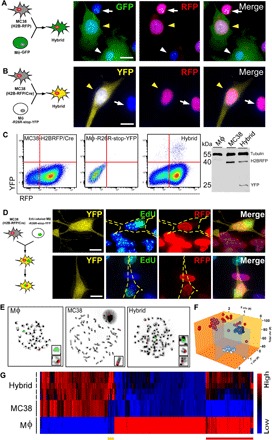
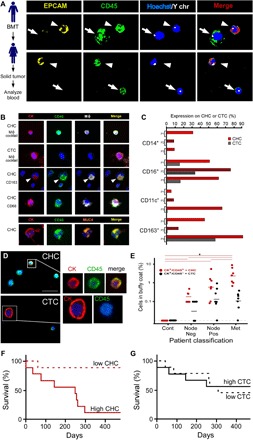
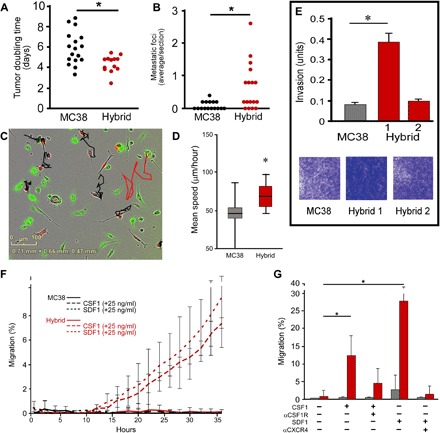
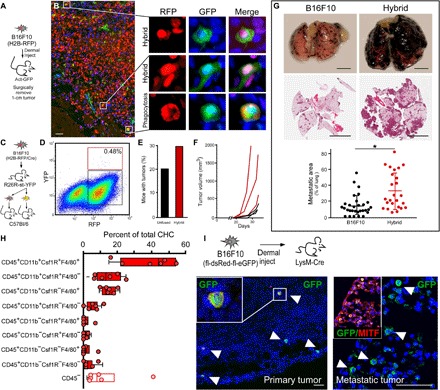
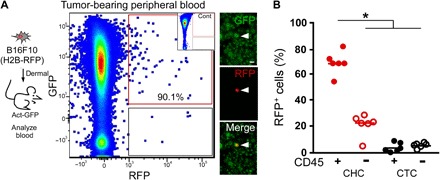
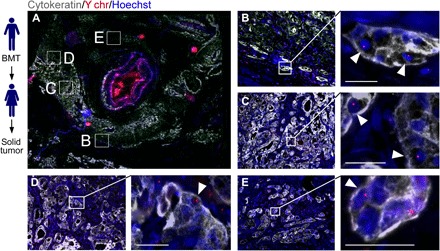
High lethality rates associated with metastatic cancer highlight an urgent medical need for improved understanding of biologic mechanisms driving metastatic spread and identification of biomarkers predicting late-stage progression. Numerous neoplastic cell intrinsic and extrinsic mechanisms fuel tumor progression; however, mechanisms driving heterogeneity of neoplastic cells in solid tumors remain obscure. Increased mutational rates of neoplastic cells in stressed environments are implicated but cannot explain all aspects of tumor heterogeneity. We present evidence that fusion of neoplastic cells with leukocytes (for example, macrophages) contributes to tumor heterogeneity, resulting in cells exhibiting increased metastatic behavior. Fusion hybrids (cells harboring hematopoietic and epithelial properties) are readily detectible in cell culture and tumor-bearing mice. Further, hybrids enumerated in peripheral blood of human cancer patients correlate with disease stage and predict overall survival. This unique population of neoplastic cells provides a novel biomarker for tumor staging, as well as a potential therapeutic target for intervention.
转移性癌症的高致死率突显了医学领域的一个迫切需求,即需要更好地理解驱动转移性扩散的生物学机制,并确定预测晚期进展的生物标志物。许多肿瘤细胞内在和外在的机制推动了肿瘤的进展;然而,驱动实体瘤中肿瘤细胞异质性的机制仍不清楚。在应激环境中,肿瘤细胞的突变率增加被认为是导致这种情况的原因之一,但不能解释肿瘤异质性的所有方面。我们提出证据表明,肿瘤细胞与白细胞(例如巨噬细胞)融合有助于肿瘤异质性的形成,导致具有更高转移行为的细胞出现。融合杂种(同时具有造血和上皮特性的细胞)在细胞培养和荷瘤小鼠中很容易被检测到。此外,在人类癌症患者的外周血中计数的杂种与疾病阶段相关,并预测总体生存率。这种新型的肿瘤细胞为肿瘤分期提供了一个独特的生物标志物,也为干预治疗提供了一个潜在的靶点。