Department of Biology, University of Iowa, Iowa City, IA, 52242, USA.
Sci Rep. 2018 Sep 14;8(1):13819. doi: 10.1038/s41598-018-31952-y.
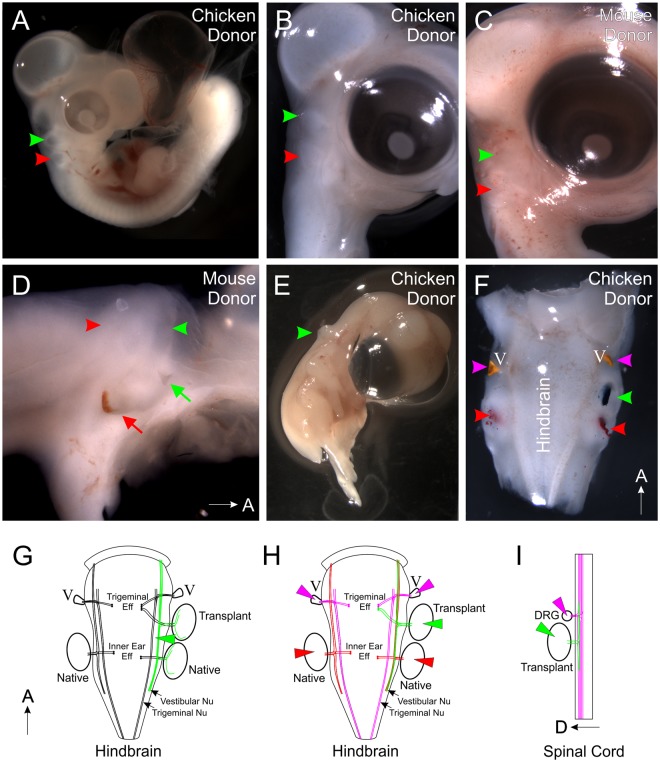
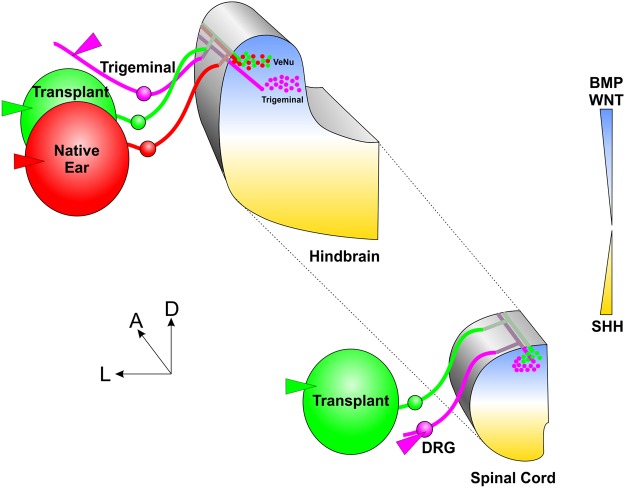
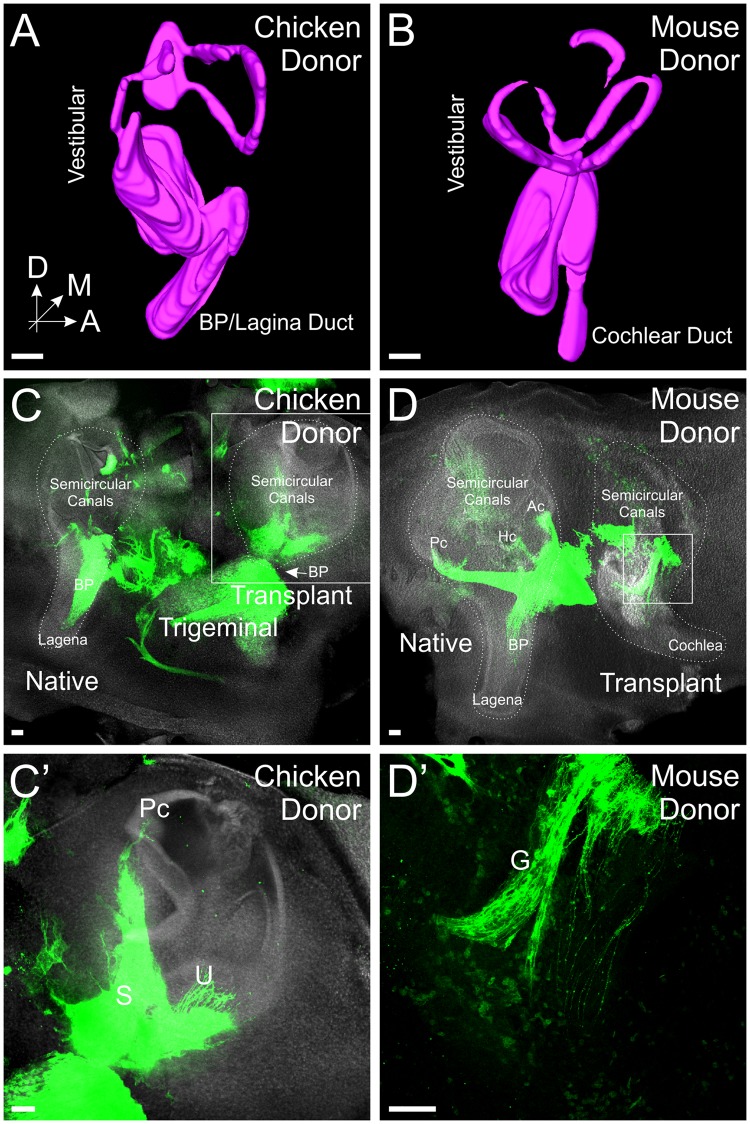
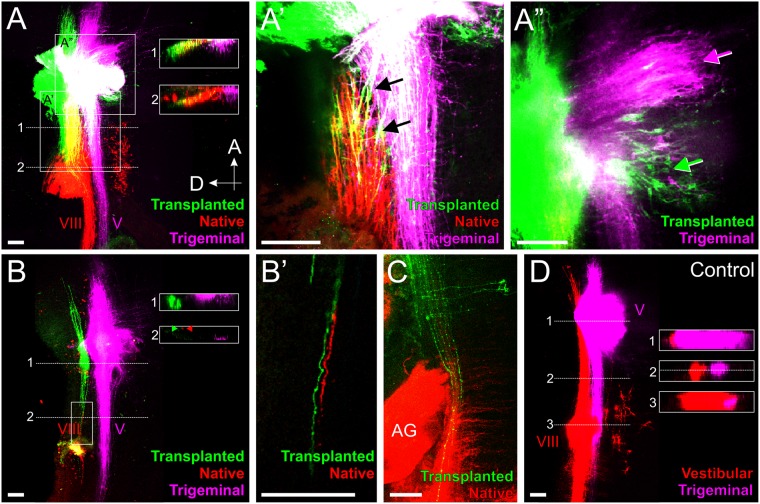
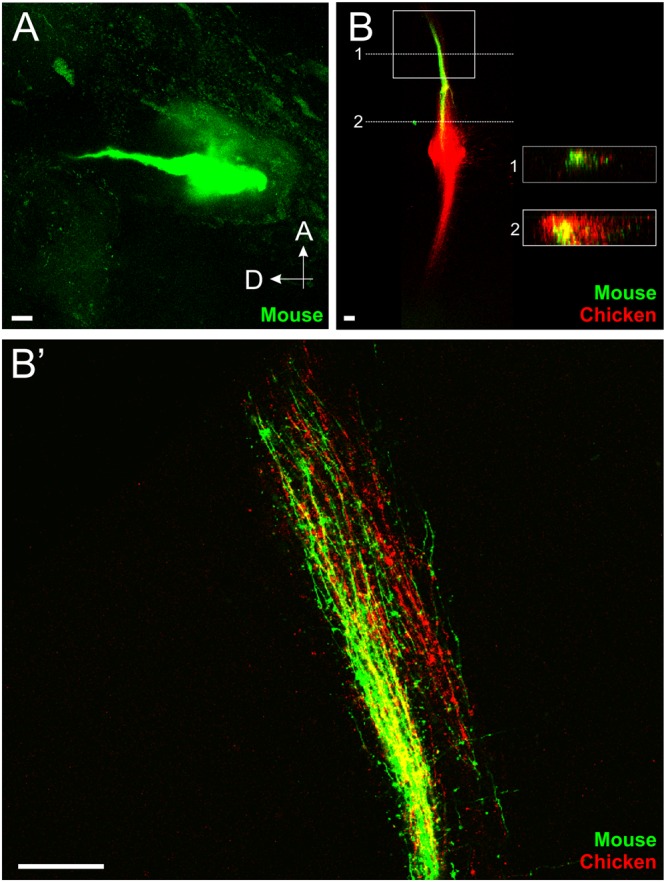
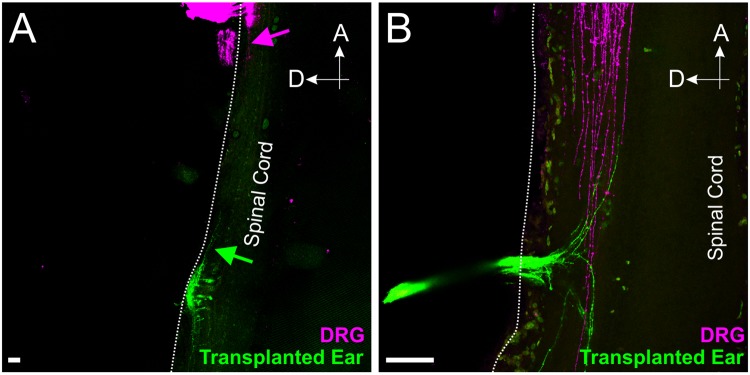
Vertebrate inner ear neurons project into the correct brainstem nuclei region before target neurons become postmitotic, or even in their absence. Moreover, afferents from transplanted ears in frogs have been shown to navigate to vestibular nuclei, suggesting that ear afferents use molecular cues to find their target. We performed heterochronic, xenoplastic, and heterotopic transplantations in chickens to investigate whether inner ear afferents are guided by conserved guidance molecules. We show that inner ear afferents can navigate to the vestibular nuclei following a delay in afferent entry and when the ear was from a different species, the mouse. These data suggest that guidance molecules are expressed for some time and are conserved across amniotes. In addition, we show that chicken ears transplanted adjacent to the spinal cord project dorsally like in the hindbrain. These results suggest that inner ear afferents navigate to the correct dorsoventral brainstem column using conserved cues.
脊椎动物内耳神经元在靶神经元进入有丝分裂后甚至在其缺失之前就投射到正确的脑干核区。此外,已经证明青蛙移植耳朵的传入神经会向前庭核导航,这表明耳传入神经使用分子线索来寻找其靶标。我们在鸡中进行了异时性、异种和异位移植,以研究内耳传入神经是否受保守导向分子的指导。我们发现,在内耳传入神经进入延迟和耳朵来自不同物种(即小鼠)的情况下,内耳传入神经可以向前庭核导航。这些数据表明,导向分子在一段时间内表达并在羊膜动物中保守。此外,我们还发现,移植到脊髓旁边的鸡耳朵像在后脑一样向背部投射。这些结果表明,内耳传入神经使用保守线索导航到正确的背腹脑干柱。