Department of Endocrinology, Austin Health, Melbourne, Victoria, Australia.
The Florey Institute of Neuroscience and Mental Health, University of Melbourne, Melbourne, Victoria, Australia.
J Diabetes Investig. 2019 May;10(3):780-792. doi: 10.1111/jdi.12932. Epub 2018 Oct 13.
AIMS/INTRODUCTION: Diabetes mellitus is an established risk factor for stroke and maybe associated with poorer outcomes after stroke. The aims of the present literature review were to determine: (i) the prevalence of diabetes in acute stroke patients through a meta-analysis; (ii) the association between diabetes and outcomes after ischemic and hemorrhagic stroke; and (iii) to review the value of glycated hemoglobin and admission glucose-based tests in predicting stroke outcomes.
Ovid MEDLINE and EMBASE searches were carried out to find studies relating to diabetes and inpatient stroke populations published between January 2004 and April 2017. A meta-analysis of the prevalence of diabetes from included studies was undertaken. A narrative review on the associations of diabetes and different diagnostic methods on stroke outcomes was carried out.
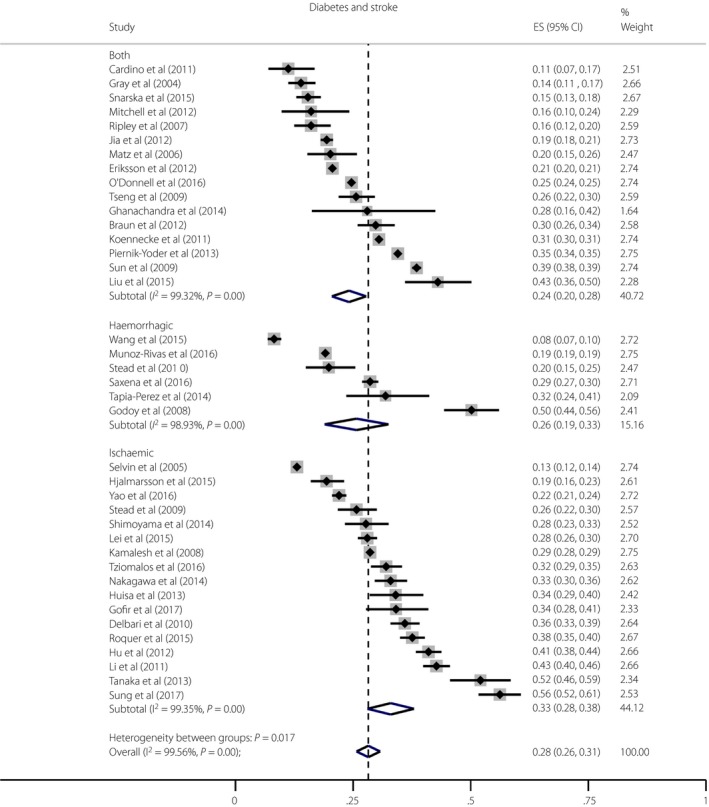
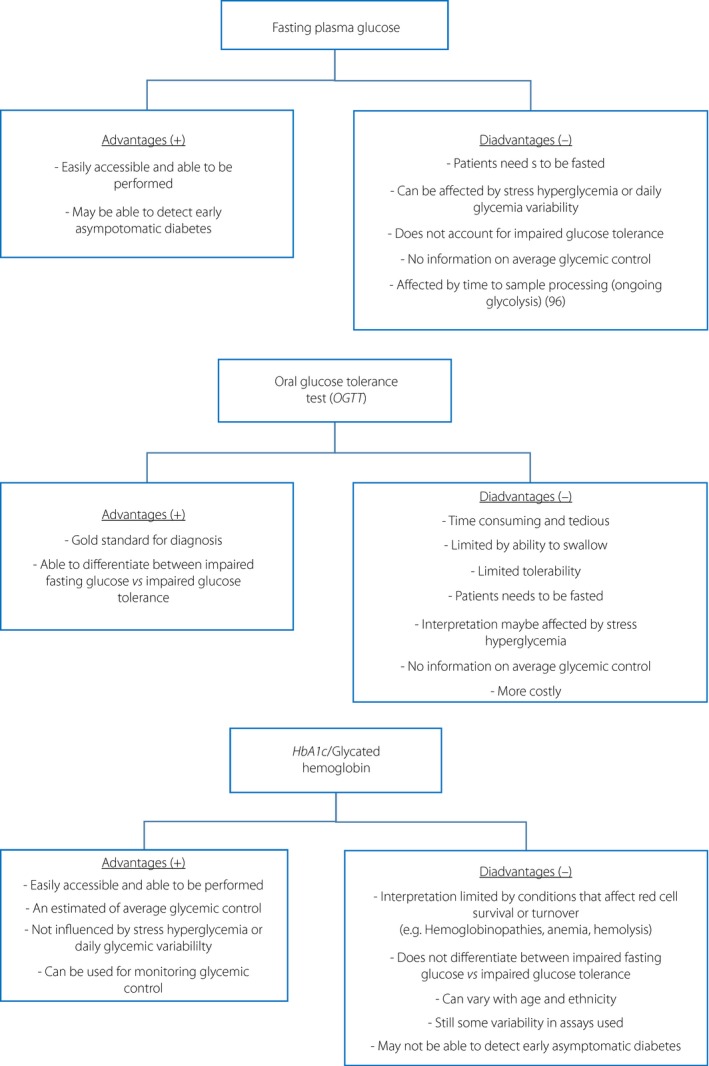
A total of 66 eligible articles met inclusion criteria. A meta-analysis of 39 studies (n = 359,783) estimated the prevalence of diabetes to be 28% (95% confidence interval 26-31). The rate was higher in ischemic (33%, 95% confidence interval 28-38) compared with hemorrhagic stroke (26%, 95% confidence interval 19-33) inpatients. Most, but not all, studies found that acute hyperglycemia and diabetes were associated with poorer outcomes after ischemic or hemorrhagic strokes: including higher mortality, poorer neurological and functional outcomes, longer hospital stay, higher readmission rates, and stroke recurrence. Diagnostic methods for establishing diagnosis were heterogeneous between the reviewed studies.
Approximately one-third of all stroke patients have diabetes. Uniform methods to screen for diabetes after stroke are required to identify individuals with diabetes to design interventions aimed at reducing poor outcomes in this high-risk population.
目的/引言:糖尿病是中风的既定危险因素,并且可能与中风后的不良预后有关。本文献综述的目的是确定:(i) 通过荟萃分析确定急性中风患者中糖尿病的患病率;(ii) 糖尿病与缺血性和出血性中风后结局之间的关系;以及 (iii) 回顾糖化血红蛋白和入院时血糖检测在预测中风结局中的价值。
对 Ovid MEDLINE 和 EMBASE 进行检索,以查找 2004 年 1 月至 2017 年 4 月期间发表的与糖尿病和住院中风人群相关的研究。对纳入研究中糖尿病患病率进行荟萃分析。对糖尿病和不同诊断方法对中风结局的相关性进行了叙述性综述。
共有 66 篇符合纳入标准的文章。对 39 项研究(n=359783)的荟萃分析估计糖尿病的患病率为 28%(95%置信区间 26-31)。与出血性中风(26%,95%置信区间 19-33)相比,缺血性中风(33%,95%置信区间 28-38)患者的发生率更高。大多数(但并非全部)研究发现急性高血糖和糖尿病与缺血性或出血性中风后的不良结局相关:包括更高的死亡率、更差的神经和功能结局、更长的住院时间、更高的再入院率和中风复发率。用于确定诊断的诊断方法在综述研究之间存在差异。
大约三分之一的中风患者患有糖尿病。需要采用统一的方法来筛选中风后的糖尿病,以识别患有糖尿病的个体,从而为这一高危人群设计旨在降低不良结局的干预措施。