Abbati de Assis Camilla, Greca Luiz G, Ago Mariko, Balakshin Mikhail Yu, Jameel Hasan, Gonzalez Ronalds, Rojas Orlando J
Department of Forest Biomaterials, North Carolina State University, 2820 Faucette Drive, Raleigh, North Carolina 27606, United States.
Department of Bioproducts and Biosystems, School of Chemical Engineering, Aalto University, Vuorimiehentie 1, Espoo 02150, Finland.
ACS Sustain Chem Eng. 2018 Sep 4;6(9):11853-11868. doi: 10.1021/acssuschemeng.8b02151. Epub 2018 Jul 13.
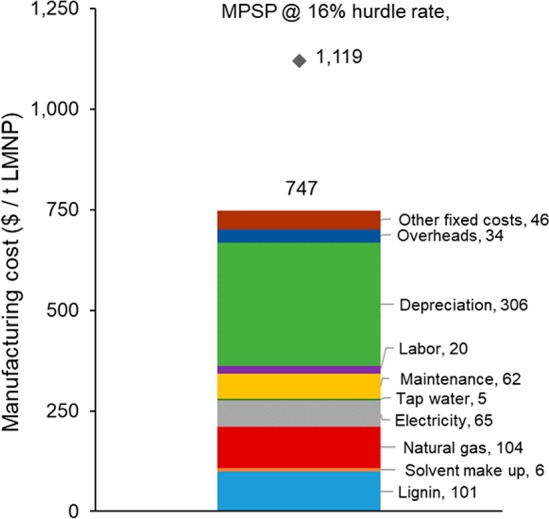
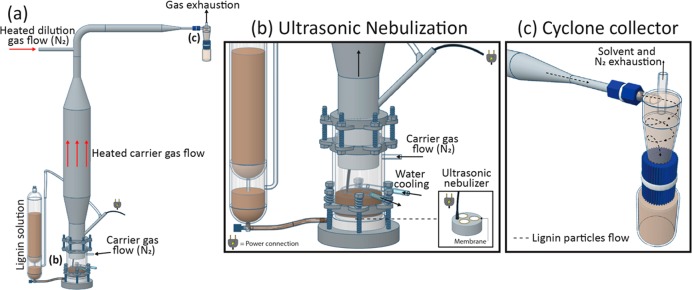
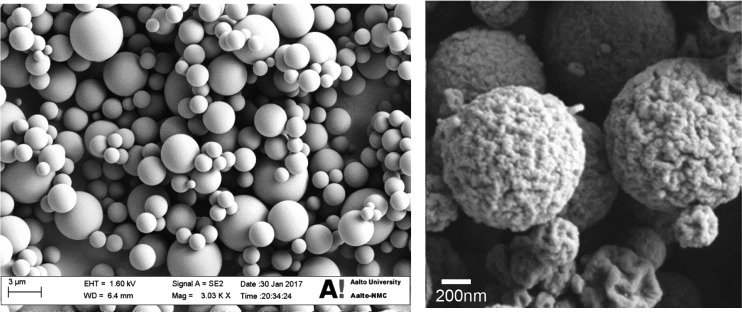
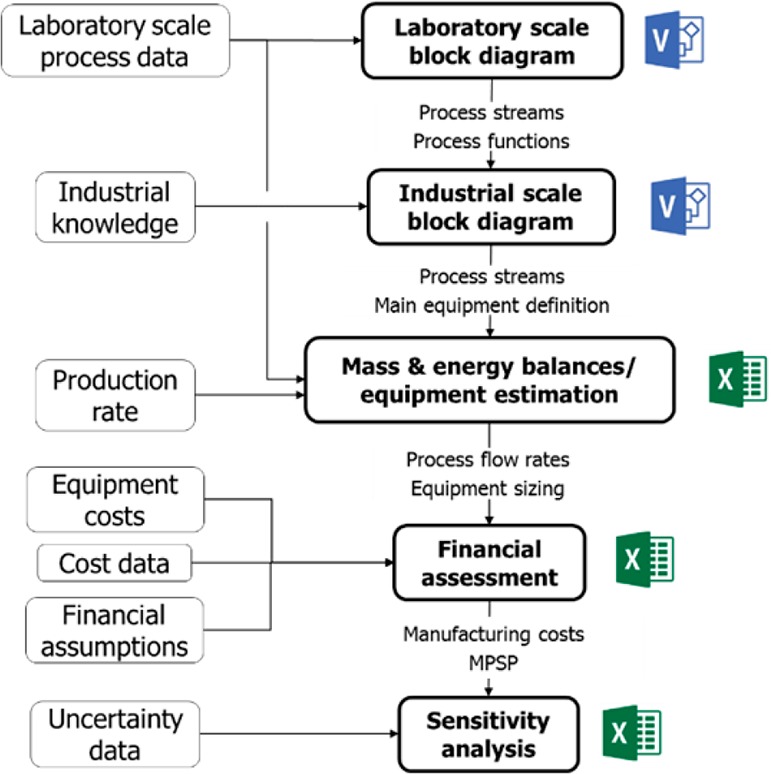
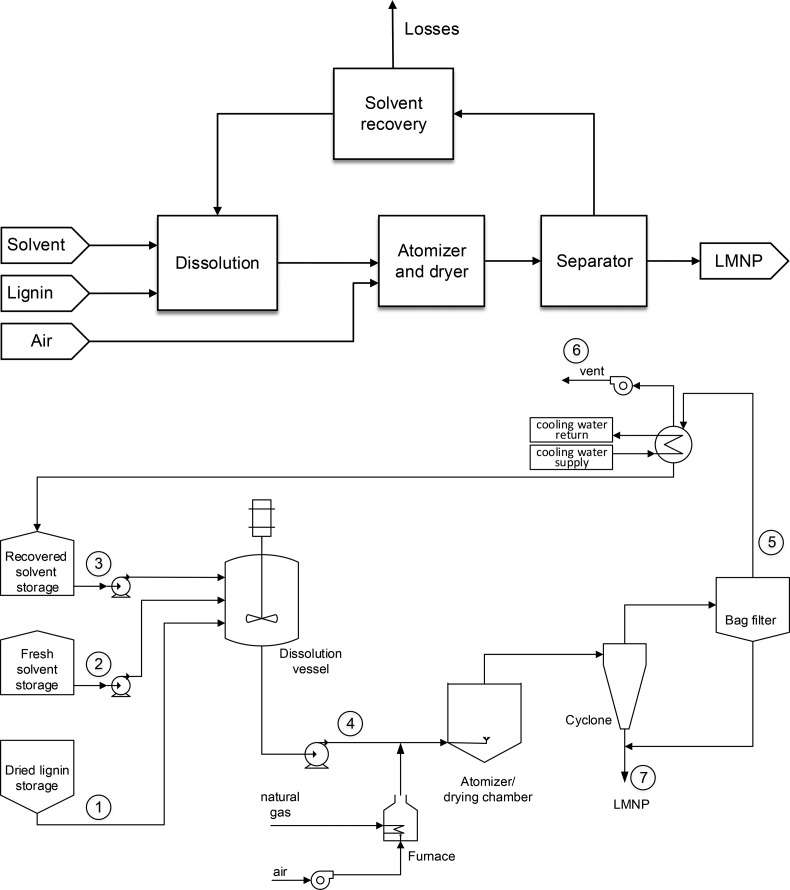
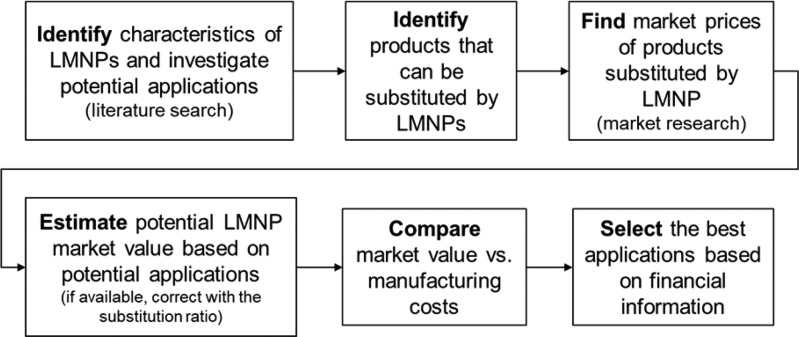
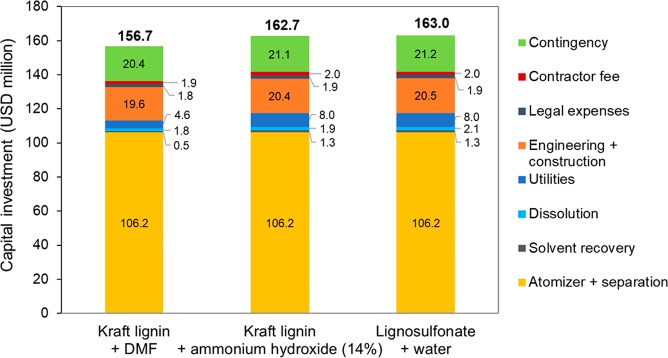
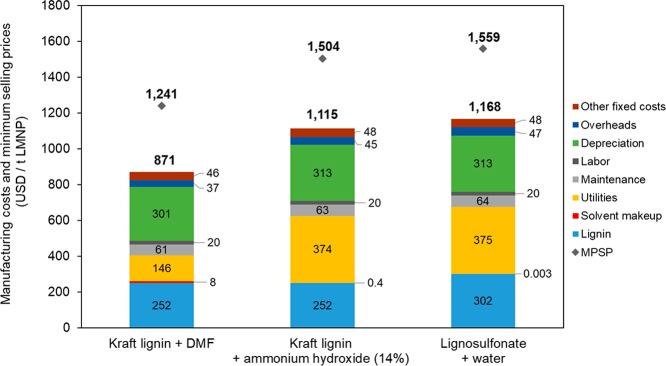
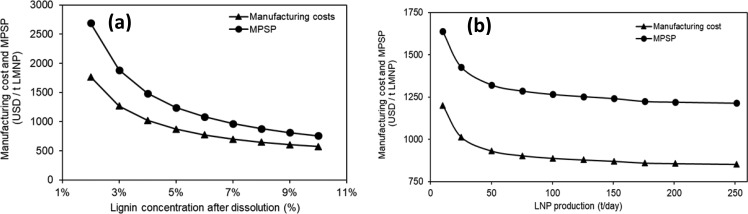
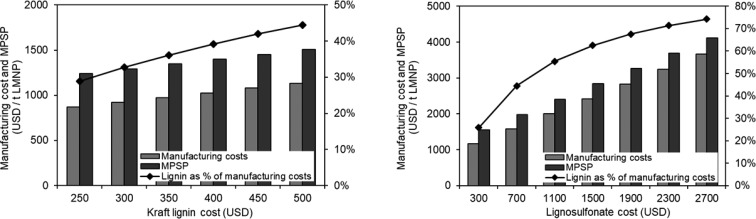
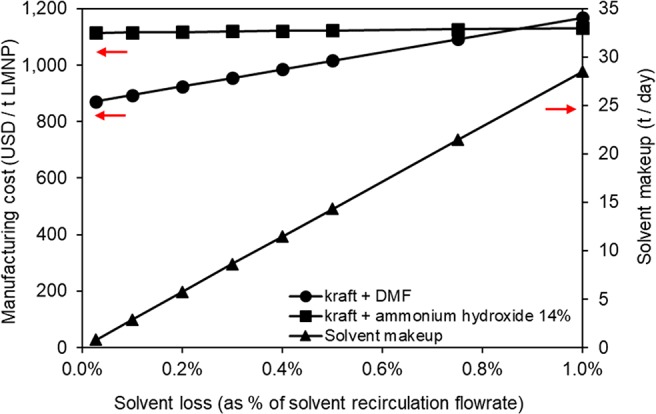
Lignin micro- and nanoparticles (LMNPs) synthesized from side-streams of pulp and paper and biorefinery operations have been proposed for the generation of new, high-value materials. As sustainable alternatives to particles of synthetic or mineral origins, LMNPs viability depends on scale-up, manufacturing cost, and applications. By using experimental data as primary source of information, along with industrial know-how, we analyze dry and spherical LMNPs obtained by our recently reported aerosol/atomization method. First, a preliminary evaluation toward the commercial production of LMNPs from industrial lignin precursors is presented. Following, we introduce potential LMNPs applications from a financial perspective. Mass and energy balances, operating costs, and capital investment are estimated and discussed in view of LMNPs scalability prospects. The main potential market segments identified (from a financial perspective) include composite nanofillers, solid foams, emulsion stabilizers, chelating agents, and UV protection. Our technical, financial, and market assessment represent the basis for R&D planning and efforts to lower the risk related to expected industrialization efforts. Manufacturing costs were estimated between 870 and 1170 USD/t; also, minimum selling prices varied from 1240 and 1560 USD/t, depending on raw materials used. Sensitivity analysis indicated that manufacturing cost can be as low as 600 USD/t, depending on the process conditions considered. Finally, based on the financial assessment, potential applications were identified.
由制浆造纸和生物精炼业务的副产品合成的木质素微米和纳米颗粒(LMNP)已被提议用于生产新型高价值材料。作为合成或矿物来源颗粒的可持续替代品,LMNP的可行性取决于扩大规模、制造成本和应用。通过将实验数据作为主要信息来源,并结合行业知识,我们分析了通过我们最近报道的气溶胶/雾化方法获得的干燥球形LMNP。首先,对从工业木质素前体商业化生产LMNP进行了初步评估。接下来,我们从财务角度介绍了LMNP的潜在应用。鉴于LMNP的可扩展性前景,估计并讨论了质量和能量平衡、运营成本和资本投资。确定的主要潜在市场领域(从财务角度)包括复合纳米填料、固体泡沫、乳液稳定剂、螯合剂和紫外线防护。我们的技术、财务和市场评估是研发规划以及降低与预期工业化努力相关风险的基础。估计制造成本在870至1170美元/吨之间;此外,最低销售价格根据所使用的原材料不同,在1240至1560美元/吨之间变化。敏感性分析表明,根据所考虑的工艺条件,制造成本可能低至600美元/吨。最后,基于财务评估确定了潜在应用。