Department of Molecular Microbiology, Washington University School of Medicine, St. Louis, MO, USA.
Department of Medicine, Washington University School of Medicine, St. Louis, MO, USA.
Nat Microbiol. 2018 Oct;3(10):1099-1108. doi: 10.1038/s41564-018-0245-0. Epub 2018 Sep 17.
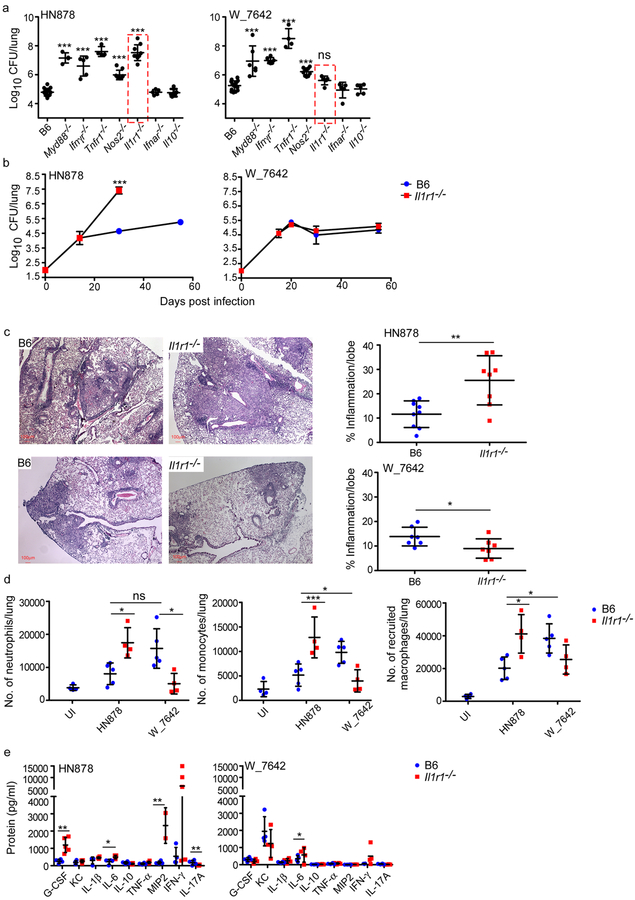
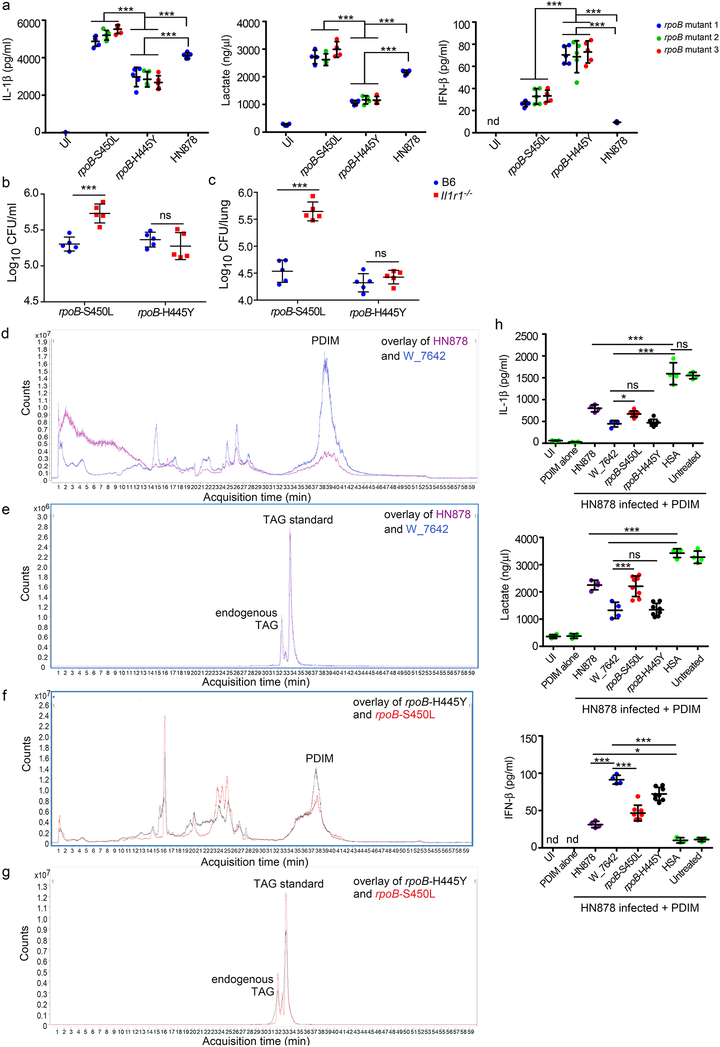
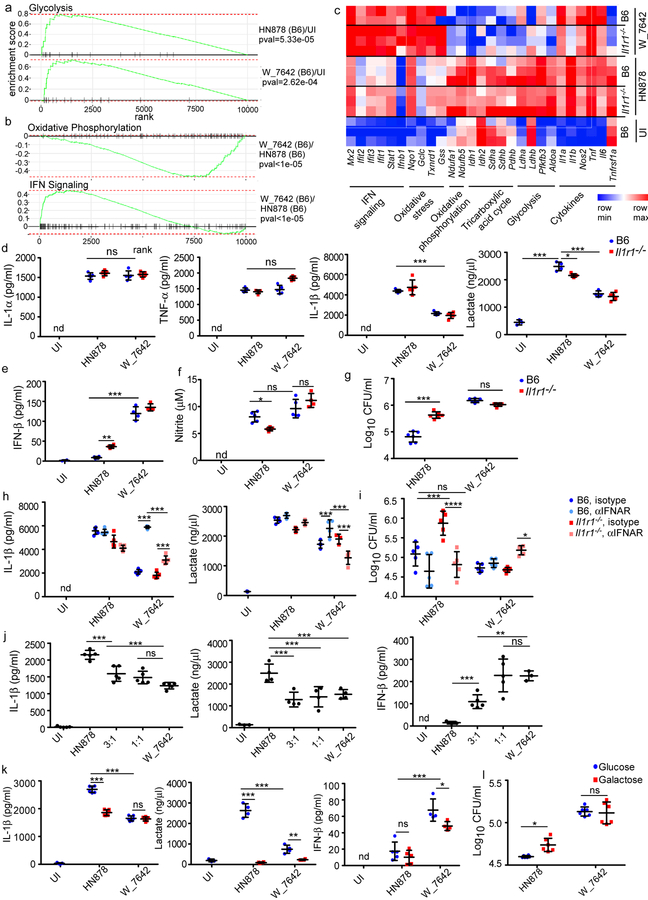
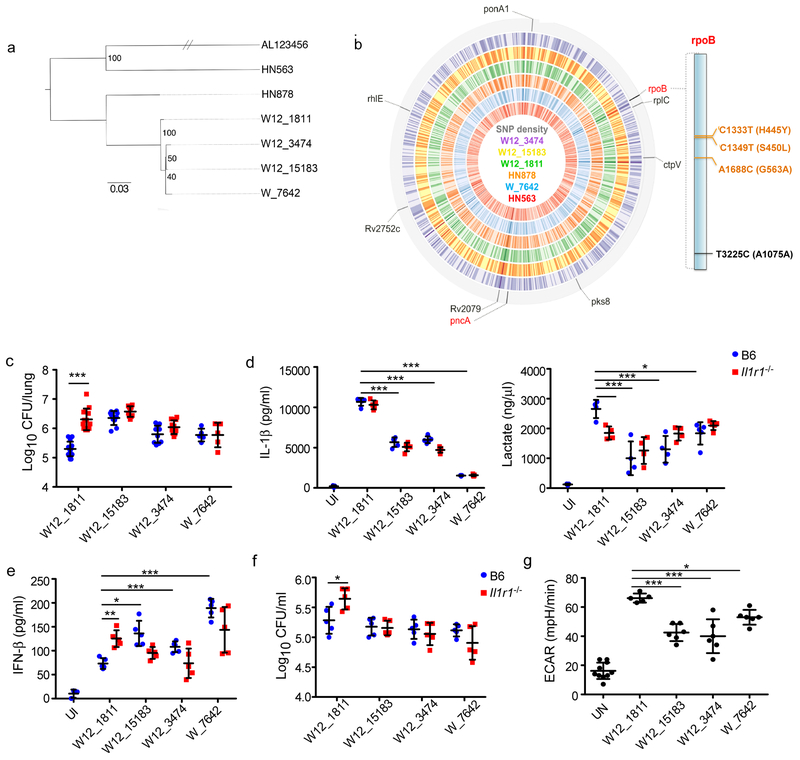
Tuberculosis is a significant global health threat, with one-third of the world's population infected with its causative agent Mycobacterium tuberculosis (Mtb). The emergence of multidrug-resistant (MDR) Mtb that is resistant to the frontline anti-tubercular drugs rifampicin and isoniazid forces treatment with toxic second-line drugs. Currently, ~4% of new and ~21% of previously treated tuberculosis cases are either rifampicin-drug-resistant or MDR Mtb infections. The specific molecular host-pathogen interactions mediating the rapid worldwide spread of MDR Mtb strains remain poorly understood. W-Beijing Mtb strains are highly prevalent throughout the world and associated with increased drug resistance. In the early 1990s, closely related MDR W-Beijing Mtb strains (W strains) were identified in large institutional outbreaks in New York City and caused high mortality rates. The production of interleukin-1β (IL-1β) by macrophages coincides with the shift towards aerobic glycolysis, a metabolic process that mediates protection against drug-susceptible Mtb. Here, using a collection of MDR W-Mtb strains, we demonstrate that the overexpression of Mtb cell wall lipids, phthiocerol dimycocerosates, bypasses the interleukin 1 receptor, type I (IL-1R1) signalling pathway, instead driving the induction of interferon-β (IFN-β) to reprogram macrophage metabolism. Importantly, Mtb carrying a drug resistance-conferring single nucleotide polymorphism in rpoB (H445Y) can modulate host macrophage metabolic reprogramming. These findings transform our mechanistic understanding of how emerging MDR Mtb strains may acquire drug resistance single nucleotide polymorphisms, thereby altering Mtb surface lipid expression and modulating host macrophage metabolic reprogramming.
结核病是一个重大的全球健康威胁,全球有三分之一的人口感染了其病原体结核分枝杆菌(Mtb)。耐多药(MDR)结核分枝杆菌的出现,对利福平(rifampicin)和异烟肼(isoniazid)等一线抗结核药物产生耐药性,迫使使用毒性二线药物进行治疗。目前,约有 4%的新发和 21%的既往治疗结核病病例为利福平耐药或耐多药结核分枝杆菌感染。介导耐多药结核分枝杆菌快速在全球传播的具体分子宿主-病原体相互作用仍知之甚少。W-北京结核分枝杆菌菌株在全球广泛流行,并与耐药性增加有关。上世纪 90 年代初,在纽约市的大型机构暴发中发现了密切相关的耐多药 W-北京结核分枝杆菌菌株(W 株),并导致高死亡率。巨噬细胞产生白细胞介素 1β(IL-1β)与有氧糖酵解的转变相吻合,这是一种代谢过程,可介导对药物敏感的结核分枝杆菌的保护。在这里,我们使用一组耐多药 W-结核分枝杆菌菌株证明,结核分枝杆菌细胞壁脂质(phthiocerol dimycocerosates)的过度表达绕过了白细胞介素 1 受体,I 型(IL-1R1)信号通路,转而驱动干扰素-β(IFN-β)的诱导,从而重新编程巨噬细胞代谢。重要的是,携带 rpoB(H445Y)赋予药物耐药性的单核苷酸多态性的结核分枝杆菌可以调节宿主巨噬细胞代谢的重新编程。这些发现改变了我们对新兴耐多药结核分枝杆菌菌株如何获得药物耐药性单核苷酸多态性的机制理解,从而改变了结核分枝杆菌表面脂质表达并调节了宿主巨噬细胞代谢的重新编程。