Schötterl Sonja, Huber Stephan M, Lentzen Hans, Mittelbronn Michel, Naumann Ulrike
Molecular Neuro-Oncology, Hertie Institute for Clinical Brain Research and Center Neurology, University of Tübingen, Otfried-Müller-Str. 27, 72076 Tübingen, Germany.
Department of Radiation Oncology, University of Tübingen, Hoppe-Seyler-Str. 3, 72076 Tübingen, Germany.
Evid Based Complement Alternat Med. 2018 Aug 27;2018:3928572. doi: 10.1155/2018/3928572. eCollection 2018.
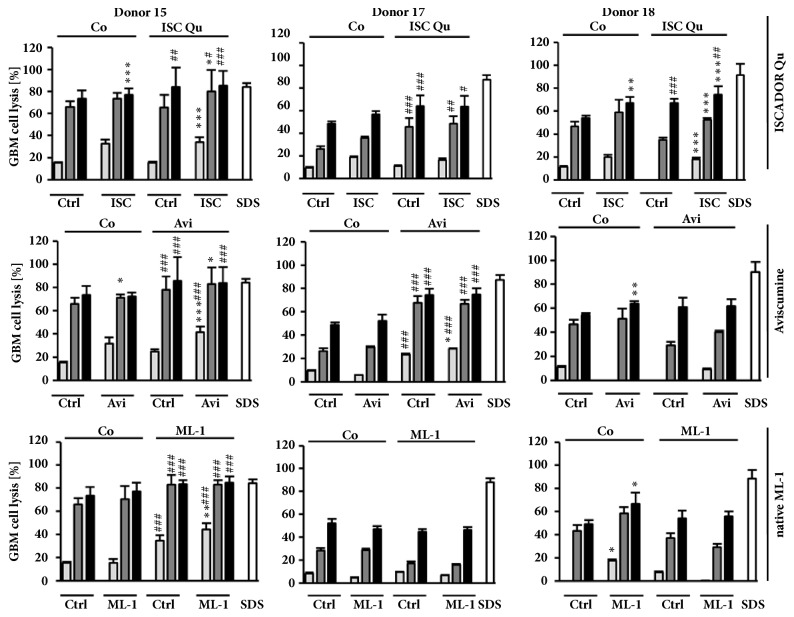
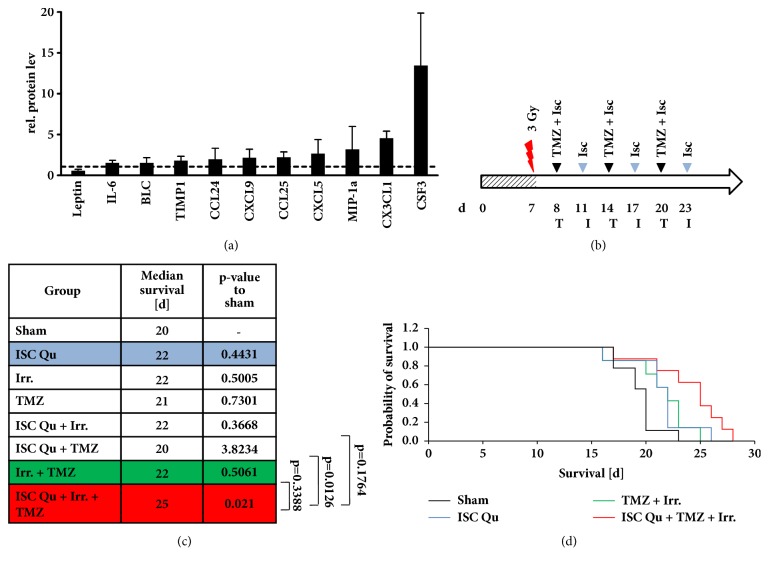
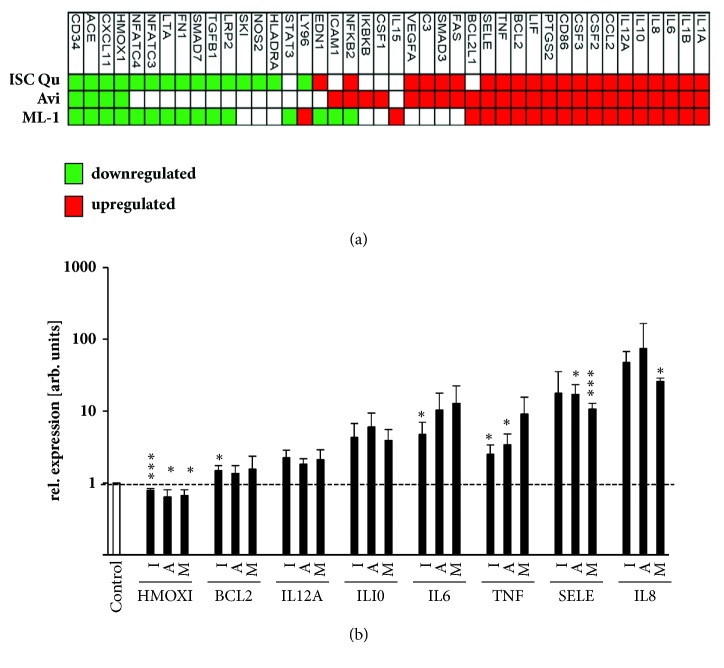
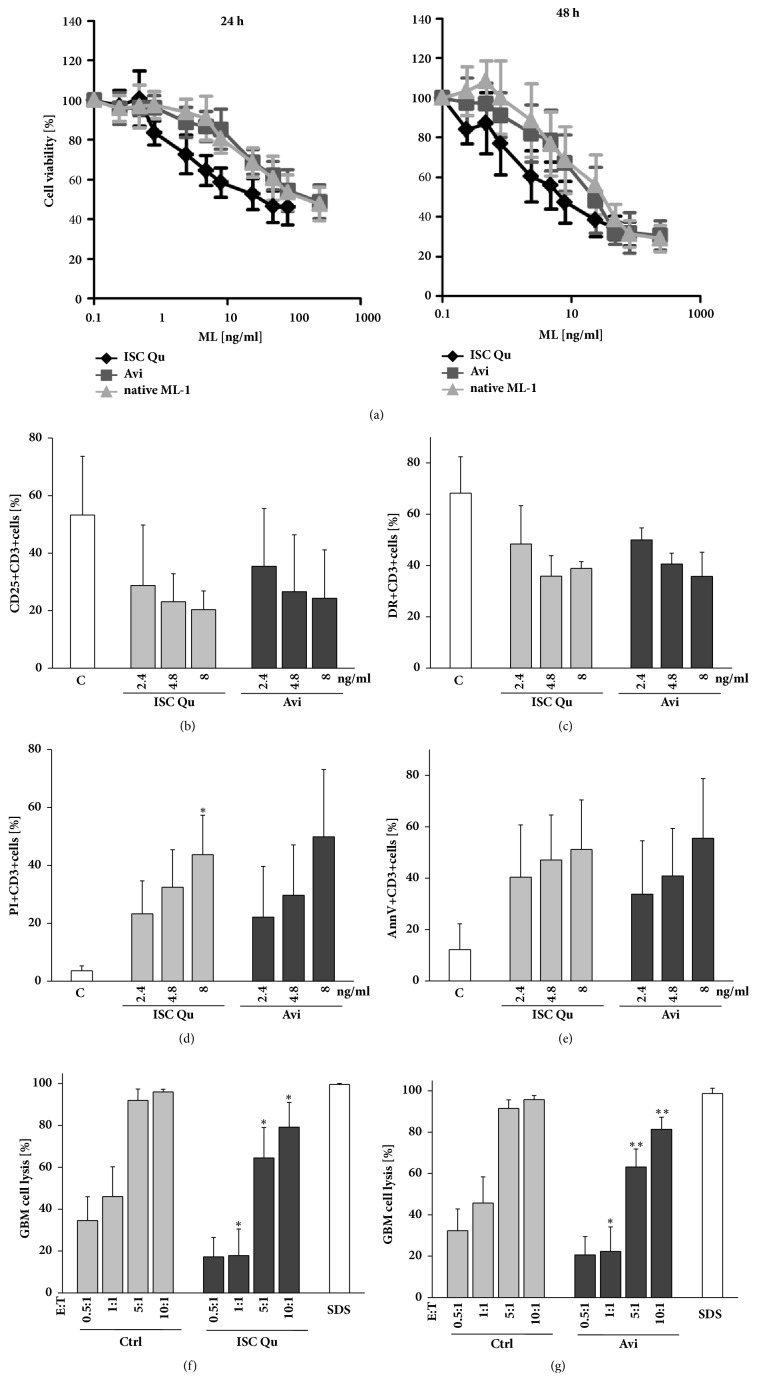
extracts (VE) are applied as complementary cancer therapeutics for more than one century. Extracts contain several compounds like mistletoe lectins (ML) 1-3 and viscotoxins, but also several minor ingredients. Since ML-1 has been described as one of the main active components harboring antitumor activity, purified native or recombinant ML-1 has been also used in clinical trials in the last years. The present study examined and compared the immunoboosting effects of three ML-1 containing drugs (the extract ISCADOR Qu, the recombinant ML-1 Aviscumine, and purified native ML-1) in the context of the T-cell mediated killing of glioma cells. Additionally we examined the possible underlying T-cell stimulating mechanisms. Using cocultures of immune and glioma cells, a PCR-based microarray, quantitative RT-PCR, and an antibody-based array to measure cytokines in blood serum, immunosupporting effects were determined. A highly aggressive, orthotopic, immunocompetent syngeneic mouse glioma model was used to determine the survival of mice treated with ISCADOR Qu alone or in combination with tumor irradiation and temozolomide (TMZ). Treatment of glioblastoma (GBM) cells with ISCADOR Qu that contains a high ML concentration, but also viscotoxins and other compounds, as well as with Aviscumine or native ML-1, enhanced the expansion of cancer cell-specific T-cells as well as T-cell-mediated tumor cell lysis, but to a different degree. In GBM cells all three ML-1-containing preparations modulated the expression of immune response associated genes. subcutaneous ISCADOR Qu injections at increasing concentration induced cytokine release in immunocompetent VM/Dk-mice. Finally, ISCADOR Qu, if applied in combination with tumor irradiation and TMZ, further prolonged the survival of glioma mice. Our findings indicate that ML-1 containing drugs enhance anti-GBM immune responses and work in synergy with radiochemotherapy. Therefore, adjuvant mistletoe therapy should be considered as an auspicious treatment option for glioma patients.
槲寄生提取物(VE)作为辅助癌症治疗药物已应用了一个多世纪。提取物含有多种化合物,如槲寄生凝集素(ML)1 - 3和viscotoxins,还有一些次要成分。由于ML - 1被描述为具有抗肿瘤活性的主要活性成分之一,纯化的天然或重组ML - 1在过去几年也被用于临床试验。本研究在T细胞介导的胶质瘤细胞杀伤背景下,检测并比较了三种含ML - 1药物(提取物ISCADOR Qu、重组ML - 1 Aviscumine和纯化的天然ML - 1)的免疫增强作用。此外,我们还研究了潜在的T细胞刺激机制。通过免疫细胞与胶质瘤细胞共培养、基于PCR的微阵列、定量RT - PCR以及基于抗体的阵列来检测血清中的细胞因子,确定免疫支持作用。使用高度侵袭性、原位、免疫活性同基因小鼠胶质瘤模型来确定单独使用ISCADOR Qu或与肿瘤照射及替莫唑胺(TMZ)联合治疗的小鼠的存活率。用含有高浓度ML以及viscotoxins和其他化合物的ISCADOR Qu、Aviscumine或天然ML - 1处理胶质母细胞瘤(GBM)细胞,可增强癌细胞特异性T细胞的扩增以及T细胞介导的肿瘤细胞裂解,但程度不同。在GBM细胞中,所有三种含ML - 1的制剂均调节了免疫反应相关基因的表达。在免疫活性VM/Dk小鼠中,皮下注射浓度递增的ISCADOR Qu可诱导细胞因子释放。最后,ISCADOR Qu与肿瘤照射及TMZ联合应用可进一步延长胶质瘤小鼠的生存期。我们的研究结果表明,含ML - 1的药物可增强抗GBM免疫反应,并与放化疗协同作用。因此,辅助性槲寄生疗法应被视为胶质瘤患者的一种有前景的治疗选择。