9/F, Lui Che Woo Clinical Science Building, Department of Medicine and Therapeutics, The Chinese University of Hong Kong, Prince of Wales Hospital, 30-32 Ngan Shing Street, Shatin, Hong Kong Special Administrative Region, Hong Kong.
Hong Kong Institute of Diabetes and Obesity, The Chinese University of Hong Kong, Shatin, Hong Kong Special Administrative Region, Hong Kong.
Diabetologia. 2018 Dec;61(12):2539-2548. doi: 10.1007/s00125-018-4724-x. Epub 2018 Sep 17.
AIMS/HYPOTHESIS: Accumulating evidence suggests an impact of gestational weight gain (GWG) on pregnancy outcomes; however, data on cardiometabolic risk factors later in life have not been comprehensively studied. This study aimed to evaluate the relationship between GWG and cardiometabolic risk in offspring aged 7 years.
We included a total of 905 mother-child pairs who enrolled in the follow-up visit of the multicentre Hyperglycemia and Adverse Pregnancy Outcome study, at the Hong Kong Centre. Women were classified as having gained weight below, within or exceeding the 2009 Institute of Medicine (IOM) guidelines. A standardised GWG according to pre-pregnancy BMI categories was calculated to explore for any quadratic relationship.
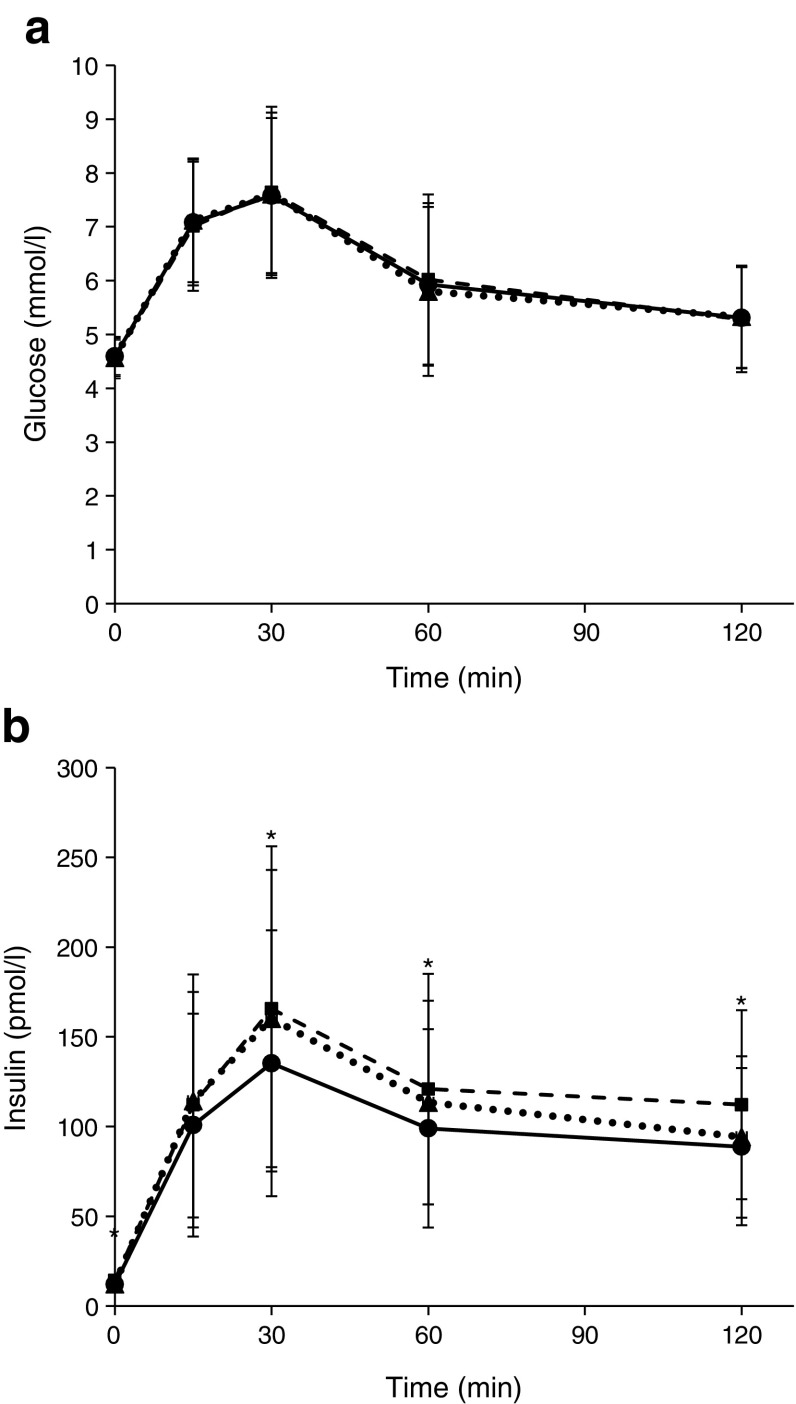
Independent of pre-pregnancy BMI, gestational hyperglycaemia and other confounders, women who gained more weight than the IOM recommendations had offspring with a larger body size and increased odds of adiposity, hypertension and insulin resistance (range of p values of all the traits: 4.6 × 10 < p < 0.0390) than women who were within the recommended range of weight gain during pregnancy. Meanwhile, women who gained less weight than outlined in the recommendations had offspring with increased risks of hypertension and insulin resistance, compared with those who gained weight within the recommended range (7.9 × 10 < p < 0.0477). Quadratic relationships for diastolic blood pressure, AUC for insulin, pancreatic beta cell function and insulin sensitivity index were confirmed in the analysis of standardised GWG (1.4 × 10 < p < 0.0282). Further adjustment for current BMI noticeably attenuated the observed associations.
CONCLUSIONS/INTERPRETATION: Both excessive and inadequate GWG have independent and significant impacts on childhood adiposity, hypertension and insulin resistance. Our findings support the notion that adverse intrauterine exposures are associated with persistent cardiometabolic risk in the offspring.
目的/假设:越来越多的证据表明,妊娠体重增加(GWG)对妊娠结局有影响;然而,关于生命后期心血管代谢危险因素的数据尚未得到全面研究。本研究旨在评估 GWG 与 7 岁儿童后代心血管代谢风险之间的关系。
我们共纳入了 905 对母婴对,他们参加了香港中心多中心高血糖和不良妊娠结局研究的随访。根据 2009 年美国医学研究所(IOM)指南,将女性分为体重增加不足、在范围内和超过范围。根据孕前 BMI 类别计算了标准化的 GWG,以探索任何二次关系。
独立于孕前 BMI、妊娠期间的高血糖和其他混杂因素,体重增加超过 IOM 建议的女性所生的子女体型较大,肥胖、高血压和胰岛素抵抗的几率增加(所有特征的 p 值范围:4.6×10 < p < 0.0390),而体重增加在孕期建议范围内的女性所生的子女。与此同时,体重增加低于建议范围的女性所生的子女,与体重增加在建议范围内的女性相比,患高血压和胰岛素抵抗的风险增加(7.9×10 < p < 0.0477)。在标准化 GWG 分析中,确认了舒张压、胰岛素 AUC、胰岛β细胞功能和胰岛素敏感性指数的二次关系(1.4×10 < p < 0.0282)。进一步调整当前 BMI,明显减弱了观察到的关联。
结论/解释:无论是 GWG 过多还是不足,都对儿童肥胖、高血压和胰岛素抵抗有独立且显著的影响。我们的研究结果支持这样一种观点,即宫内不良暴露与后代持续的心血管代谢风险有关。