CAS Key Laboratory for Biomedical Effects of Nanomaterial and Nanosafety, Institute of High Energy Physics, Chinese Academy of Science (CAS), Beijing 100049, China.
University of Chinese Academy of Sciences (UCAS), Beijing 100049, China.
Int J Mol Sci. 2018 Sep 17;19(9):2790. doi: 10.3390/ijms19092790.
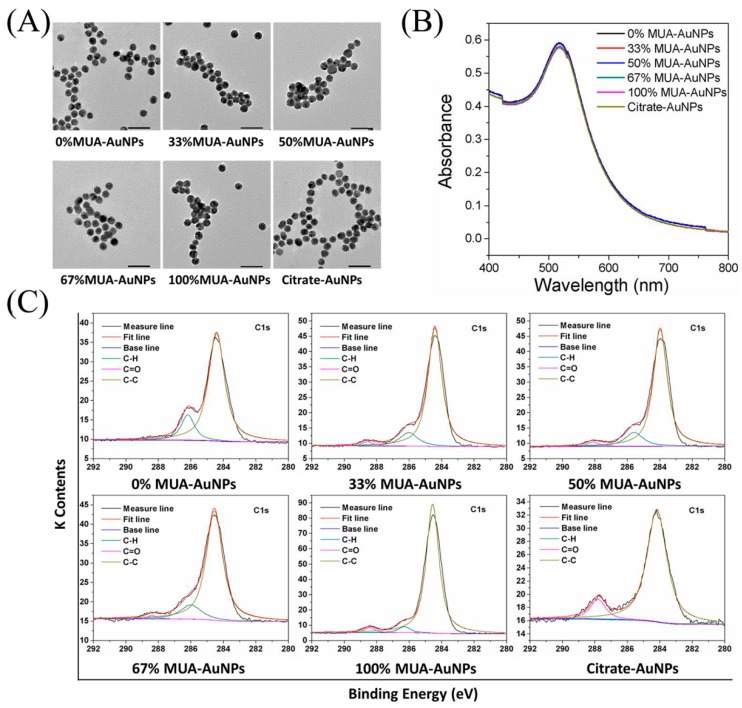
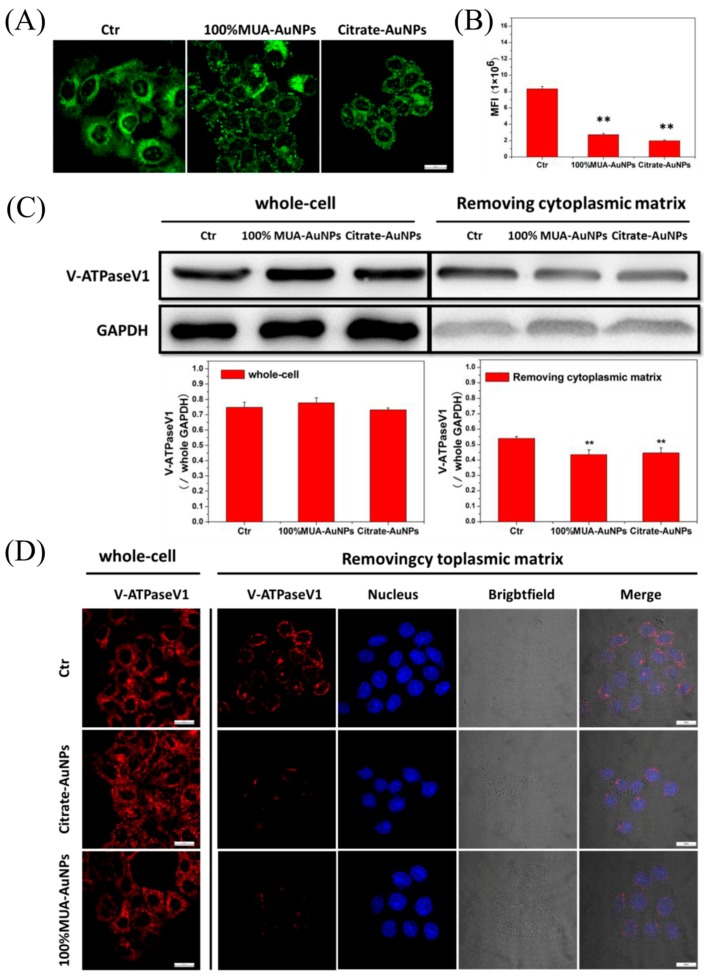
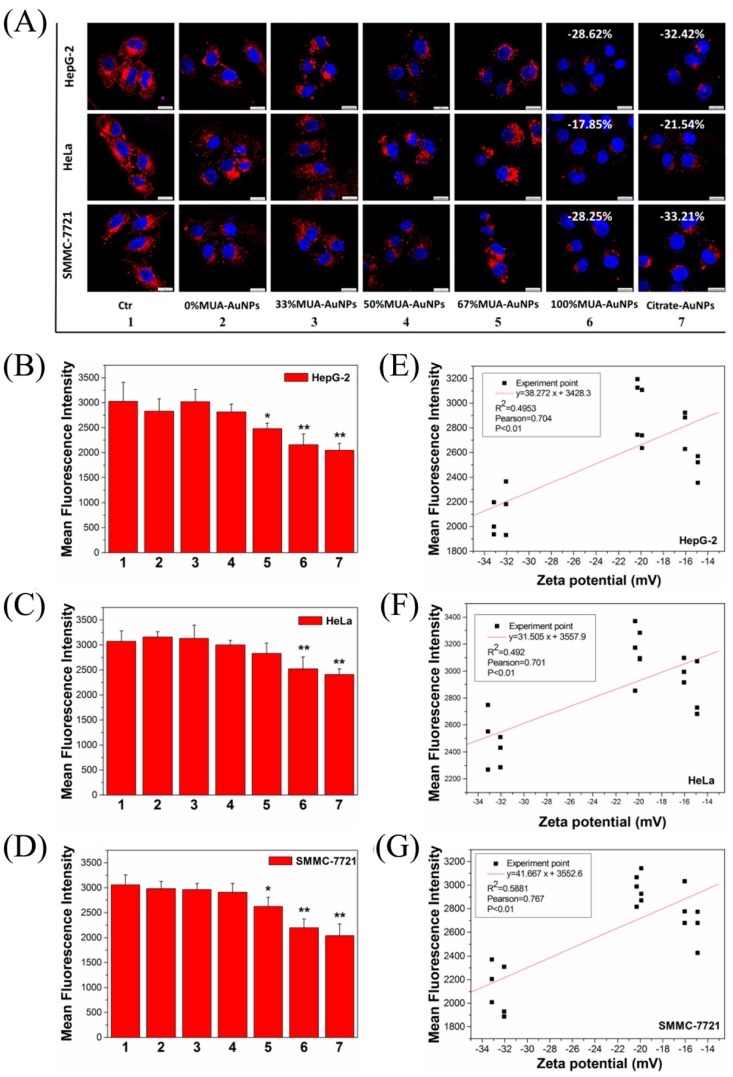
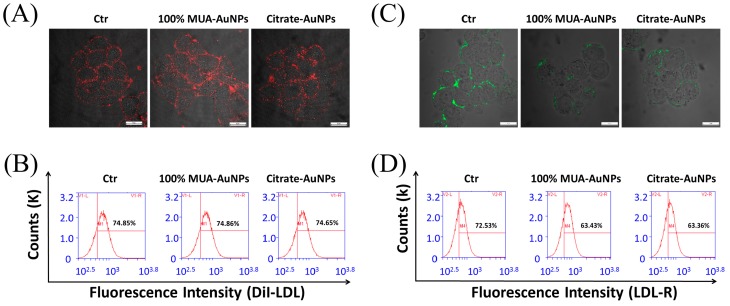
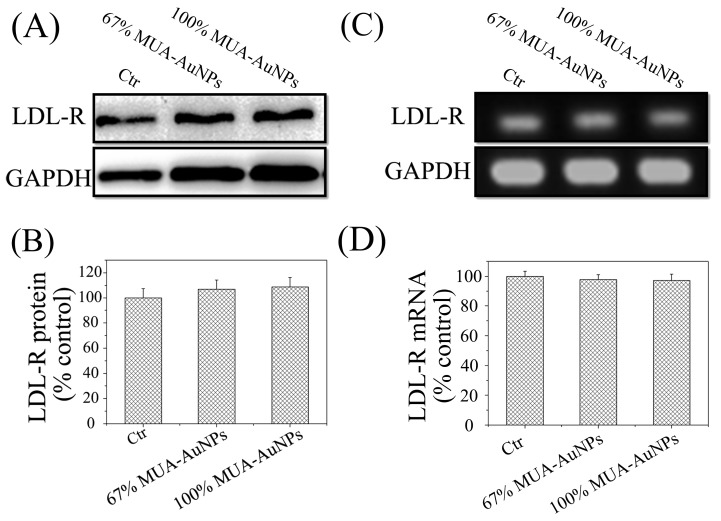
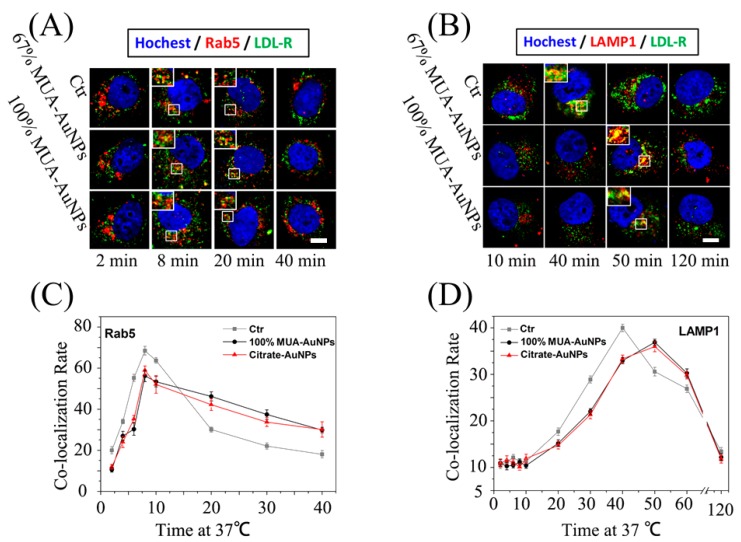
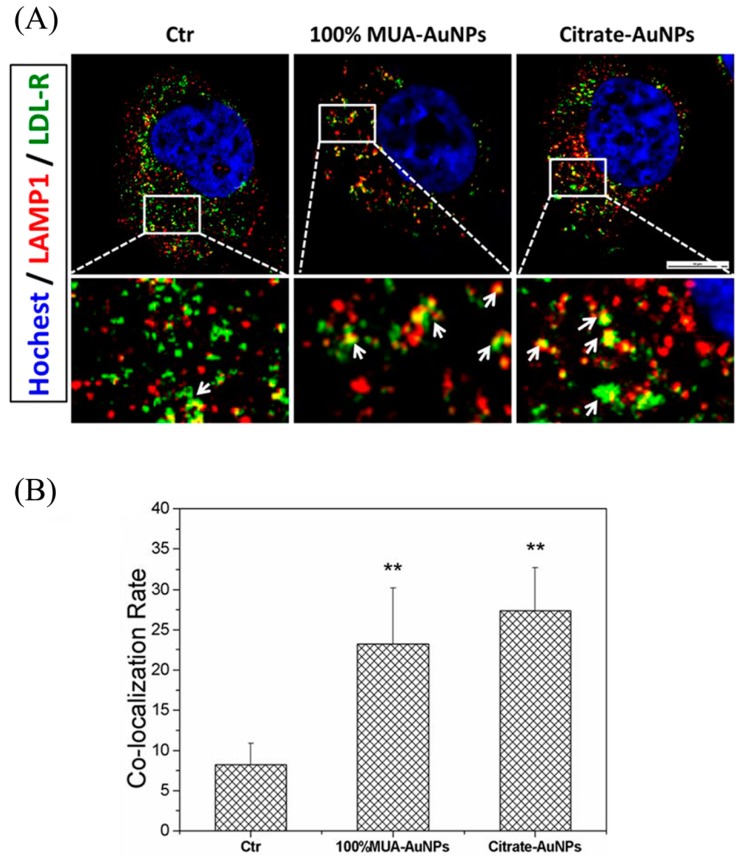
Endocytosis is an important pathway to regulate the metabolism of low-density lipoprotein (LDL) in cells. At the same time, engineering nanoparticles (ENPs) enter the cell through endocytosis in biomedical applications. Therefore, a crucial question is whether the nanoparticles involved in endocytosis could impact the natural metabolism of LDL in cells. In this study, we fabricated a series of gold nanoparticles (AuNPs) (13.00 ± 0.69 nm) with varied surface charge densities. The internalized AuNPs with high-surface negative-charge densities (HSNCD) significantly reduced LDL uptake in HepG-2, HeLa, and SMMC-7721 cells compared with those cells in control group. Notably, the significant reduction of LDL uptake in cells correlates with the reduction of LDL receptors (LDL-R) on the cell surface, but there is no change in protein and mRNA of LDL-Rs. The cyclic utilization of LDL-R in cells is a crucial pathway to maintain the homoeostasis of LDL uptake. The release of LDL-Rs from LDL/LDL-R complexes in endosomes depended on reduction of the pH in the lumen. AuNPs with HSNCD hampered vacuolar-type H⁺-ATPase V1 (ATPaseV1) and ATPaseV0 binding on the endosome membrane, blocking protons to enter the endosome by the pump. Hence, fewer freed LDL-Rs were transported into recycling endosomes (REs) to be returned to cell surface for reuse, reducing the LDL uptake of cells by receptor-mediated endocytosis. The restrained LDL-Rs in the LDL/LDL-R complex were degraded in lysosomes.
内吞作用是细胞内调节低密度脂蛋白 (LDL) 代谢的重要途径。同时,在生物医学应用中,工程纳米颗粒(ENPs)通过内吞作用进入细胞。因此,一个关键问题是,内吞作用涉及的纳米颗粒是否会影响细胞内 LDL 的自然代谢。在这项研究中,我们制备了一系列具有不同表面电荷密度的金纳米颗粒 (AuNPs)(13.00 ± 0.69nm)。与对照组相比,具有高表面负电荷密度(HSNCD)的内吞 AuNPs 显著降低了 HepG-2、HeLa 和 SMMC-7721 细胞对 LDL 的摄取。值得注意的是,细胞内 LDL 摄取的显著减少与细胞表面 LDL 受体(LDL-R)的减少相关,但 LDL-R 的蛋白和 mRNA 没有变化。细胞内 LDL-R 的循环利用是维持 LDL 摄取平衡的关键途径。内体中 LDL/LDL-R 复合物中 LDL-R 的释放取决于内腔 pH 值的降低。具有 HSNCD 的 AuNPs 阻碍了液泡型 H ⁺ -ATP 酶 V1(ATPaseV1)和 ATPaseV0 在内涵体膜上的结合,阻止质子通过泵进入内涵体。因此,更少的游离 LDL-R 被运送到再循环内涵体(REs)中以返回细胞表面再利用,从而减少细胞通过受体介导的内吞作用对 LDL 的摄取。LDL/LDL-R 复合物中受限制的 LDL-R 在溶酶体中被降解。