Kennedy Institute of Rheumatology, University of Oxford, Oxford, OX3 7FY, United Kingdom.
Genentech, Department of Cancer Immunology, South San Francisco, CA, 94080, USA.
Nat Commun. 2018 Sep 18;9(1):3797. doi: 10.1038/s41467-018-06085-5.
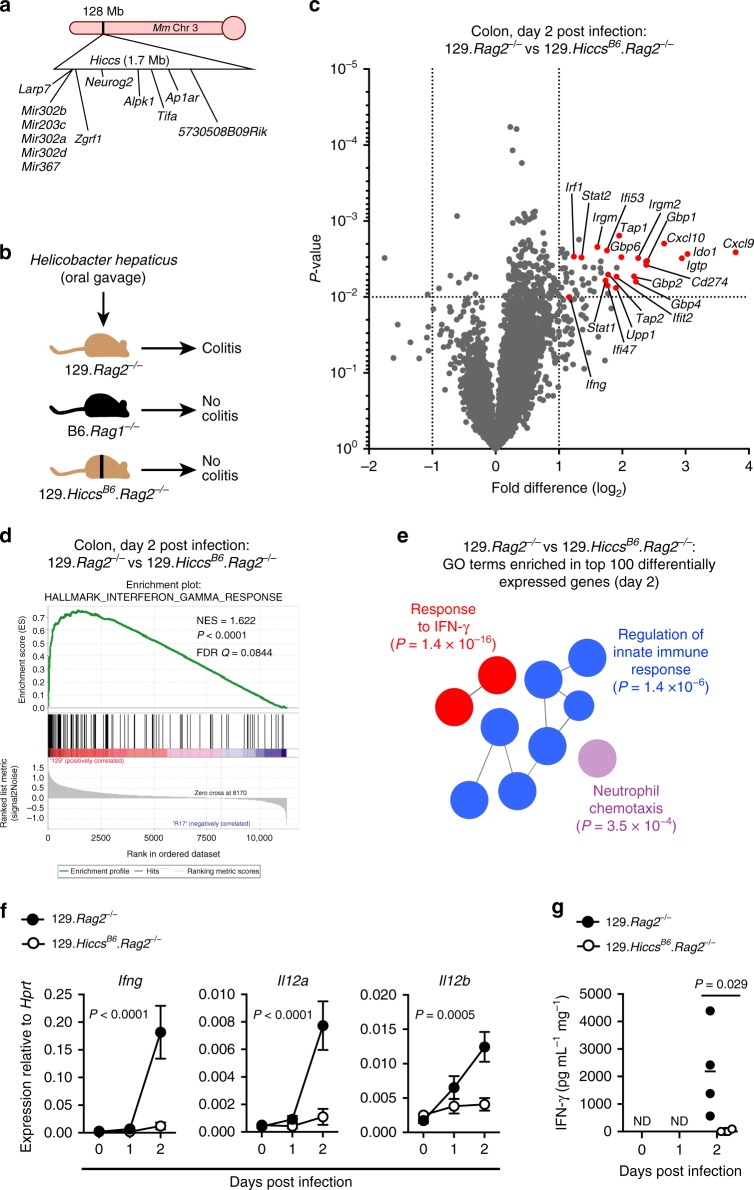
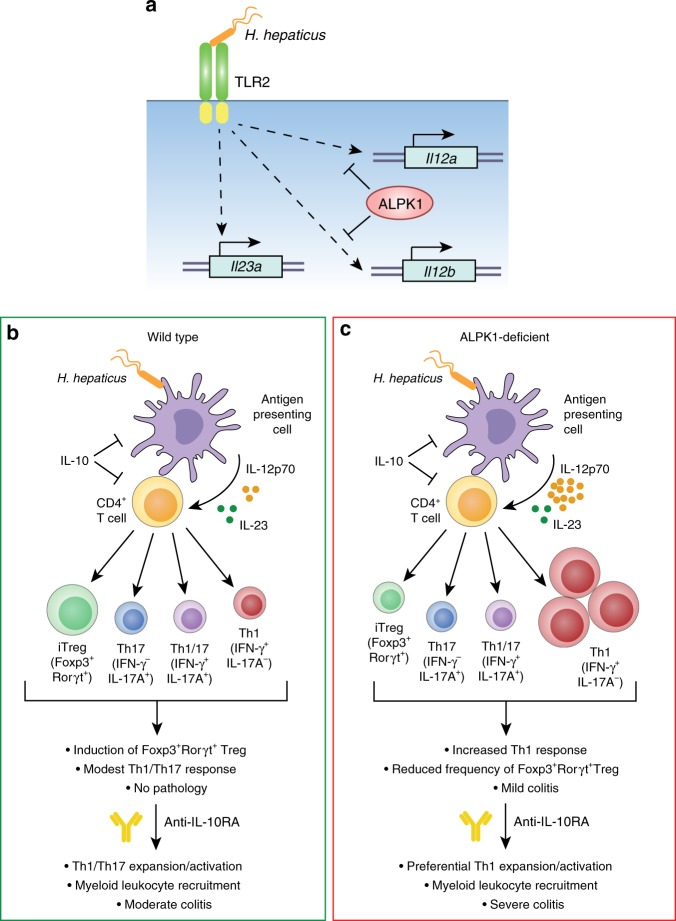
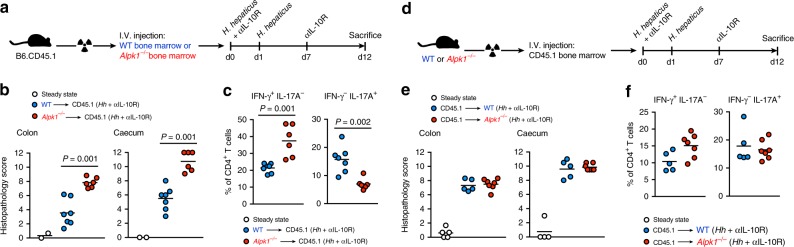
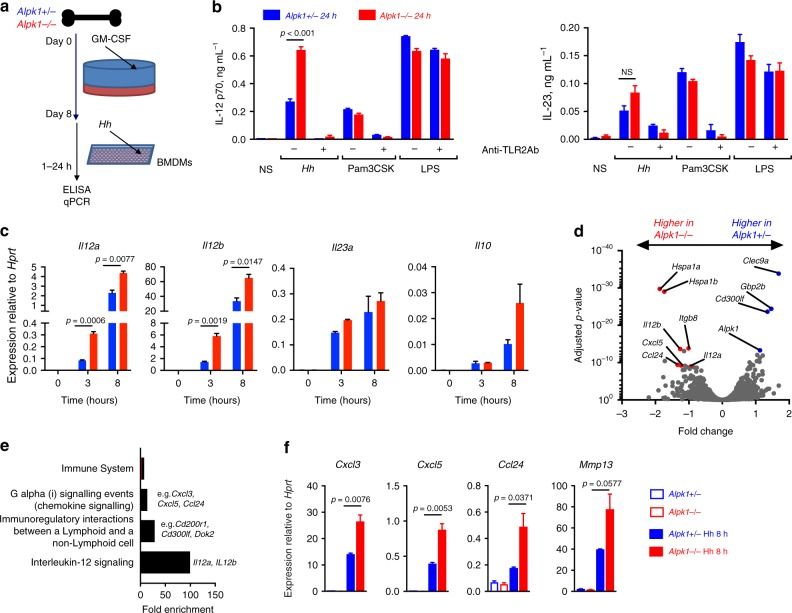
Inflammatory bowel disease (IBD) are heterogenous disorders of the gastrointestinal tract caused by a spectrum of genetic and environmental factors. In mice, overlapping regions of chromosome 3 have been associated with susceptibility to IBD-like pathology, including a locus called Hiccs. However, the specific gene that controls disease susceptibility remains unknown. Here we identify a Hiccs locus gene, Alpk1 (encoding alpha kinase 1), as a potent regulator of intestinal inflammation. In response to infection with the commensal pathobiont Helicobacter hepaticus (Hh), Alpk1-deficient mice display exacerbated interleukin (IL)-12/IL-23 dependent colitis characterized by an enhanced Th1/interferon(IFN)-γ response. Alpk1 controls intestinal immunity via the hematopoietic system and is highly expressed by mononuclear phagocytes. In response to Hh, Alpk1 macrophages produce abnormally high amounts of IL-12, but not IL-23. This study demonstrates that Alpk1 promotes intestinal homoeostasis by regulating the balance of type 1/type 17 immunity following microbial challenge.
炎症性肠病(IBD)是一种由遗传和环境因素引起的胃肠道多态性疾病。在小鼠中,染色体 3 的重叠区域与 IBD 样病理学的易感性有关,包括一个称为 Hiccs 的基因座。然而,控制疾病易感性的特定基因仍然未知。在这里,我们确定了一个 Hiccs 基因座基因 Alpk1(编码α激酶 1),它是肠道炎症的有效调节因子。在感染共生条件致病菌幽门螺杆菌(Hh)后,Alpk1 缺陷型小鼠表现出更严重的白细胞介素(IL)-12/IL-23 依赖性结肠炎,其特征是 Th1/干扰素(IFN)-γ反应增强。Alpk1 通过造血系统控制肠道免疫,并且单核吞噬细胞高度表达。在 Hh 刺激下,Alpk1 巨噬细胞产生异常高水平的 IL-12,但不产生 IL-23。这项研究表明,Alpk1 通过调节微生物挑战后 1 型/17 型免疫的平衡来促进肠道稳态。