Department of Otolaryngology-Head and Neck Surgery, Chungnam National University, College of Medicine, Daejeon 35015, Republic of Korea.
Department of Otolaryngology, Seoul National University Bundang Hospital, Seoul National University, College of Medicine, Seongnam 13620, Republic of Korea.
Biomed Res Int. 2018 Aug 30;2018:7087586. doi: 10.1155/2018/7087586. eCollection 2018.
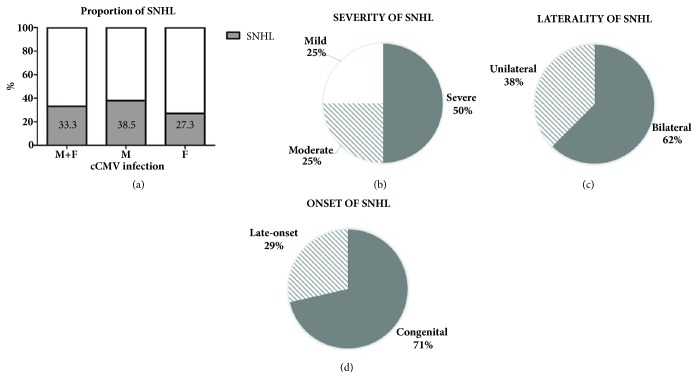
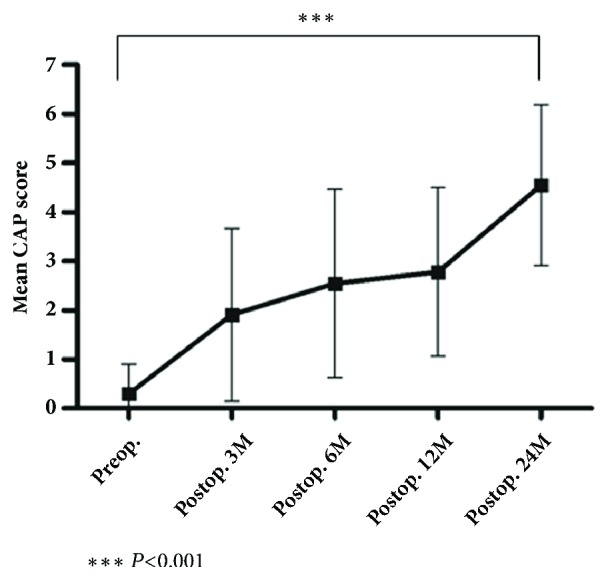
Congenital cytomegalovirus (cCMV) infection is a common congenital infection that causes sensorineural hearing loss (SNHL). Despite its substantial impact on public health and cost burden, epidemiology and clinical features of CMV-related SNHL have never been reported in the Korean populations. This study investigated the detailed audiologic phenotypes of cCMV infection to see if a specific SNHL pattern is associated with a particular clinical setting. A total of 38 patients with cCMV infection were studied retrospectively. Patients were classified into three groups with distinct demographics: clinically driven diagnosis (n=17), routine newborn CMV screening according to the NICU protocols (n=10), or referral to ENT for cochlear implant (CI) (n=11). The incidence of cCMV infection was 3.6%, showing 33.3% of SNHL among cCMV patients, 38% of asymmetric hearing loss, 29% of late-onset hearing loss, and diverse severity spectrum in patients with CMV-related SNHL. CI recipients with CMV-related SNHL showed a significantly improved speech perception. Surprisingly, in 36.4 % of CI implantees, initial audiological manifestation was significant asymmetry of hearing thresholds between both ears, with better ear retaining significant residual hearing up to 50dB. CMV turns out to be a significant etiology of SNHL, first to date reported in the Korean pediatric population. Analysis of audiologic phenotypes showed a very wide spectrum of SNHL and favorable CI outcomes in case of profound deafness. Especially for the patients with asymmetric hearing loss, close surveillance of hearing should be warranted and CI could be considered on the worse side first, based on the observation of rapid progression to profound deafness of better side.
先天性巨细胞病毒 (cCMV) 感染是一种常见的先天性感染,可导致感音神经性听力损失 (SNHL)。尽管它对公共卫生和成本负担有重大影响,但在韩国人群中从未报道过 CMV 相关 SNHL 的流行病学和临床特征。本研究调查了 cCMV 感染的详细听力表型,以观察是否存在特定的 SNHL 模式与特定的临床环境相关。共有 38 例 cCMV 感染患者进行了回顾性研究。根据不同的人口统计学特征,患者分为三组:临床驱动诊断 (n=17)、根据 NICU 方案进行常规新生儿 CMV 筛查 (n=10) 或转耳鼻喉科进行人工耳蜗植入 (CI) (n=11)。cCMV 感染的发生率为 3.6%,cCMV 患者中有 33.3%发生 SNHL,38%为不对称听力损失,29%为迟发性听力损失,CMV 相关 SNHL 患者的听力损失严重程度谱多样。接受 CI 治疗的 CMV 相关 SNHL 患者的言语感知能力显著提高。令人惊讶的是,在接受 CI 植入的患者中,有 36.4%的患者最初的听力表现为双耳听力阈值的显著不对称,较好耳保留了高达 50dB 的显著残余听力。CMV 是 SNHL 的一个重要病因,这是迄今为止在韩国儿科人群中首次报道。听力表型分析显示,SNHL 谱非常广泛,在极重度聋的情况下 CI 结果良好。特别是对于不对称听力损失的患者,应密切监测听力,并根据对侧听力迅速进展为极重度聋的观察,首先考虑在较差侧进行 CI。