Yamaguchi Akira, Oh-Ishi Tsutomu, Arai Takashi, Sakata Hideaki, Adachi Nodoka, Asanuma Satoshi, Oguma Eiji, Kimoto Hirofumi, Matsumoto Jiro, Fujita Hidetoshi, Uesato Tadashi, Fujita Jutaro, Shirato Ken, Ohno Hideki, Kizaki Takako
Laboratory of Clinical Research, Saitama Children's Medical Center, Saitama, Japan.
Department of Radiological Technology, Saitama Children's Medical Center, Saitama, Japan.
BMJ Open. 2017 Jan 20;7(1):e013810. doi: 10.1136/bmjopen-2016-013810.
Approximately 8-10% of newborns with asymptomatic congenital cytomegalovirus (cCMV) infection develop sensorineural hearing loss (SNHL). However, the relationship between CMV load, SNHL and central nervous system (CNS) damage in cCMV infection remains unclear. This study aimed to examine the relationship between urinary CMV load, SNHL and CNS damage in newborns with cCMV infection.
The study included 23 368 newborns from two maternity hospitals in Saitama Prefecture, Japan. Urine screening for cCMV infection (quantitative real-time PCR) and newborn hearing screening (automated auditory brainstem response (AABR) testing) were conducted within 5 days of birth to examine the incidence of cCMV infection and SNHL, respectively. CNS damage was assessed by MRI of cCMV-infected newborns.
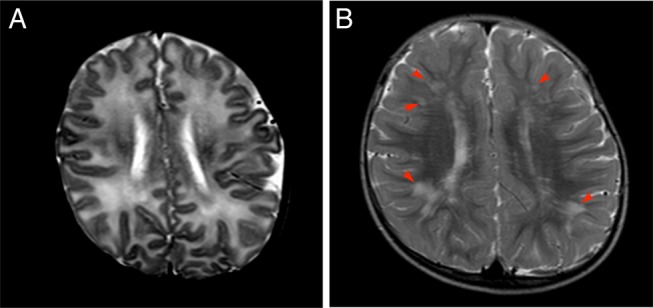
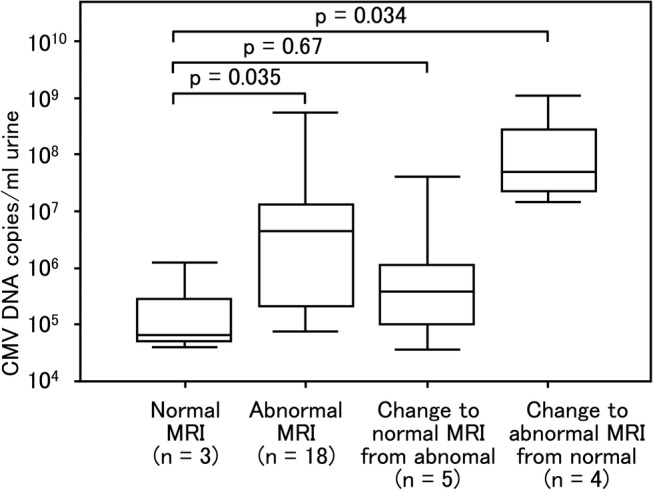
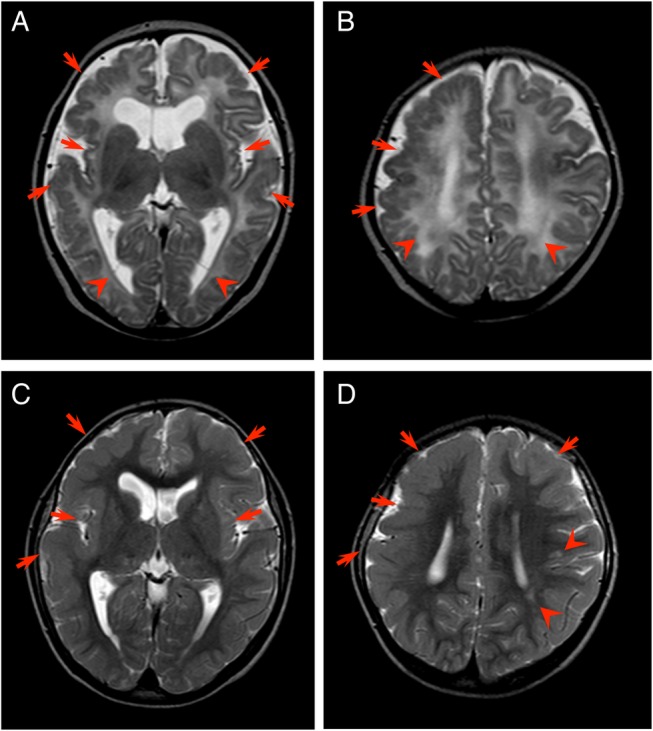
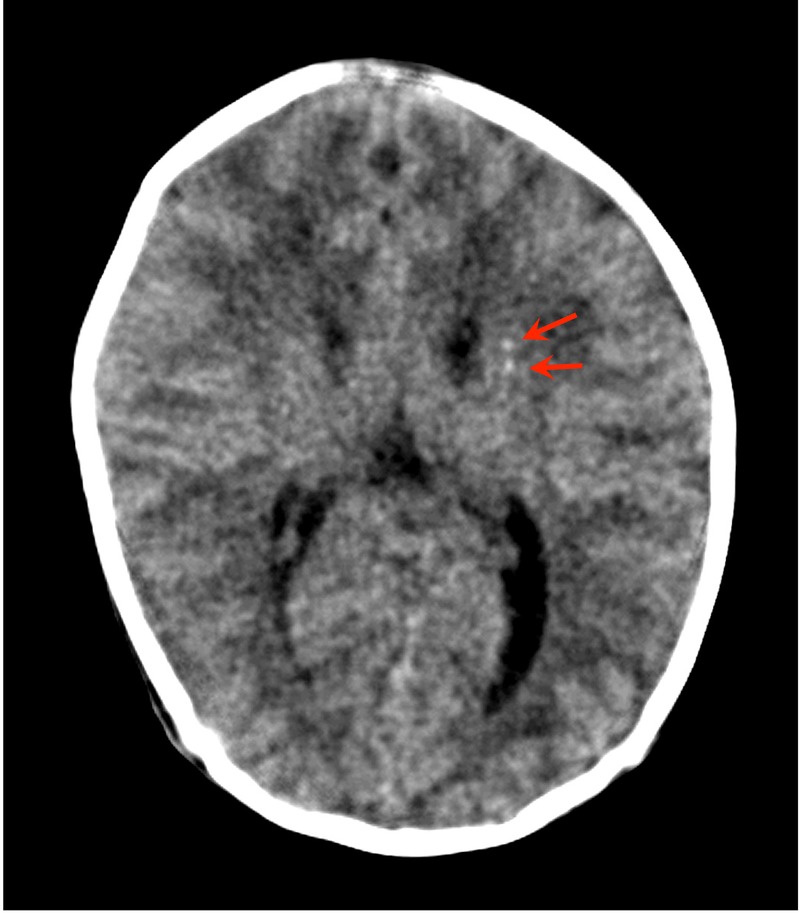
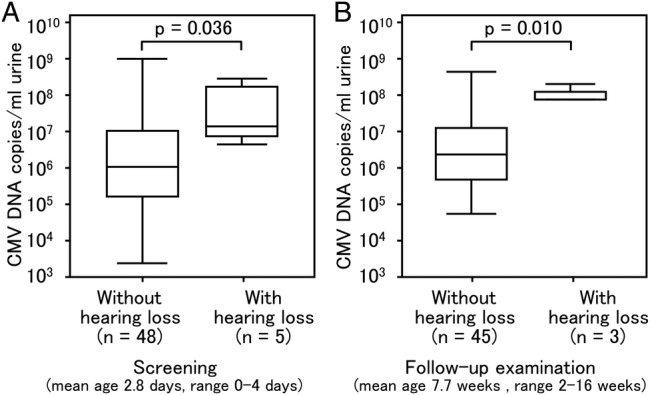
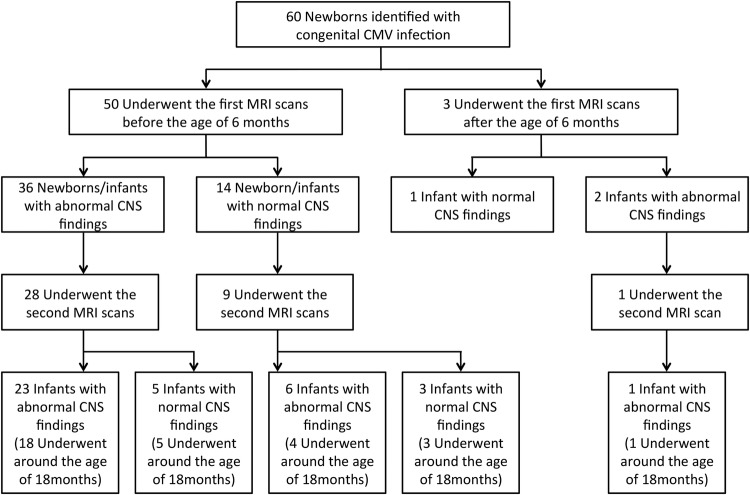
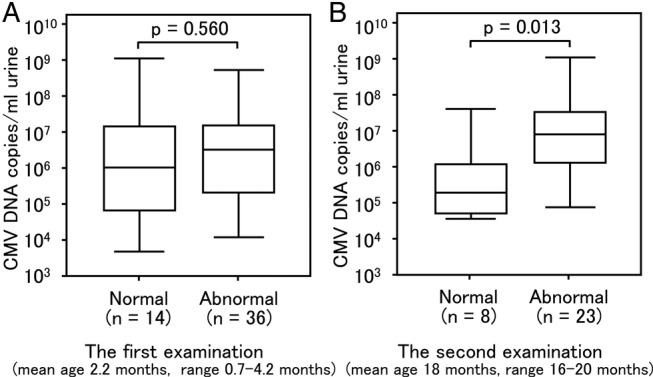
The incidence of cCMV infection was 60/23 368 (0.257%; 95% CI 0.192% to 0.322%). The geometric mean urinary CMV DNA copy number in newborns with cCMV was 1.79×10 copies/mL (95% CI 7.97×10 to 4.02×10). AABR testing revealed abnormalities in 171 of the 22 229 (0.769%) newborns whose parents approved hearing screening. Of these 171 newborns, 22 had SNHL (12.9%), and 5 of these 22 were infected with cCMV (22.7%). Newborns with both cCMV and SNHL had a higher urinary CMV DNA copy number than newborns with cCMV without SNHL (p=0.036). MRI revealed CNS damage, including white matter abnormalities, in 83.0% of newborns with cCMV. Moreover, newborns with CNS damage had a significantly greater urinary CMV load than newborns without CNS damage (p=0.013).
We determined the incidence of cCMV infection and urinary CMV DNA copy number in seemingly healthy newborns from two hospitals in Saitama Prefecture. SNHL and CNS damage were associated with urinary CMV DNA copy number. Quantification of urinary CMV load may effectively predict the incidence of late-onset SNHL and neurodevelopmental disorders.
约8%-10%无症状先天性巨细胞病毒(cCMV)感染的新生儿会发生感音神经性听力损失(SNHL)。然而,cCMV感染中巨细胞病毒载量、SNHL与中枢神经系统(CNS)损害之间的关系仍不清楚。本研究旨在探讨cCMV感染新生儿的尿巨细胞病毒载量、SNHL与CNS损害之间的关系。
该研究纳入了来自日本埼玉县两家妇产医院的23368名新生儿。分别在出生后5天内进行尿cCMV感染筛查(定量实时PCR)和新生儿听力筛查(自动听性脑干反应(AABR)测试),以检查cCMV感染和SNHL的发生率。通过对cCMV感染新生儿进行MRI评估CNS损害情况。
cCMV感染发生率为60/23368(0.257%;95%CI 0.192%至0.322%)。cCMV感染新生儿尿巨细胞病毒DNA拷贝数的几何平均值为1.79×10拷贝/mL(95%CI 7.97×10至4.02×10)。AABR测试显示,在其父母同意听力筛查的22229名新生儿中,有171名(0.769%)异常。在这171名新生儿中,22名患有SNHL(12.9%),其中22名中有5名感染了cCMV(22.7%)。患有cCMV和SNHL的新生儿尿巨细胞病毒DNA拷贝数高于患有cCMV但无SNHL的新生儿(p=0.036)。MRI显示,83.0%的cCMV感染新生儿存在CNS损害,包括白质异常。此外,有CNS损害的新生儿尿巨细胞病毒载量显著高于无CNS损害的新生儿(p=0.013)。
我们确定了埼玉县两家医院看似健康的新生儿中cCMV感染的发生率和尿巨细胞病毒DNA拷贝数。SNHL和CNS损害与尿巨细胞病毒DNA拷贝数有关。尿巨细胞病毒载量的量化可能有效地预测迟发性SNHL和神经发育障碍的发生率。