Furlong-Dillard Jamie, Neary Alaina, Marietta Jennifer, Jones Courtney, Jeffers Grace, Gakenheimer Lindsey, Puchalski Michael, Eckauser Aaron, Delgado-Corcoran Claudia
Division of Critical Care, Department of Pediatrics, University of Utah, Salt Lake City, Utah.
Primary Children's Hospital, Intermountain Healthcare, Salt Lake City, Utah.
Pediatr Qual Saf. 2018 May 18;3(3):e080. doi: 10.1097/pq9.0000000000000080. eCollection 2018 May-Jun.
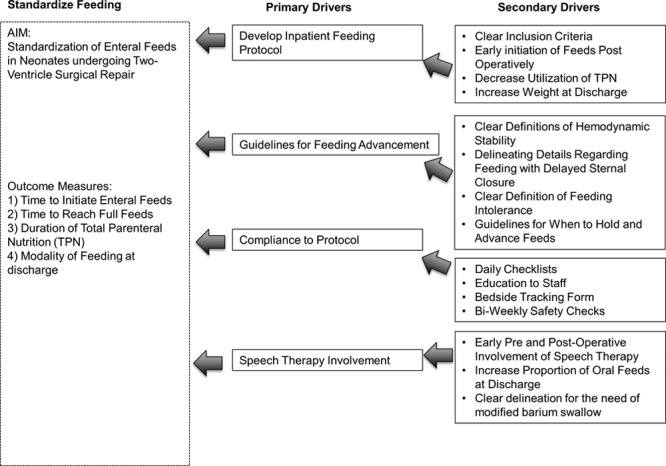
Feeding difficulties and malnutrition are important challenges when caring for newborns with critical congenital heart disease (CCHD) without clear available guidelines for providers. This study describes the utilization of a feeding protocol with the focus on standardization, feeding modality, and total parenteral nutrition (TPN) utilization postoperatively.
Patients included neonates with CCHD undergoing complex biventricular repair using cardiopulmonary bypass. Data were collected in 2013 preintervention and from 2015 to 2017 postintervention. The feeding protocol outlined guidelines for and postoperative use of TPN. Adverse outcomes data included rates of central line-associated bloodstream infections, necrotizing enterocolitis, chylothorax, and vocal cord dysfunction. Balance outcomes measured were weight for age Z-score at discharge, number of abdominal radiographs obtained, readmission within 90 days, and central venous line utilization.
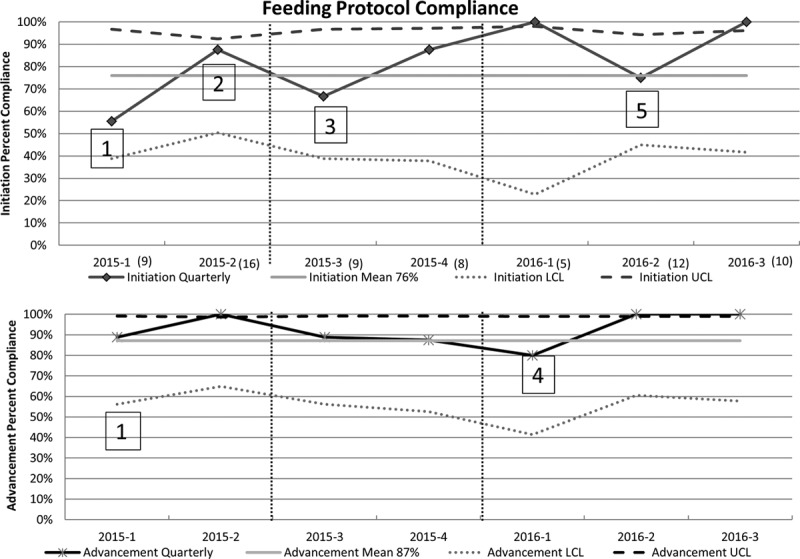
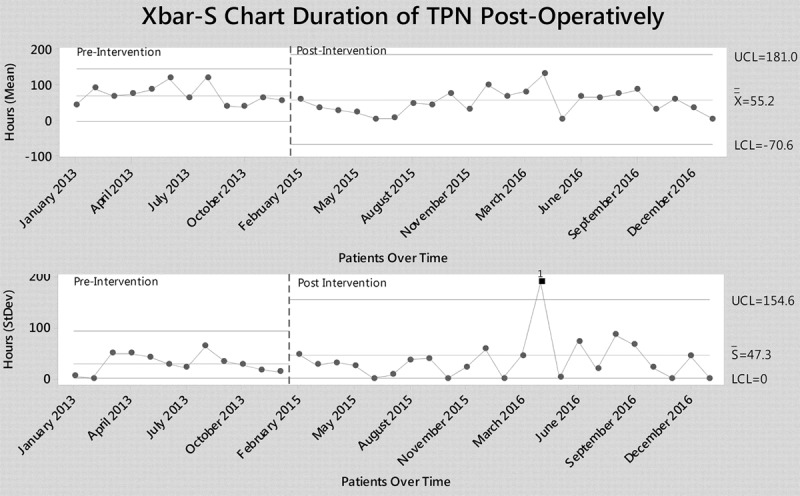
We included a total of 121 neonates: 49 in the preintervention group and 72 in the postintervention group. The protocol standardized feeding practices in CCHD neonates undergoing surgery with improved compliance from 70% early in the study period to 90% at the end of the study. Infants were fed enterally more preoperatively (86% versus 67%; .023), reached a fluid goal sooner (63 hours versus 72 hours; .035), and postoperative duration of TPN usage was significantly shorter in the postintervention period (48 hours versus 62 hours; = 0.041) with no increase in adverse outcome events or unintended consequences.
By implementing a feeding protocol, we reduced practice variation among providers, increased the number of patients fed enterally preoperatively and reduced postoperative use of TPN without increased complications.
在照顾患有严重先天性心脏病(CCHD)的新生儿时,喂养困难和营养不良是重要挑战,而目前尚无明确的可用指南供医护人员参考。本研究描述了一种喂养方案的应用情况,该方案侧重于标准化、喂养方式以及术后全胃肠外营养(TPN)的使用。
研究对象包括接受体外循环下复杂双心室修复术的CCHD新生儿。于2013年干预前及2015年至2017年干预后收集数据。该喂养方案概述了TPN的术前及术后使用指南。不良结局数据包括中心静脉导管相关血流感染、坏死性小肠结肠炎、乳糜胸和声带功能障碍的发生率。所测量的平衡结局指标包括出院时年龄别体重Z评分、腹部X光片拍摄次数、90天内再入院率以及中心静脉导管使用率。
我们共纳入121例新生儿,其中干预前组49例,干预后组72例。该方案规范了接受手术的CCHD新生儿的喂养操作,依从性从研究初期的70%提高到研究结束时的90%。术前经口喂养的婴儿更多(86%对67%;P = 0.023),更快达到液体目标(63小时对72小时;P = 0.035),干预后期术后TPN使用持续时间显著缩短(48小时对62小时;P = 0.041),且不良结局事件或意外后果未增加。
通过实施喂养方案,我们减少了医护人员之间的操作差异,增加了术前经口喂养的患者数量,减少了术后TPN的使用,且未增加并发症。