Seeland Anett, Krell Mario M, Straube Sirko, Kirchner Elsa A
Robotics Innovation Center, German Research Center for Artificial Intelligence (DFKI GmbH), Bremen, Germany.
Robotics Group, Faculty of Mathematics and Computer Science, University of Bremen, Bremen, Germany.
Front Hum Neurosci. 2018 Sep 3;12:340. doi: 10.3389/fnhum.2018.00340. eCollection 2018.
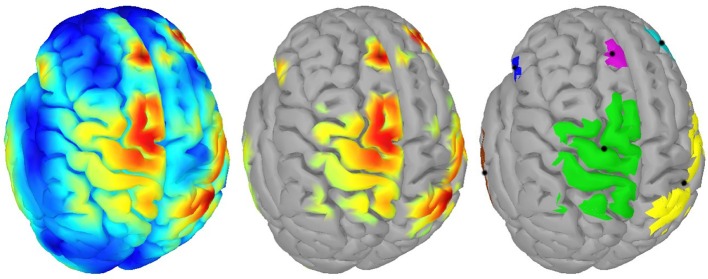
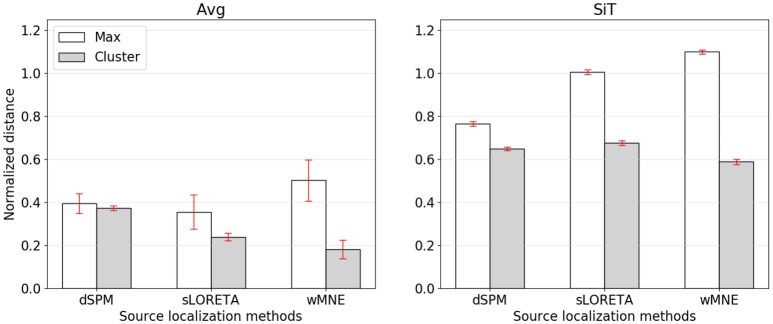
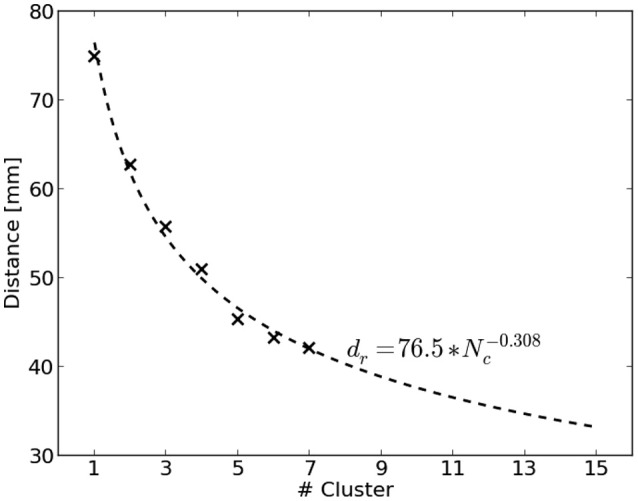
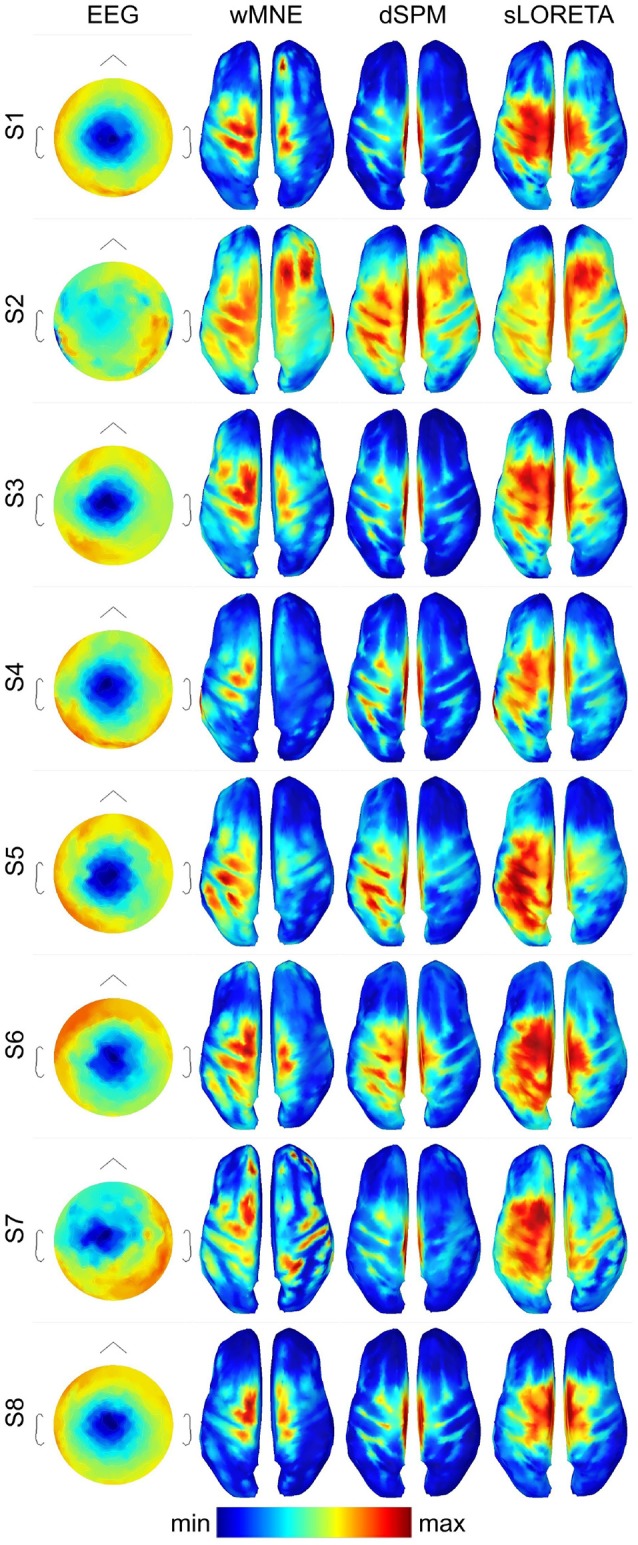
The development of technologies for the treatment of movement disorders, like stroke, is still of particular interest in brain-computer interface (BCI) research. In this context, source localization methods (SLMs), that reconstruct the cerebral origin of brain activity measured outside the head, e.g., via electroencephalography (EEG), can add a valuable insight into the current state and progress of the treatment. However, in BCIs SLMs were often solely considered as advanced signal processing methods that are compared against other methods based on the classification performance alone. Though, this approach does not guarantee physiological meaningful results. We present an empirical comparison of three established distributed SLMs with the aim to use one for single-trial movement prediction. The SLMs wMNE, sLORETA, and dSPM were applied on data acquired from eight subjects performing voluntary arm movements. Besides the classification performance as quality measure, a distance metric was used to asses the physiological plausibility of the methods. For the distance metric, which is usually measured to the source position of maximum activity, we further propose a variant based on clusters that is better suited for the single-trial case in which several sources are likely and the actual maximum is unknown. The two metrics showed different results. The classification performance revealed no significant differences across subjects, indicating that all three methods are equally well-suited for single-trial movement prediction. On the other hand, we obtained significant differences in the distance measure, favoring wMNE even after correcting the distance with the number of reconstructed clusters. Further, distance results were inconsistent with the traditional method using the maximum, indicating that for wMNE the point of maximum source activity often did not coincide with the nearest activation cluster. In summary, the presented comparison might help users to select an appropriate SLM and to understand the implications of the selection. The proposed methodology pays attention to the particular properties of distributed SLMs and can serve as a framework for further comparisons.
诸如中风等运动障碍治疗技术的发展,在脑机接口(BCI)研究中仍然备受关注。在此背景下,源定位方法(SLMs)能够重建在头部外部测量到的大脑活动的脑起源,例如通过脑电图(EEG),这可以为治疗的当前状态和进展提供有价值的见解。然而,在脑机接口中,源定位方法通常仅被视为先进的信号处理方法,仅基于分类性能与其他方法进行比较。不过,这种方法并不能保证得到具有生理意义的结果。我们对三种既定的分布式源定位方法进行了实证比较,目的是使用其中一种进行单次试验运动预测。将加权最小范数估计(wMNE)、标准化低分辨率脑电磁断层成像(sLORETA)和动态统计参数映射(dSPM)这三种源定位方法应用于从八名进行自愿手臂运动的受试者获取的数据。除了将分类性能作为质量度量外,还使用了一种距离度量来评估这些方法的生理合理性。对于通常测量到最大活动源位置的距离度量,我们进一步提出了一种基于聚类的变体,它更适合于单次试验情况,即可能存在多个源且实际最大值未知的情况。这两种度量显示出不同的结果。分类性能在受试者之间没有显著差异,表明这三种方法同样适用于单次试验运动预测。另一方面,我们在距离度量上获得了显著差异,即使在用重建聚类数量校正距离后,加权最小范数估计(wMNE)仍更具优势。此外,距离结果与使用最大值的传统方法不一致,这表明对于加权最小范数估计(wMNE),最大源活动点通常与最近的激活聚类不重合。总之,所呈现的比较可能有助于用户选择合适的源定位方法,并理解选择的含义。所提出的方法关注分布式源定位方法的特殊属性,并可作为进一步比较的框架。