Bartoníková Tereza, Menšíková Kateřina, Kolaříková Kristýna, Vodička Radek, Vrtěl Radek, Otruba Pavel, Kaiserová Michaela, Vaštík Miroslav, Mikulicová Lenka, Ovečka Josef, Šáchová Ludmila, Dvorský František, Krša Jiří, Jugas Petr, Godava Marek, Bareš Martin, Janout Vladimír, Hluštík Petr, Procházka Martin, Kaňovský Petr
Department of Neurology Department of Medical Genetics, Faculty of Medicine and Dentistry, Palacký University, University Hospital, Olomouc General Practitioner, Lipov General Practitioner, Velká nad Veličkou General Practitioner, Blatnice pod Svatým Antonínkem Neurology Outpatient Clinic, Veselí nad Moravou First Department of Neurology, Masaryk University Medical School, St. Anne University Hospital, Brno Department of Epidemiology and Public Health, Faculty of Medicine and Dentistry, Palacky University, University Hospital, Olomouc, Czech Republic.
Medicine (Baltimore). 2018 Sep;97(38):e12313. doi: 10.1097/MD.0000000000012313.
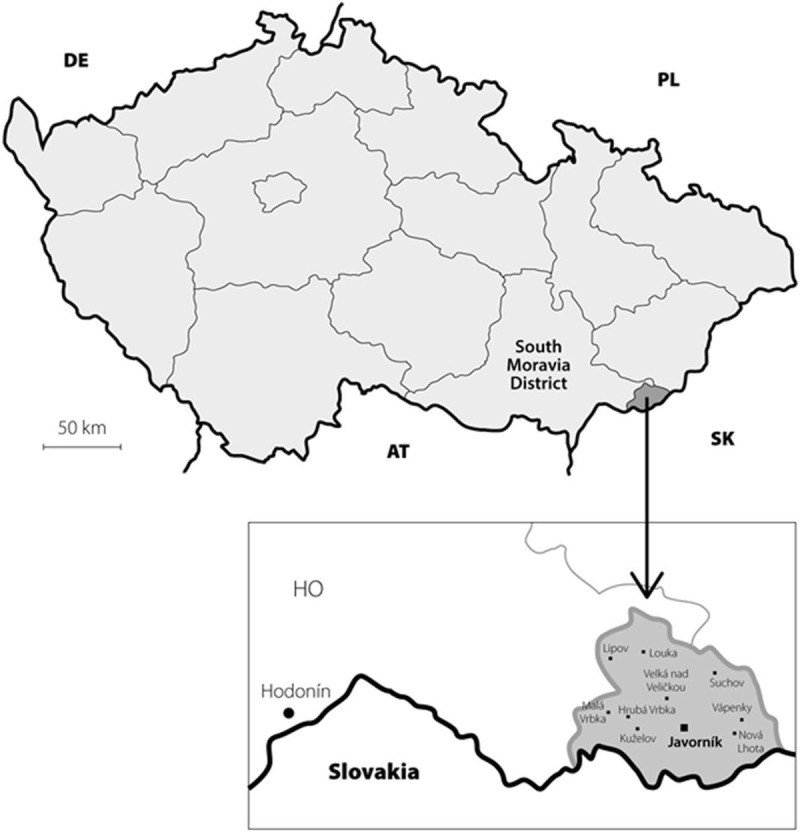
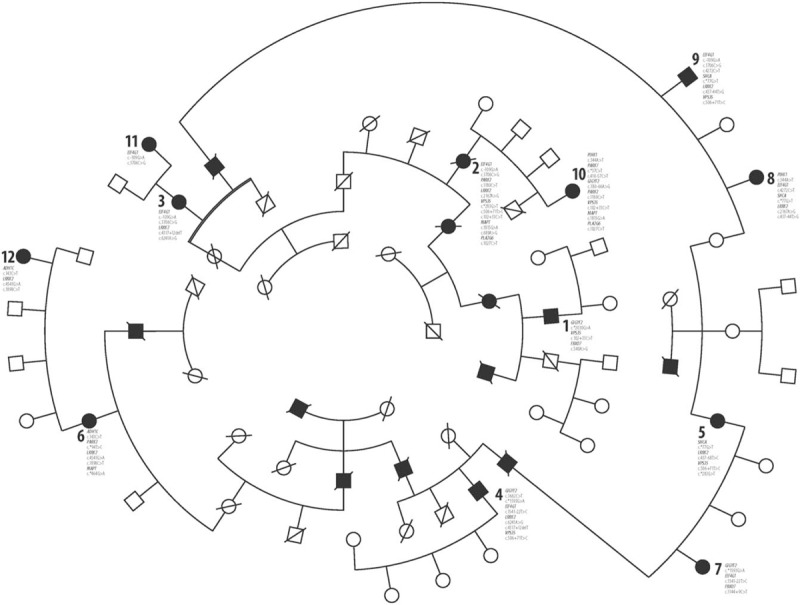
An increased prevalence of familial neurodegenerative parkinsonism or cognitive deterioration was recently found in a small region of southeastern Moravia.The aim of the study was to assess the genetic background of this familial disease.Variants in the ADH1C, EIF4G1, FBXO7, GBA + GBAP1, GIGYF2, HTRA2, LRRK2, MAPT, PRKN, DJ-1, PINK1, PLA2G6, SNCA, UCHL1, VPS35 genes were examined in 12 clinically positive probands of the pedigree in which familial atypical neurodegenerative parkinsonism was identified in previous epidemiological studies. Libraries were sequenced by massive parallel sequencing (MPS) on the Personal Genome Machine (PGM; Ion Torrent). Data were analyzed using Torrent Suite and IonReporter software. All variants were then verified and confirmed by Sanger sequencing.We identified 31 rare heterozygous variants: 11 missense variants, 3 synonymous variants, 8 variants in the UTR region, and 9 intronic variants. Six variants (rs1801334, rs33995883, rs35507033, rs781737269, rs779760087, and rs63750072) were evaluated as pathogenic by at least one in-silico predictor.No single "founder" pathogenic variant associated with parkinsonism has been found in any of the probands from researched pedigree. It may rather be assumed that the familial occurrence of this disease is caused by the combined influence of several "small-effect" genetic variants that accumulate in the population with long-lasting inbreeding behavior.
最近在摩拉维亚东南部的一个小区域发现家族性神经退行性帕金森病或认知功能衰退的患病率有所增加。本研究的目的是评估这种家族性疾病的遗传背景。在先前的流行病学研究中已确定家族性非典型神经退行性帕金森病的家系中,对12名临床阳性先证者的ADH1C、EIF4G1、FBXO7、GBA + GBAP1、GIGYF2、HTRA2、LRRK2、MAPT、PRKN、DJ-1、PINK1、PLA2G6、SNCA、UCHL1、VPS35基因中的变异进行了检测。文库通过在个人基因组机器(PGM;Ion Torrent)上进行大规模平行测序(MPS)进行测序。使用Torrent Suite和IonReporter软件对数据进行分析。然后通过桑格测序对所有变异进行验证和确认。我们鉴定出31个罕见的杂合变异:11个错义变异、3个同义变异、8个UTR区域变异和9个内含子变异。至少一种计算机预测器将6个变异(rs1801334、rs33995883、rs35507033、rs781737269、rs779760087和rs63750072)评估为致病变异。在所研究家系的任何先证者中均未发现与帕金森病相关的单一“奠基者”致病变异。相反,可以推测这种疾病的家族性发生是由几种“小效应”遗传变异的综合影响所致,这些变异在具有长期近亲繁殖行为的人群中积累。