Department of Molecular Virology, Research Institute for Microbial Diseases, Osaka University, Osaka 565-0871, Japan.
Division of Infectious Disease Control, Center for Infectious Diseases, Kobe University Graduate School of Medicine, Kobe, Hyogo 650-0017, Japan.
Viruses. 2018 Sep 19;10(9):510. doi: 10.3390/v10090510.
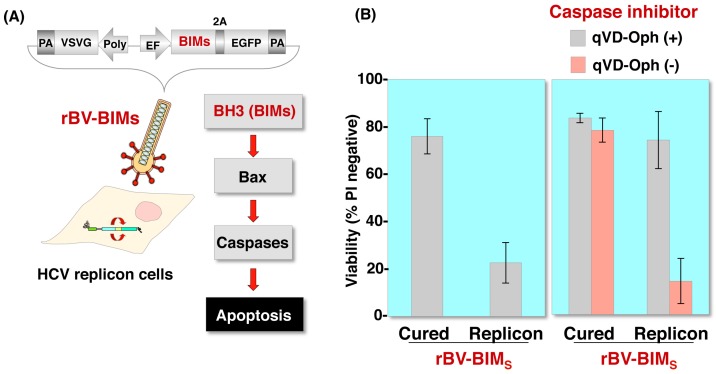
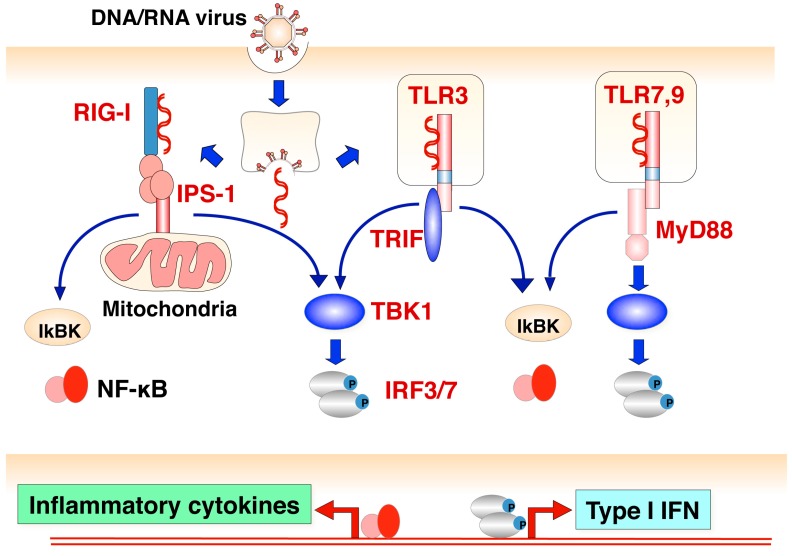
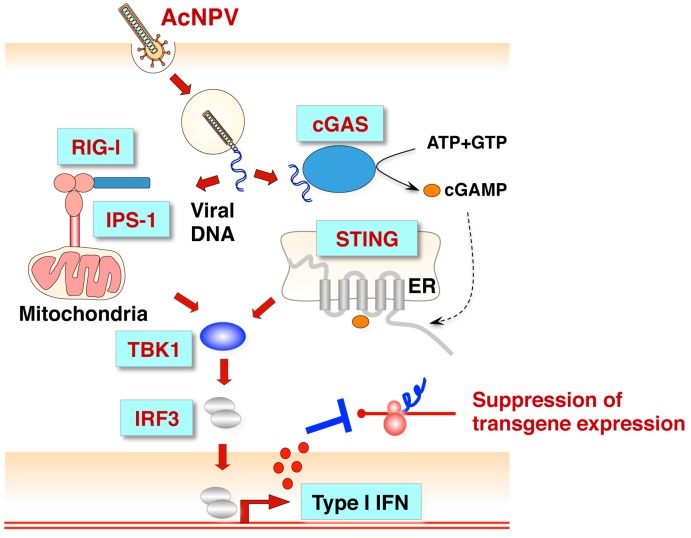
Based on its ability to express high levels of protein, baculovirus has been widely used for recombinant protein production in insect cells for more than thirty years with continued technical improvements. In addition, baculovirus has been successfully applied for foreign gene delivery into mammalian cells without any viral replication. However, several CpG motifs are present throughout baculoviral DNA and induce an antiviral response in mammalian cells, resulting in the production of pro-inflammatory cytokines and type I interferon through a Toll-like receptor (TLR)-dependent or -independent signaling pathway, and ultimately limiting the efficiency of transgene expression. On the other hand, by taking advantage of this strong adjuvant activity, recombinant baculoviruses encoding neutralization epitopes can elicit protective immunity in mice. Moreover, immunodeficient cells, such as hepatitis C virus (HCV)- or human immunodeficiency virus (HIV)-infected cells, are more susceptible to baculovirus infection than normal cells and are selectively eliminated by the apoptosis-inducible recombinant baculovirus. Here, we summarize the application of baculovirus as a gene expression vector and the mechanism of the host innate immune response induced by baculovirus in mammalian cells. We also discuss the future prospects of baculovirus vectors.
基于其能够表达高水平蛋白质的能力,杆状病毒已被广泛用于昆虫细胞中的重组蛋白生产超过三十年,并不断进行技术改进。此外,杆状病毒已成功应用于外源基因传递到哺乳动物细胞而不进行任何病毒复制。然而,杆状病毒 DNA 中存在几个 CpG 基序,在哺乳动物细胞中诱导抗病毒反应,通过 Toll 样受体 (TLR)-依赖或非依赖信号通路导致促炎细胞因子和 I 型干扰素的产生,并最终限制转基因表达的效率。另一方面,利用这种强大的佐剂活性,编码中和表位的重组杆状病毒可以在小鼠中引发保护性免疫。此外,免疫缺陷细胞,如丙型肝炎病毒 (HCV) 或人类免疫缺陷病毒 (HIV) 感染的细胞,比正常细胞更容易受到杆状病毒的感染,并被诱导凋亡的重组杆状病毒选择性消除。在这里,我们总结了杆状病毒作为基因表达载体的应用以及杆状病毒在哺乳动物细胞中诱导宿主固有免疫反应的机制。我们还讨论了杆状病毒载体的未来前景。