Chen Ying, Huang Ying, Chen Dong-Ming, Wu Chao, Leng Qiu-Ping, Wang Wen-Yi, Deng Ming-Qin, Zhao Yan-Xia, Yang Xiao-Hong
Department of Respiratory and Critical Care Medicine, People's Hospital of Xinjiang Uygur Autonomous Region, Urumqi 830001, China,
Graduate School of Xinjiang Medical University, Urumqi 830001 Xinjiang, China.
Onco Targets Ther. 2018 Sep 7;11:5579-5589. doi: 10.2147/OTT.S162667. eCollection 2018.
The usefulness of ribonucleotide reductase catalytic subunit M1 (RRM1) for predicting the therapeutic effects of gemcitabine-containing chemotherapy in patients with non-small cell lung cancer (NSCLC) remains controversial. RRM1-positive patients show unique clinicopathological features.
Here, we performed a meta-analysis to systematically evaluate the relationship between RRM1 expression and the clinicopathological characteristics of NSCLC patients treated with gemcitabine-containing regimens. A comprehensive electronic and manual search was performed to identify relevant articles. The pooled relative risk (RR) and 95% CI were used to estimate the relation between the clinicopathological characteristics of NSCLC patients and RRM1 expression.
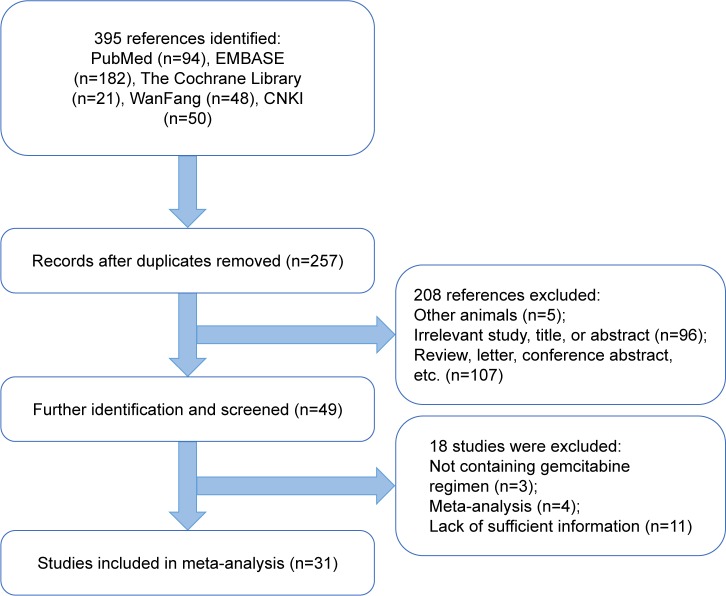
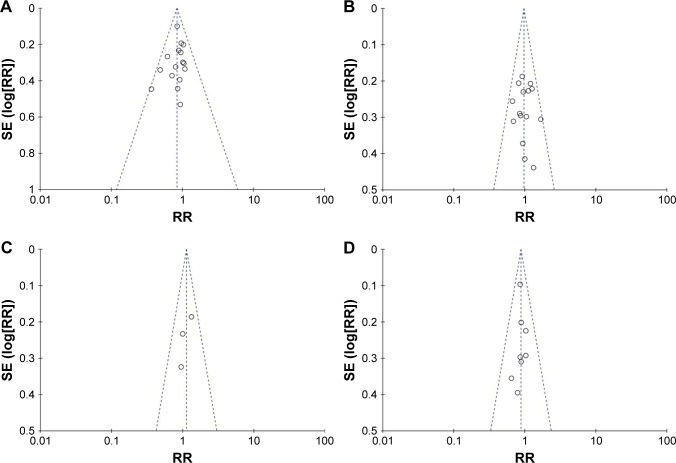
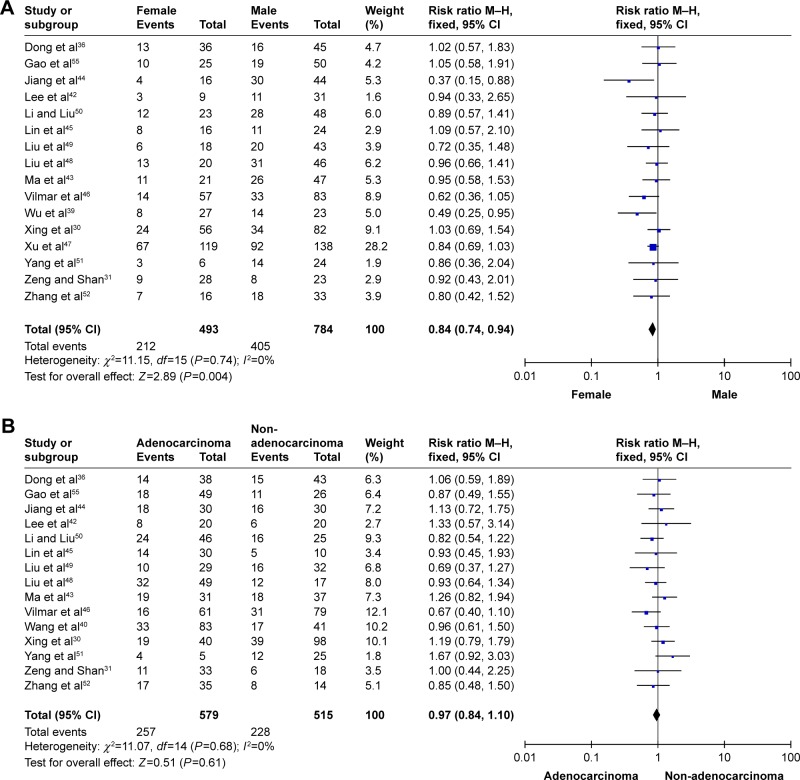
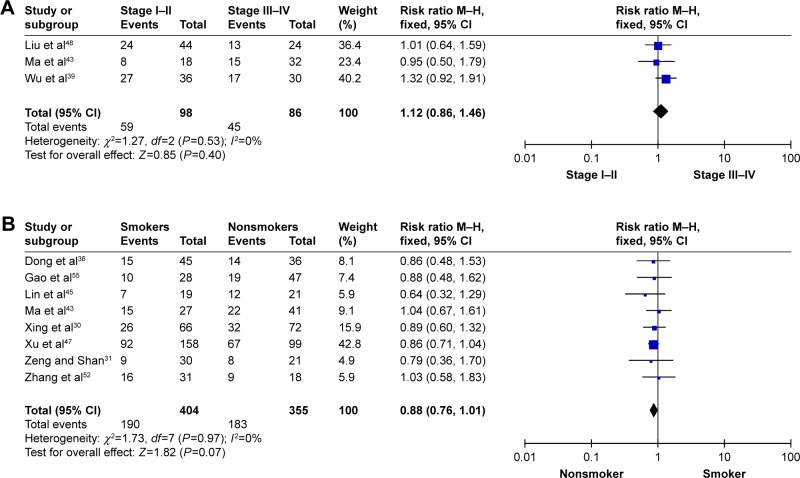
The study included 31 observational studies and 3,667 patients. The analysis showed no significant association between RRM1 expression and pathological type, stage, and smoking status; however, RRM1 positivity was significantly lower in women than in men (43.0% vs 51.7%, RR=0.84, 95% CI: 0.74-0.94, =0.004).
The present pooled analyses demonstrated that RRM1 positivity in women with advanced NSCLC was associated with a higher rate of response to gemcitabine-containing regimens. Immunohistochemistry may be valuable to prescreen for RRM1 expression in clinical practice, whereas PCR can be routinely used as a verification method. These findings will help design suitable molecular-targeted therapies for NSCLC.
核糖核苷酸还原酶催化亚基M1(RRM1)在预测含吉西他滨化疗对非小细胞肺癌(NSCLC)患者的治疗效果方面的作用仍存在争议。RRM1阳性患者表现出独特的临床病理特征。
在此,我们进行了一项荟萃分析,以系统评估RRM1表达与接受含吉西他滨方案治疗的NSCLC患者临床病理特征之间的关系。进行了全面的电子和手动检索以识别相关文章。汇总相对风险(RR)和95%置信区间(CI)用于估计NSCLC患者临床病理特征与RRM1表达之间的关系。
该研究纳入了31项观察性研究和3667例患者。分析显示RRM1表达与病理类型、分期和吸烟状态之间无显著关联;然而,女性的RRM1阳性率显著低于男性(43.0%对51.7%,RR = 0.84,95%CI:0.74 - 0.94,P = 0.004)。
目前的汇总分析表明,晚期NSCLC女性患者的RRM1阳性与含吉西他滨方案的较高反应率相关。免疫组化在临床实践中对RRM1表达进行预筛查可能有价值,而PCR可常规用作验证方法。这些发现将有助于为NSCLC设计合适的分子靶向治疗。