Department of Critical Care, University of Groningen, University Medical Center Groningen, Groningen, The Netherlands.
Department of Pathology and Medical Biology, Medical Biology Section, University of Groningen, University Medical Center Groningen, Groningen, The Netherlands.
Crit Care Med. 2018 Dec;46(12):e1196-e1203. doi: 10.1097/CCM.0000000000003427.
To determine the applicability of recombinant Klotho to prevent inflammation and organ injury in sepsis in man and mice.
Prospective, clinical laboratory study using "warm" human postmortem sepsis-acute kidney injury biopsies. Laboratory study using a mouse model of endotoxemia.
Research laboratory at a university teaching hospital.
Adult patients who died of sepsis in the ICU and control patients undergoing total nephrectomy secondary to renal cancer; male C57BL/6 and Klotho haploinsufficient mice.
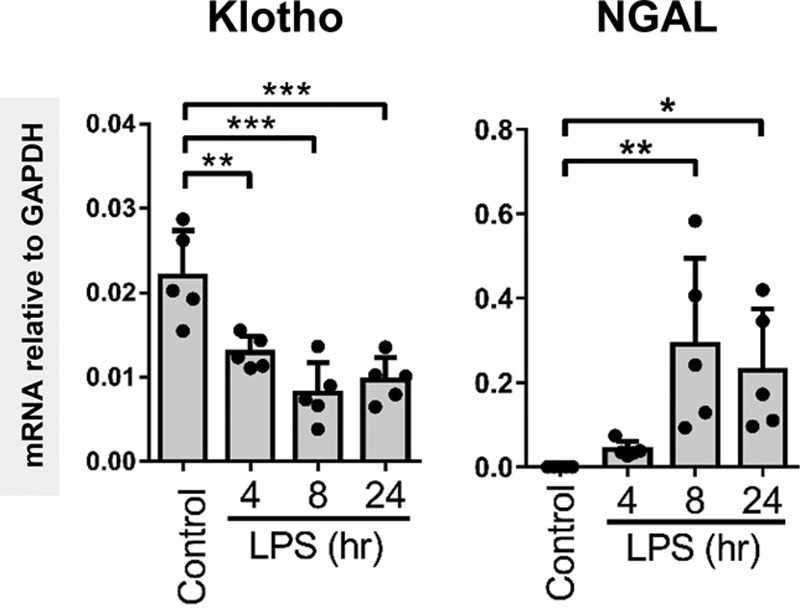
Lipopolysaccharide (0.05 mg/kg) injection and kill after 4, 8, and 24 hours. Mice received recombinant Klotho (0.05 mg/kg) 30 minutes prior to lipopolysaccharide (1 mg/kg) injection. Mice treated with saline were included as controls.
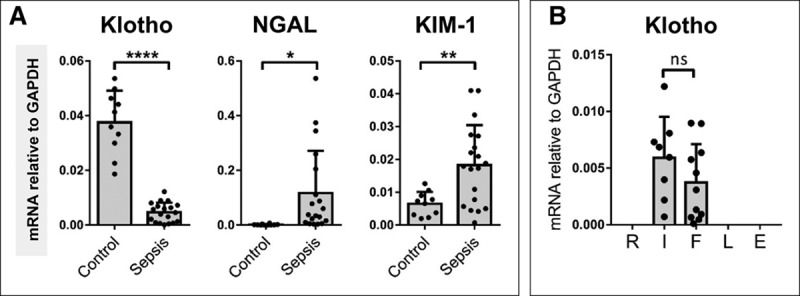
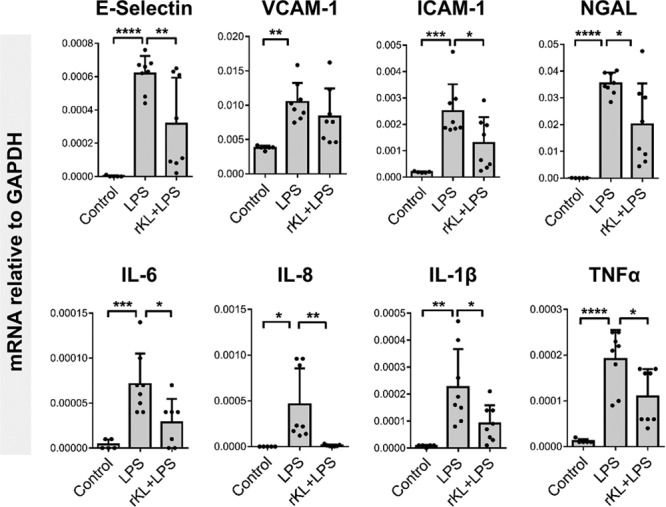
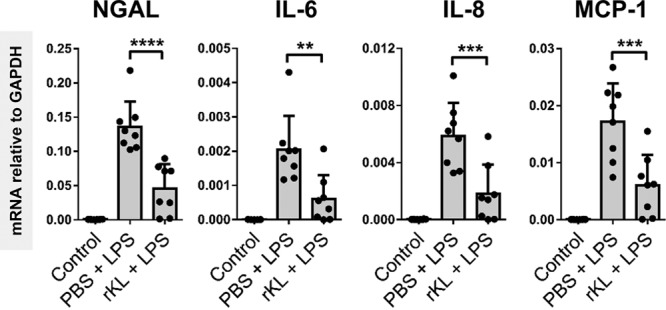
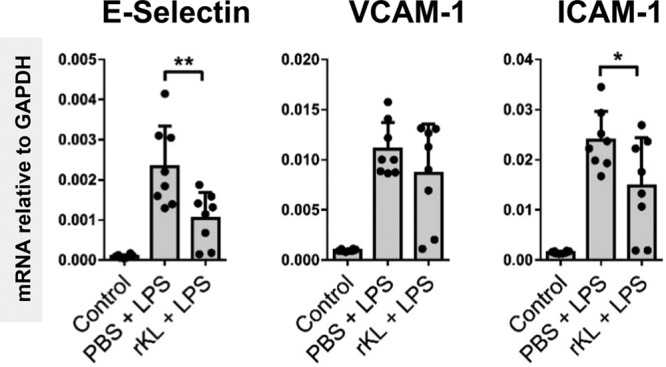
Quantitative reverse transcription polymerase chain reaction and immunohistochemical staining were used to quantify Klotho messenger RNA and protein expression in the kidney of sepsis-acute kidney injury patients and the kidney and brain of mice. The messenger RNA and protein expression of damage markers, inflammatory cytokine, chemokines, and endothelial adhesion molecules were also determined in mice. Renal neutrophil influx was quantified. We found significantly lower renal Klotho messenger RNA and protein levels in sepsis-acute kidney injury biopsies than in control subjects. These findings were recapitulated in the kidney and brain of lipopolysaccharide-challenged mice. Decreased Klotho expression paralleled an increase in kidney damage markers neutrophil gelatinase-associated lipocalin and kidney injury molecule-1. Administration of recombinant Klotho prior to lipopolysaccharide injection attenuated organ damage, inflammation and endothelial activation in the kidney and brain of mice. Furthermore, less neutrophils infiltrated into the kidneys of recombinant Klotho mice compared with lipopolysaccharide only treated mice.
Renal Klotho expression in human sepsis-acute kidney injury and in mouse models of sepsis was significantly decreased and correlated with renal damage. Recombinant Klotho intervention diminished organ damage, inflammation, and endothelial activation in the kidney and brain of lipopolysaccharide-challenged mice. Systemic Klotho replacement may potentially be an organ-protective therapy for septic patients to halt acute, inflammatory organ injury.
确定重组 Klotho 预防人类和小鼠脓毒症炎症和器官损伤的适用性。
前瞻性临床实验室研究,使用“温热”的人类脓毒症-急性肾损伤活检。使用内毒素血症小鼠模型的实验室研究。
大学教学医院的研究实验室。
因脓毒症入住 ICU 死亡的成年患者和因肾癌行全肾切除术的对照患者;雄性 C57BL/6 和 Klotho 单倍体不足小鼠。
脂多糖(0.05mg/kg)注射,4、8 和 24 小时后处死。在注射脂多糖(1mg/kg)前 30 分钟,小鼠给予重组 Klotho(0.05mg/kg)。给予盐水的小鼠作为对照。
使用定量逆转录聚合酶链反应和免疫组织化学染色来定量脓毒症-急性肾损伤患者肾脏和小鼠肾脏和大脑中的 Klotho 信使 RNA 和蛋白表达。还测定了小鼠的损伤标志物、炎症细胞因子、趋化因子和内皮细胞黏附分子的信使 RNA 和蛋白表达。定量肾中性粒细胞浸润。我们发现脓毒症-急性肾损伤活检中的肾 Klotho 信使 RNA 和蛋白水平明显低于对照组。这些发现在脂多糖挑战的小鼠的肾脏和大脑中得到了重现。Klotho 表达的降低与肾脏损伤标志物中性粒细胞明胶酶相关脂质运载蛋白和肾损伤分子 1 的增加平行。脂多糖注射前给予重组 Klotho 可减轻小鼠肾脏和大脑的器官损伤、炎症和内皮激活。此外,与仅接受脂多糖处理的小鼠相比,重组 Klotho 小鼠的肾脏中浸润的中性粒细胞较少。
人类脓毒症-急性肾损伤和小鼠脓毒症模型中的肾脏 Klotho 表达明显降低,与肾脏损伤相关。重组 Klotho 干预可减轻脂多糖挑战小鼠肾脏和大脑的器官损伤、炎症和内皮激活。全身性 Klotho 替代可能是治疗脓毒症患者以阻止急性炎症性器官损伤的潜在器官保护疗法。