Yang Tai-Hua, Gingery Anne, Thoreson Andrew R, Larson Dirk R, Zhao Chunfeng, Amadio Peter C
Biomechanics & Tendon and Soft Tissue Biology Laboratory, Division of Orthopedic Research, Rochester, USA.
Division of Biomedical Statistics and Informatics, Department of Health Science Research, Mayo Clinic, Rochester, MN, 55905, USA.
BMC Musculoskelet Disord. 2018 Sep 22;19(1):342. doi: 10.1186/s12891-018-2260-y.
Fibroblast behavior and cell-matrix interactions of cells from normal and idiopathic carpal tunnel syndrome (CTS) subsynovial connective tissue (SSCT) with and without Triamcinolone Acetonide (TA) were compared in this study. A cell-seeded gel contraction model was applied to investigate the effect of steroid treatment on SSCT fibroblast gene expression and function.
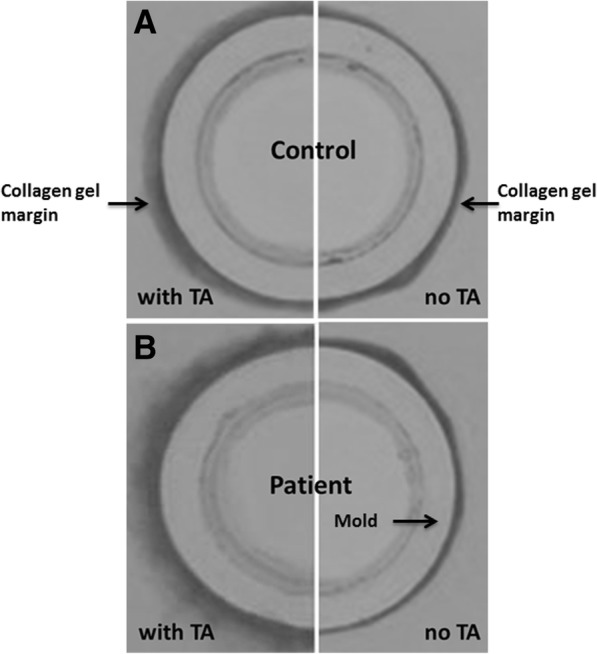
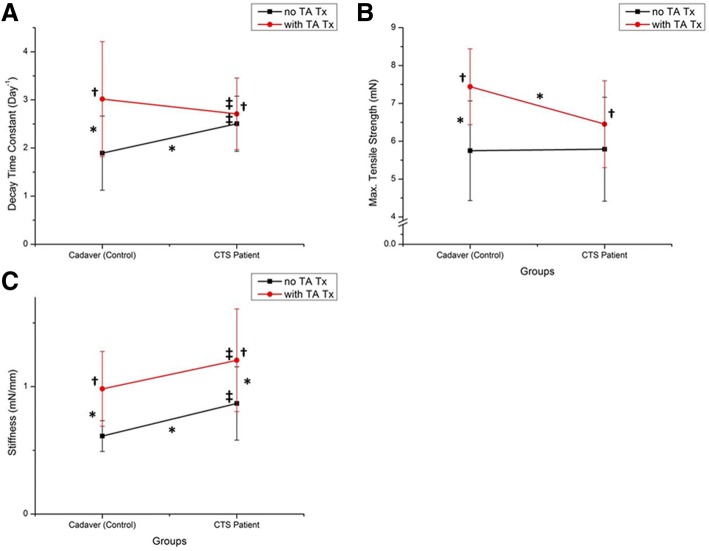
SSCT cells were obtained from CTS patients and fresh cadavers. Cells were isolated by mechanical and collagenase digestion. Collagen gels (1 mg/ml) were prepared with SSCT cells (1 × 10/mL). A sterile Petri dish with a cloning ring in the center was prepared. The area between the ring and outer dish was filled with cell-seeded collagen solution and gelled for 1 h. The gel was released from the outer way of the petri dish to allow gel contraction. Cell seeded gels were treated with 10 M triamcinolone acetonide (TA) or vehicle (DMSO) in modified MEM. Every 4 h for 3 days the contracting gels were photographed and areas calculated. Duplicate contraction tests were performed with each specimen, and the averages were used in the analyses, which were conducted using two-factor analysis of variance in a generalized linear model framework utilizing generalized estimating equations (GEE) to account for the correlation between samples. The contraction rate was determined by the area change over time, and the decay time constant was calculated. A customized mechanical test system was used to determine gel stiffness and tensile strength. Gene expression was assessed using Human Fibrosis and Cell Motility PCR arrays.
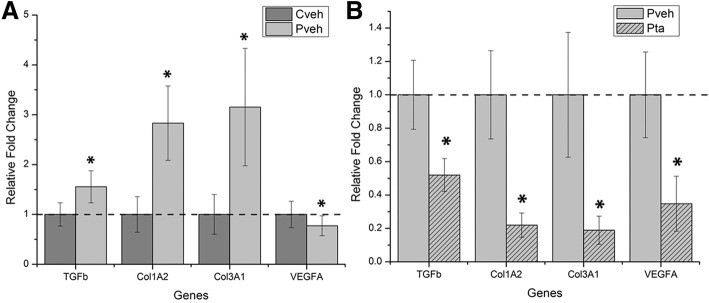
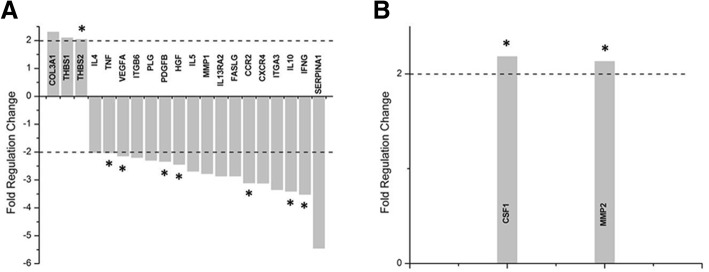
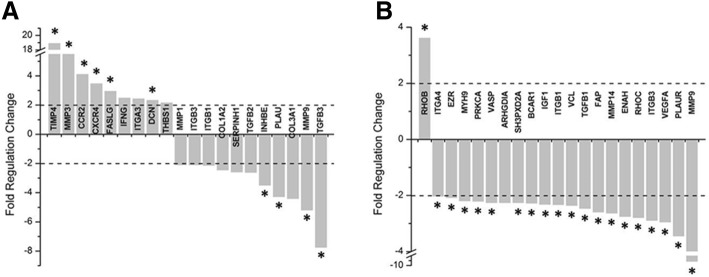
TA-treated gels had a significantly higher contraction rate, tensile strength and stiffness than the untreated gels. Proteinases involved in remodeling had increased expression in TA-treated gels of the patient group. Pro-fibrotic genes and ECM regulators, such as TGF-β, collagens and integrins, were down-regulated by TA, indicating that TA may work in part by decreasing fibrotic gene expression.
This study showed that TA affects cell-matrix interaction and suppresses fibrotic gene expression in the SSCT cells of CTS patients.
本研究比较了来自正常和特发性腕管综合征(CTS)滑膜下结缔组织(SSCT)的细胞在使用和不使用曲安奈德(TA)情况下的成纤维细胞行为及细胞与基质的相互作用。应用细胞接种凝胶收缩模型来研究类固醇治疗对SSCT成纤维细胞基因表达和功能的影响。
从CTS患者和新鲜尸体获取SSCT细胞。通过机械和胶原酶消化分离细胞。用SSCT细胞(1×10⁶/mL)制备胶原蛋白凝胶(1mg/mL)。准备一个中心有克隆环的无菌培养皿。环与外皿之间的区域用细胞接种的胶原溶液填充并凝胶化1小时。从培养皿外部释放凝胶以使其收缩。细胞接种凝胶在改良的MEM中用10μM曲安奈德(TA)或溶剂(二甲基亚砜)处理。在3天内每4小时对收缩的凝胶拍照并计算面积。对每个样本进行重复收缩试验,并将平均值用于分析,分析采用广义线性模型框架下的双因素方差分析,利用广义估计方程(GEE)来考虑样本间的相关性。收缩率由面积随时间的变化确定,并计算衰减时间常数。使用定制的机械测试系统测定凝胶硬度和拉伸强度。使用人纤维化和细胞运动PCR阵列评估基因表达。
TA处理的凝胶比未处理的凝胶具有显著更高的收缩率、拉伸强度和硬度。参与重塑的蛋白酶在患者组TA处理的凝胶中表达增加。促纤维化基因和细胞外基质调节剂,如转化生长因子-β、胶原蛋白和整合素,被TA下调,表明TA可能部分通过降低纤维化基因表达起作用。
本研究表明TA影响CTS患者SSCT细胞中的细胞与基质相互作用并抑制纤维化基因表达。