Neurula Laboratory, Clem Jones Centre for Ageing Dementia Research, Queensland Brain Institute, The University of Queensland, Building 79, Brisbane, 4072, QLD, Australia.
Queensland Brain Institute, The University of Queensland, Brisbane, 4072, QLD, Australia.
J Neuroinflammation. 2018 Sep 24;15(1):276. doi: 10.1186/s12974-018-1313-3.
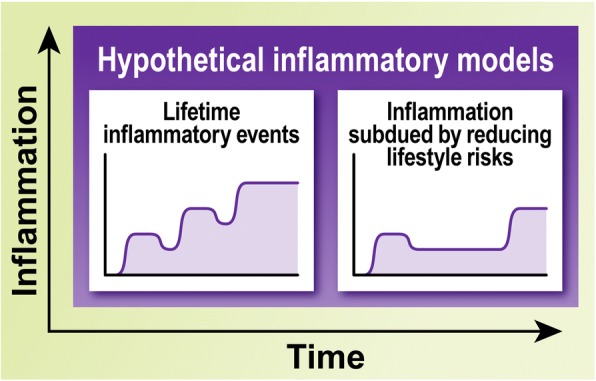
Alzheimer's disease (AD) is a neurodegenerative disorder, most cases of which lack a clear causative event. This has made the disease difficult to characterize and, thus, diagnose. Although some cases are genetically linked, there are many diseases and lifestyle factors that can lead to an increased risk of developing AD, including traumatic brain injury, diabetes, hypertension, obesity, and other metabolic syndromes, in addition to aging. Identifying common factors and trends between these conditions could enhance our understanding of AD and lead to the development of more effective treatments. Although the immune system is one of the body's key defense mechanisms, chronic inflammation has been increasingly linked with several age-related diseases. Moreover, it is now well accepted that chronic inflammation has an important role in the onset and progression of AD. In this review, the different inflammatory signals associated with AD and its risk factors will be outlined to demonstrate how chronic inflammation may be influencing individual susceptibility to AD. Our goal is to bring attention to potential shared signals presented by the immune system during different conditions that could lead to the development of successful treatments.
阿尔茨海默病(AD)是一种神经退行性疾病,大多数病例缺乏明确的病因。这使得该疾病难以被定性,从而难以诊断。尽管有些病例与遗传有关,但还有许多疾病和生活方式因素会增加患 AD 的风险,包括脑外伤、糖尿病、高血压、肥胖症和其他代谢综合征,此外还有衰老。识别这些疾病之间的常见因素和趋势可以增强我们对 AD 的理解,并促使开发出更有效的治疗方法。虽然免疫系统是人体的主要防御机制之一,但慢性炎症与几种与年龄相关的疾病的关联越来越紧密。此外,现在人们普遍认为,慢性炎症在 AD 的发病和进展中起着重要作用。在这篇综述中,将概述与 AD 及其危险因素相关的不同炎症信号,以证明慢性炎症如何影响个体对 AD 的易感性。我们的目标是引起人们对免疫系统在不同条件下表现出的潜在共同信号的关注,这些信号可能会导致成功治疗方法的开发。