Scali Maria Chiara, Ciampi Quirino, Picano Eugenio, Bossone Eduardo, Ferrara Francesco, Citro Rodolfo, Colonna Paolo, Costantino Marco Fabio, Cortigiani Lauro, Andrea Antonello D', Severino Sergio, Dodi Claudio, Gaibazzi Nicola, Galderisi Maurizio, Barbieri Andrea, Monte Ines, Mori Fabio, Reisenhofer Barbara, Re Federica, Rigo Fausto, Trambaiolo Paolo, Amor Miguel, Lowenstein Jorge, Merlo Pablo Martin, Daros Clarissa Borguezan, de Castro E Silva Pretto José Luis, Miglioranza Marcelo Haertel, Torres Marco A R, de Azevedo Bellagamba Clarissa Carmona, Chaves Daniel Quesada, Simova Iana, Varga Albert, Čelutkienė Jelena, Kasprzak Jaroslaw D, Wierzbowska-Drabik Karina, Lipiec Piotr, Weiner-Mik Paulina, Szymczyk Eva, Wdowiak-Okrojek Katarzyna, Djordjevic-Dikic Ana, Dekleva Milica, Stankovic Ivan, Neskovic Aleksandar N, Zagatina Angela, Di Salvo Giovanni, Perez Julio E, Camarozano Ana Cristina, Corciu Anca Irina, Boshchenko Alla, Lattanzi Fabio, Cotrim Carlos, Fazendas Paula, Haberka Maciej, Sobkowic Bozena, Kosmala Wojciech, Witkowski Tomasz, Gosciniak Piotr, Salustri Alessandro, Rodriguez-Zanella Hugo, Leal Luis Ignacio Martin, Nikolic Alexandra, Gligorova Suzana, Urluescu Madalina-Loredana, Fiorino Maria, Novo Giuseppina, Preradovic-Kovacevic Tamara, Ostojic Miodrag, Beleslin Branko, Villari Bruno, De Nes Michele, Paterni Marco, Carpeggiani Clara
Cardiology Department, Nottola Hospital, Siena, Italy.
Cardiothoracic Department, University of Pisa, Pisa, Italy.
Cardiovasc Ultrasound. 2018 Sep 25;16(1):20. doi: 10.1186/s12947-018-0138-7.
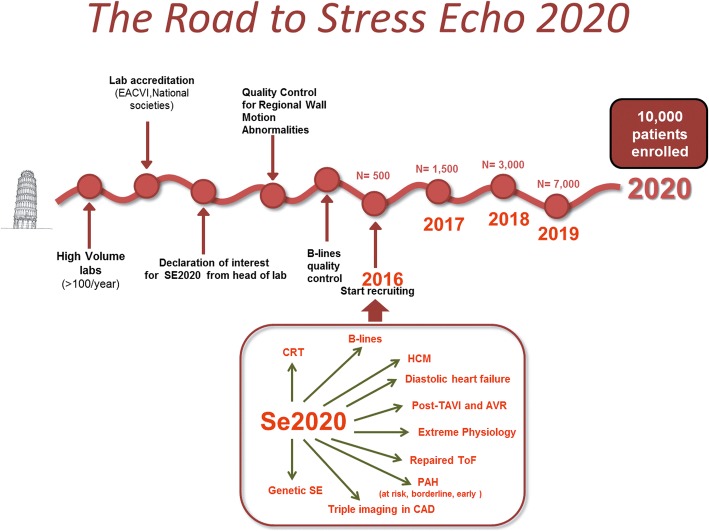
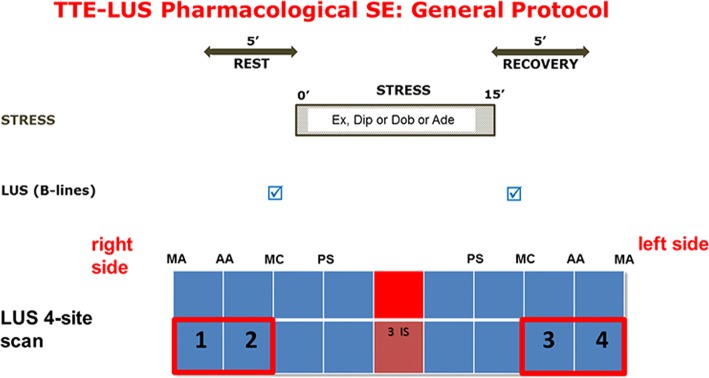
The effectiveness trial "Stress echo (SE) 2020" evaluates novel applications of SE in and beyond coronary artery disease. The core protocol also includes 4-site simplified scan of B-lines by lung ultrasound, useful to assess pulmonary congestion.
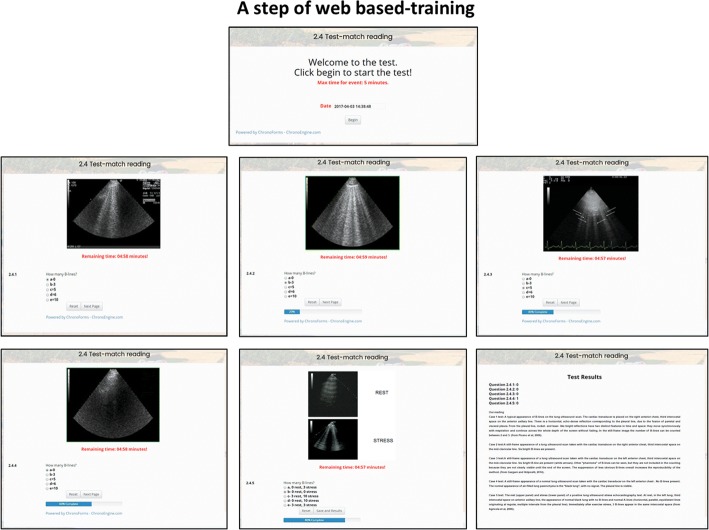
To provide web-based upstream quality control and harmonization of B-lines reading criteria.
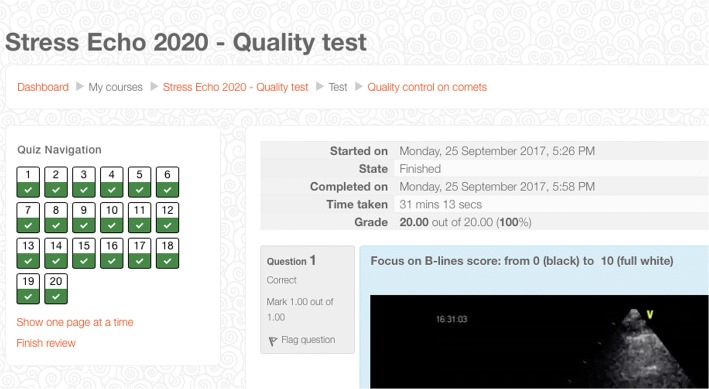
60 readers (all previously accredited for regional wall motion, 53 B-lines naive) from 52 centers of 16 countries of SE 2020 network read a set of 20 lung ultrasound video-clips selected by the Pisa lab serving as reference standard, after taking an obligatory web-based learning 2-h module ( http://se2020.altervista.org ). Each test clip was scored for B-lines from 0 (black lung, A-lines, no B-lines) to 10 (white lung, coalescing B-lines). The diagnostic gold standard was the concordant assessment of two experienced readers of the Pisa lab. The answer of the reader was considered correct if concordant with reference standard reading ±1 (for instance, reference standard reading of 5 B-lines; correct answer 4, 5, or 6). The a priori determined pass threshold was 18/20 (≥ 90%) with R value (intra-class correlation coefficient) between reference standard and recruiting center) > 0.90. Inter-observer agreement was assessed with intra-class correlation coefficient statistics.
All 60 readers were successfully accredited: 26 (43%) on first, 24 (40%) on second, and 10 (17%) on third attempt. The average diagnostic accuracy of the 60 accredited readers was 95%, with R value of 0.95 compared to reference standard reading. The 53 B-lines naive scored similarly to the 7 B-lines expert on first attempt (90 versus 95%, p = NS). Compared to the step-1 of quality control for regional wall motion abnormalities, the mean reading time per attempt was shorter (17 ± 3 vs 29 ± 12 min, p < .01), the first attempt success rate was higher (43 vs 28%, p < 0.01), and the drop-out of readers smaller (0 vs 28%, p < .01).
Web-based learning is highly effective for teaching and harmonizing B-lines reading. Echocardiographers without previous experience with B-lines learn quickly.
有效性试验“应激超声心动图(SE)2020”评估了SE在冠状动脉疾病及其他领域的新应用。核心方案还包括通过肺部超声对B线进行4部位简化扫描,这有助于评估肺淤血情况。
提供基于网络的B线阅读标准的上游质量控制与统一。
来自SE 2020网络16个国家52个中心的60名读者(均先前获得区域壁运动评估资格,53名无B线评估经验)在参加一个必修的2小时网络学习模块(http://se2020.altervista.org)后,阅读由比萨实验室挑选的一组20个肺部超声视频片段,该实验室的评估作为参考标准。每个测试片段根据B线情况从0分(黑色肺、A线、无B线)到10分(白色肺、融合的B线)进行评分。诊断金标准是比萨实验室两名经验丰富的读者的一致评估。如果读者的答案与参考标准读数相差±1(例如,参考标准读数为5条B线;正确答案为4、5或6),则认为该读者的答案正确。预先确定的通过阈值为18/20(≥90%),参考标准与招募中心之间的R值(组内相关系数)>0.90。观察者间的一致性通过组内相关系数统计进行评估。
所有60名读者均成功获得资格:第一次尝试获得资格的有26名(43%),第二次尝试获得资格的有24名(40%),第三次尝试获得资格的有10名(17%)。60名获得资格的读者的平均诊断准确率为95%,与参考标准读数相比,R值为0.95。53名无B线评估经验者第一次尝试的得分与7名有B线评估经验者相似(90%对95%,p=无显著差异)。与区域壁运动异常的质量控制第一步相比,每次尝试的平均阅读时间更短(17±3分钟对29±12分钟,p<0.01),第一次尝试成功率更高(43%对28%,p<0.),读者退出率更低(0%对28%,p<0.01)。
基于网络的学习对于B线阅读的教学和统一非常有效。以前没有B线评估经验的超声心动图医生学习速度很快。