Lawthom Charlotte, Peltola Jukka, McMurray Rob, Dodd Emma, Villanueva Vicente
Aneurin Bevan University Health Board, Newport, UK.
Tampere University Hospital, Tampere, Finland.
Neurol Ther. 2018 Dec;7(2):195-206. doi: 10.1007/s40120-018-0111-2. Epub 2018 Sep 24.
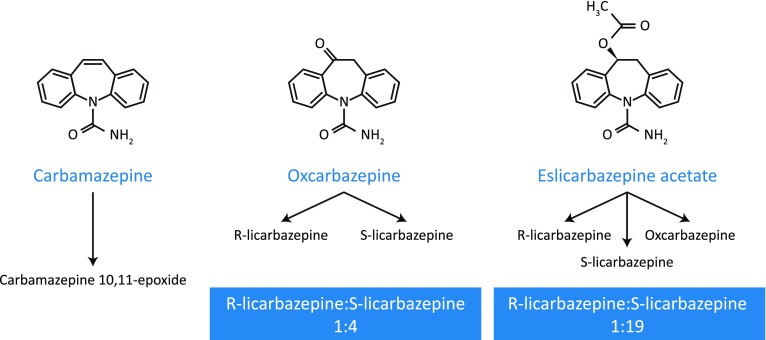
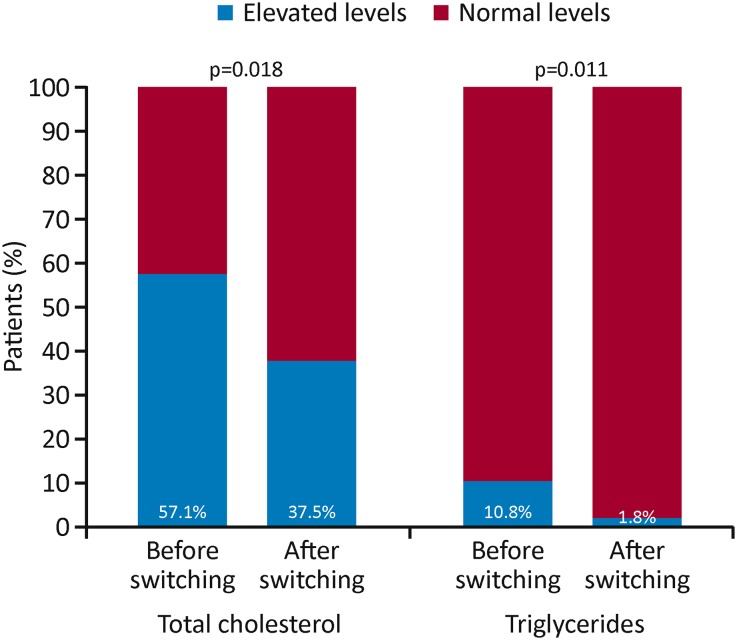
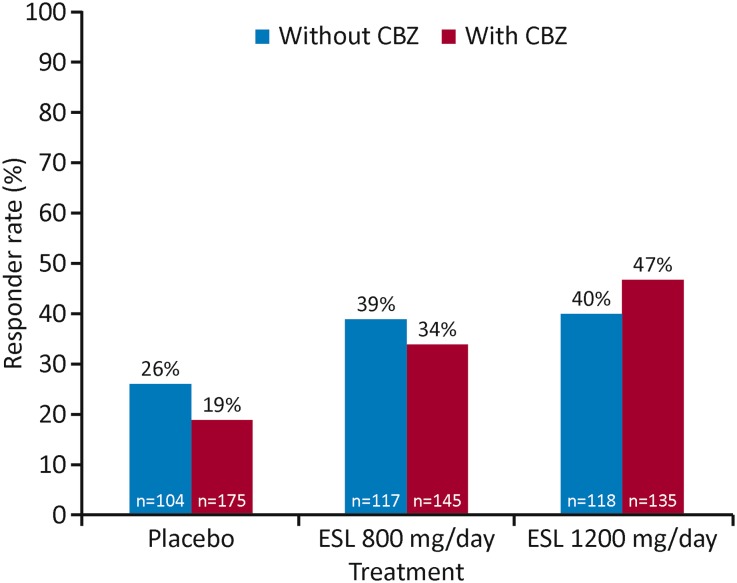
Carbamazepine (CBZ), oxcarbazepine (OXC), and eslicarbazepine acetate (ESL) belong to the dibenzazepine family of antiepileptic drugs and are all thought to primarily act as sodium channel blockers (SCBs). However, ESL is structurally distinct from CBZ and OXC, resulting in differences in metabolism, pharmacokinetics, and pharmacodynamics. Despite a lack of direct comparative data, evidence for potential differences in effectiveness and tolerability within the dibenzazepine family has emerged from studies in which patients being treated with one dibenzazepine agent have received adjunctive treatment with another (having achieved insufficient seizure control with the first) or have transitioned from one dibenzazepine agent to another because of lack of effectiveness or poor tolerability. Most of these studies have been conducted in the real-world clinical practice setting. ESL has been shown to be effective as adjunctive therapy in patients who have previously achieved inadequate seizure control with CBZ, indicating that the use of different dibenzazepine agents in combination can provide additive effectiveness benefits, which may reflect underlying differences in their mechanisms of action. Similarly, ESL monotherapy can be effective in patients who have switched from another dibenzazepine, such as CBZ or OXC, because of inadequate efficacy. There is also considerable evidence to demonstrate that patients transitioning from OXC or CBZ to ESL as a result of adverse events experience improvements in tolerability, which may also be associated with improvements in quality of life, alertness, and/or lipid profiles. Current evidence therefore demonstrates that ESL differs from other dibenzazepine agents in terms of effectiveness and tolerability.Funding: Eisai Ltd.
卡马西平(CBZ)、奥卡西平(OXC)和醋酸艾司利卡西平(ESL)属于二苯并氮䓬类抗癫痫药物,人们认为它们主要作为钠通道阻滞剂(SCB)发挥作用。然而,ESL在结构上与CBZ和OXC不同,导致其在代谢、药代动力学和药效学方面存在差异。尽管缺乏直接的对比数据,但在一些研究中已出现证据表明二苯并氮䓬类药物在有效性和耐受性方面可能存在差异:在这些研究中,接受一种二苯并氮䓬类药物治疗的患者接受了另一种药物的辅助治疗(第一种药物未能充分控制癫痫发作),或者由于疗效不佳或耐受性差而从一种二苯并氮䓬类药物转换为另一种。这些研究大多是在现实世界临床实践环境中进行的。已证明ESL作为辅助治疗对先前使用CBZ未能充分控制癫痫发作的患者有效,这表明联合使用不同的二苯并氮䓬类药物可带来增效益处,这可能反映了它们作用机制的潜在差异。同样,ESL单药治疗对因疗效不佳而从另一种二苯并氮䓬类药物(如CBZ或OXC)转换过来的患者可能有效。也有大量证据表明,因不良事件从OXC或CBZ转换为ESL的患者耐受性有所改善,这也可能与生活质量、警觉性和/或血脂状况的改善有关。因此,目前的证据表明ESL在有效性和耐受性方面与其他二苯并氮䓬类药物不同。资助:卫材株式会社