Laboratory for Molecular Biology, Institute of Molecular Genetics and Genetic Engineering, University of Belgrade, Belgrade, Serbia.
Department of Developmental Genetics, Max Planck Institute for Heart and Lung Research, Bad Nauheim, Germany.
PLoS One. 2018 Sep 25;13(9):e0204312. doi: 10.1371/journal.pone.0204312. eCollection 2018.
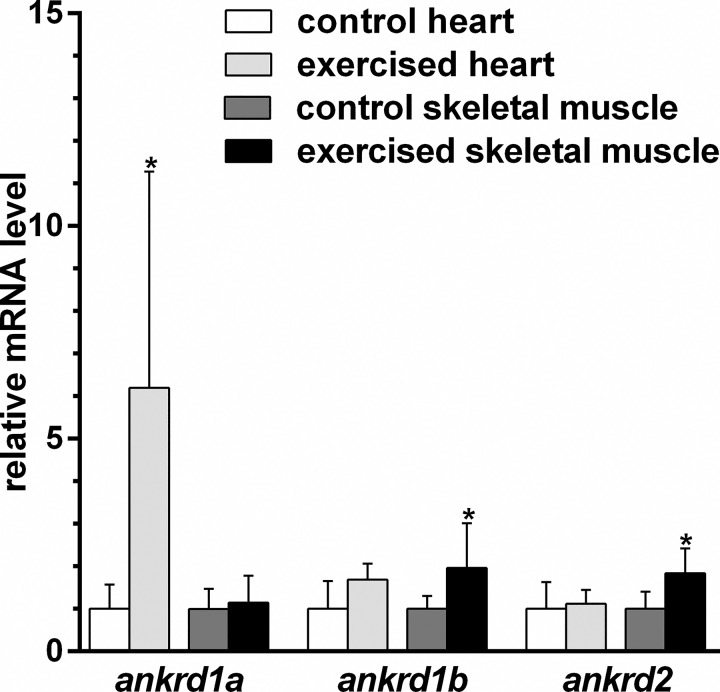
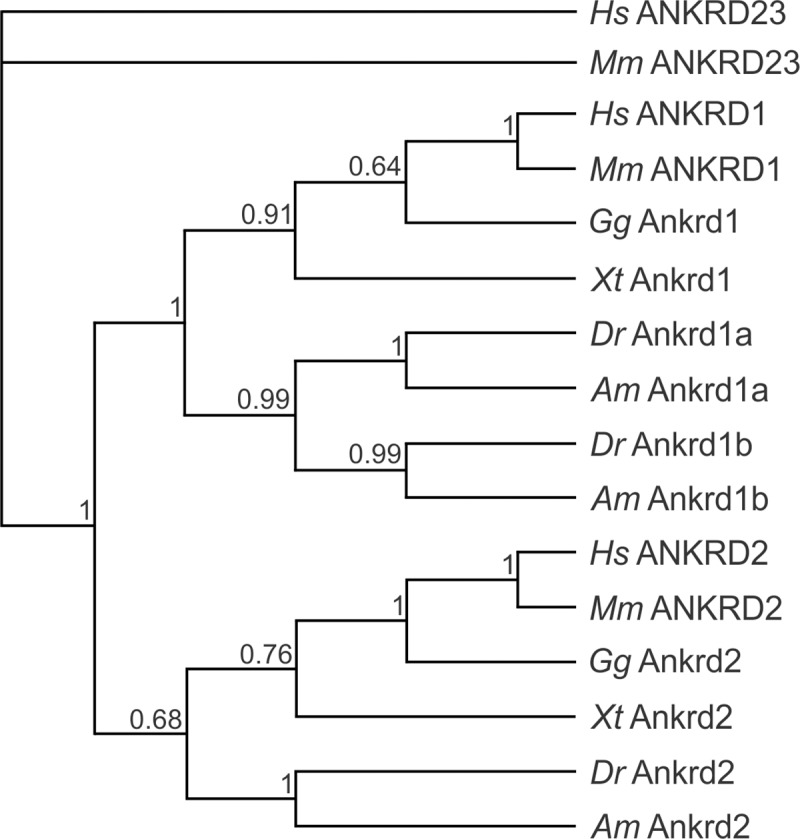
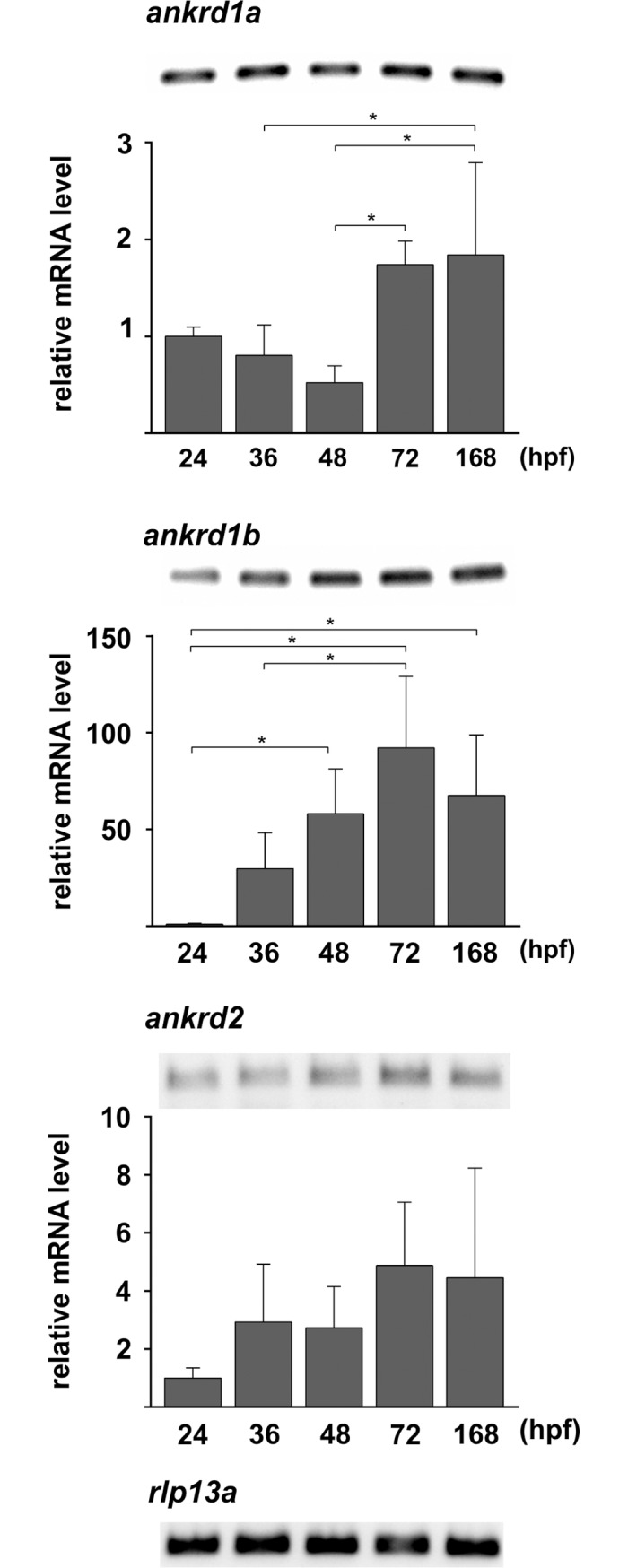
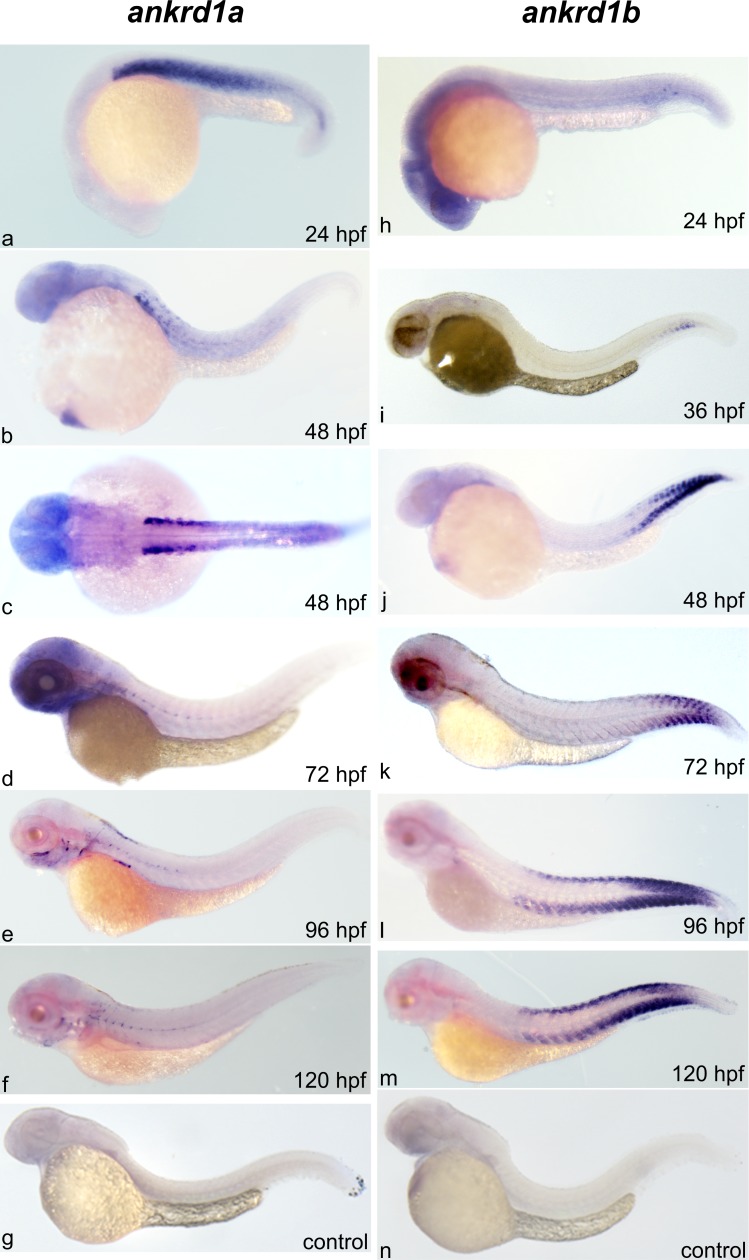
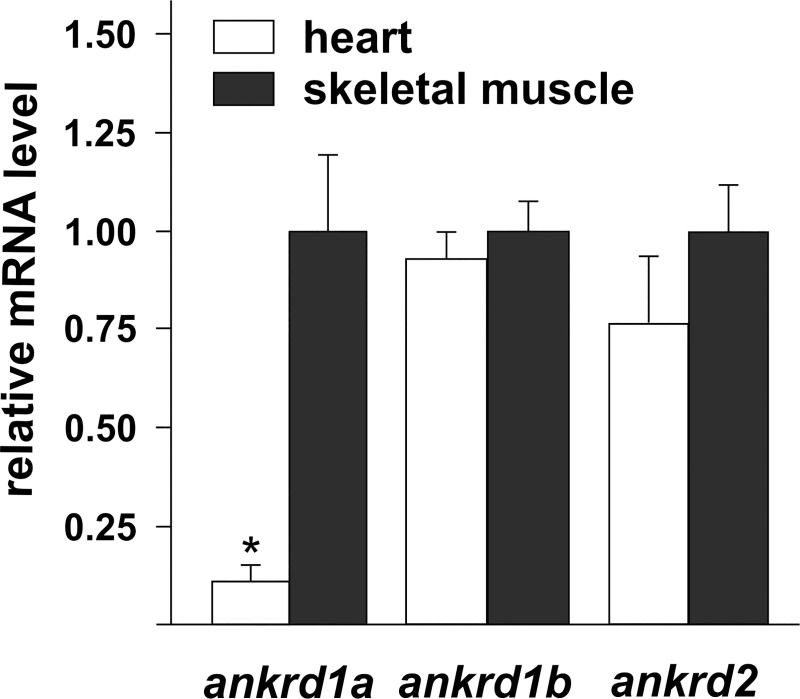
Muscle proteins with ankyrin repeats (MARPs) ANKRD1 and ANKRD2 are titin-associated proteins with a putative role as transcriptional co-regulators in striated muscle, involved in the cellular response to mechanical, oxidative and metabolic stress. Since many aspects of the biology of MARPs, particularly exact mechanisms of their action, in striated muscle are still elusive, research in this field will benefit from novel animal model system. Here we investigated the MARPs found in zebrafish for protein structure, evolutionary conservation, spatiotemporal expression profiles and response to increased muscle activity. Ankrd1 and Ankrd2 show overall moderate conservation at the protein level, more pronounced in the region of ankyrin repeats, motifs indispensable for their function. The two zebrafish genes, ankrd1a and ankrd1b, counterparts of mammalian ANKRD1/Ankrd1, have different expression profiles during first seven days of development. Mild increase of ankrd1a transcript levels was detected at 72 hpf (1.74±0.24 fold increase relative to 24 hpf time point), while ankrd1b expression was markedly upregulated from 24 hpf onward and peaked at 72 hpf (92.18±36.95 fold increase relative to 24 hpf time point). Spatially, they exhibited non-overlapping expression patterns during skeletal muscle development in trunk (ankrd1a) and tail (ankrd1b) somites. Expression of ankrd2 was barely detectable. Zebrafish MARPs, expressed at a relatively low level in adult striated muscle, were found to be responsive to endurance exercise training consisting of two bouts of 3 hours of forced swimming daily, for five consecutive days. Three hours after the last exercise bout, ankrd1a expression increased in cardiac muscle (6.19±5.05 fold change), while ankrd1b and ankrd2 were upregulated in skeletal muscle (1.97±1.05 and 1.84±0.58 fold change, respectively). This study provides the foundation to establish zebrafish as a novel in vivo model for further investigation of MARPs function in striated muscle.
肌球蛋白结合蛋白肌球蛋白结合蛋白(MARPs)ANKRD1 和 ANKRD2 是与原肌球蛋白相关的蛋白,具有作为横纹肌转录共调节剂的潜在作用,参与细胞对机械、氧化和代谢应激的反应。由于 MARPs 的生物学许多方面,特别是其在横纹肌中的作用的确切机制,仍然难以捉摸,因此该领域的研究将受益于新型动物模型系统。在这里,我们研究了斑马鱼中的 MARPs,以研究其蛋白质结构、进化保守性、时空表达谱以及对肌肉活动增加的反应。ANKRD1 和 ANKRD2 在蛋白质水平上表现出中等程度的保守性,在ankyrin 重复序列区域更为明显,这些区域对其功能至关重要。两种斑马鱼基因 ankrd1a 和 ankrd1b 是哺乳动物 ANKRD1/Ankrd1 的对应物,在发育的前 7 天具有不同的表达谱。在 72 hpf 时检测到 ankrd1a 转录本水平的轻度增加(相对于 24 hpf 时间点增加 1.74±0.24 倍),而 ankrd1b 的表达从 24 hpf 开始显著上调,并在 72 hpf 时达到峰值(相对于 24 hpf 时间点增加 92.18±36.95 倍)。空间上,它们在躯干(ankrd1a)和尾部(ankrd1b)体节的骨骼肌发育过程中表现出非重叠的表达模式。ankrd2 的表达几乎检测不到。在成年横纹肌中表达水平相对较低的斑马鱼 MARPs 被发现对包括每天两次 3 小时强制游泳在内的耐力运动训练有反应,连续五天。最后一次运动训练后 3 小时,ankrd1a 在心肌中表达增加(6.19±5.05 倍变化),而 ankrd1b 和 ankrd2 在骨骼肌中上调(1.97±1.05 和 1.84±0.58 倍变化)。本研究为建立斑马鱼作为进一步研究 MARPs 在横纹肌中功能的新型体内模型奠定了基础。