Usui Takuji, Noble Daniel W A, O'Dea Rose E, Fangmeier Melissa L, Lagisz Malgorzata, Hesselson Daniel, Nakagawa Shinichi
Evolution & Ecology Research Centre and School of Biological, Earth and Environmental Sciences, University of New South Wales, Sydney, Australia.
Diabetes and Metabolism Division, Garvan Institue of Medical Research, Sydney, New South Wales, Australia.
PeerJ. 2018 Jan 17;6:e4292. doi: 10.7717/peerj.4292. eCollection 2018.
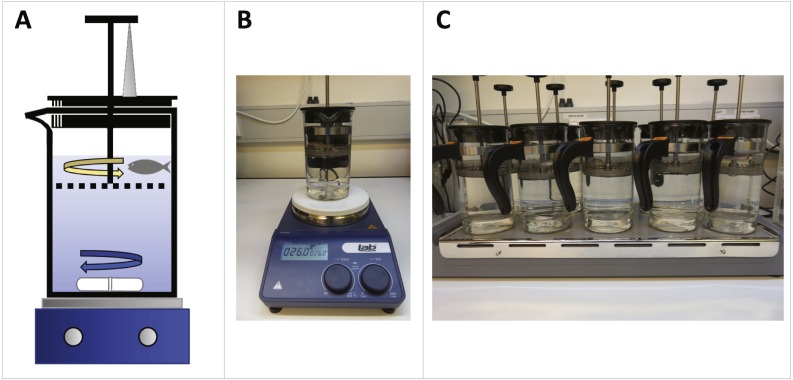
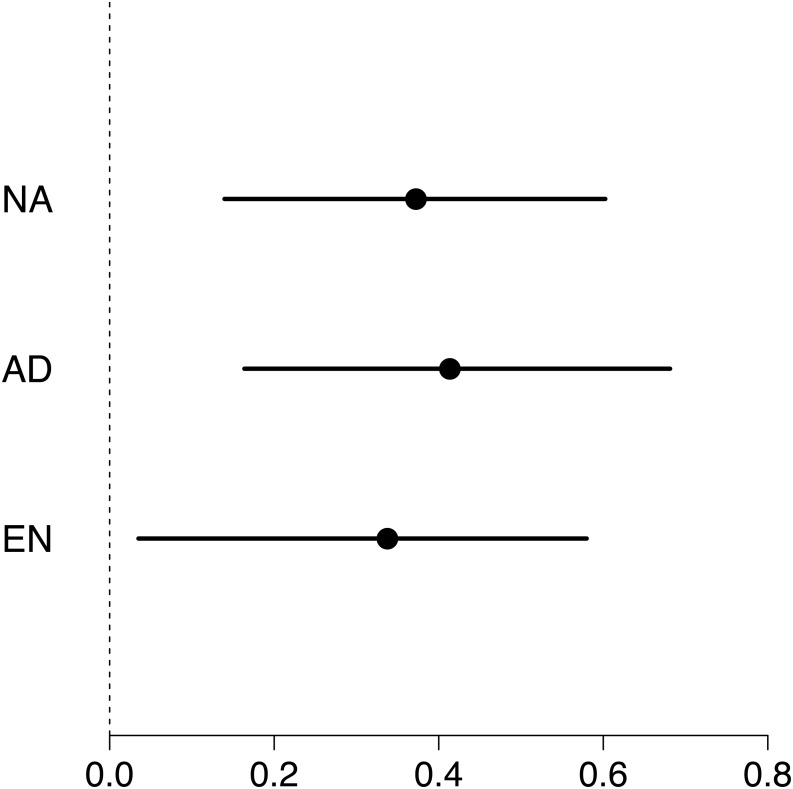
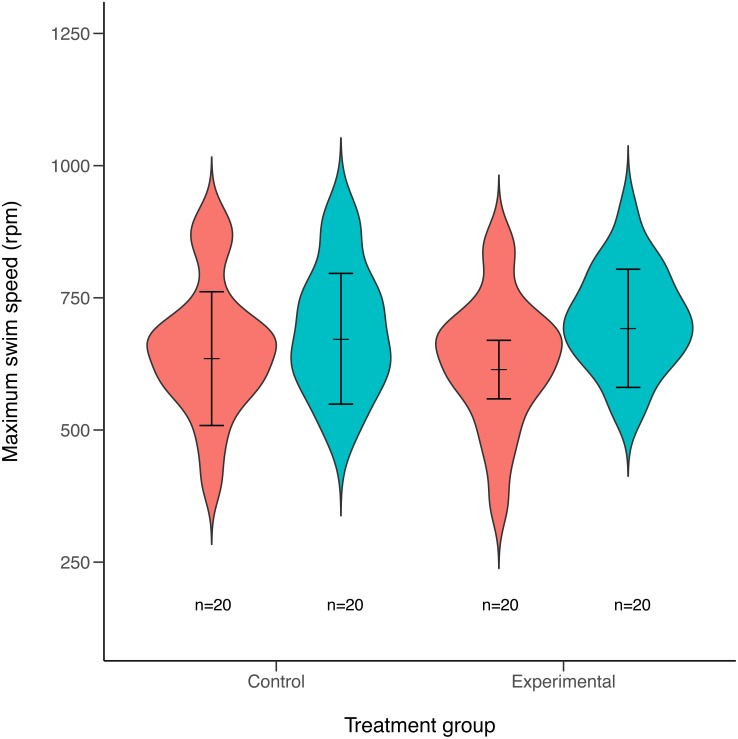
Zebrafish are increasingly used as a vertebrate model organism for various traits including swimming performance, obesity and metabolism, necessitating high-throughput protocols to generate standardized phenotypic information. Here, we propose a novel and cost-effective method for exercising zebrafish, using a coffee plunger and magnetic stirrer. To demonstrate the use of this method, we conducted a pilot experiment to show that this simple system provides repeatable estimates of maximal swim performance (intra-class correlation [ICC] = 0.34-0.41) and observe that exercise training of zebrafish on this system significantly increases their maximum swimming speed. We propose this high-throughput and reproducible system as an alternative to traditional linear chamber systems for exercising zebrafish and similarly sized fishes.
斑马鱼越来越多地被用作脊椎动物模型生物,用于研究包括游泳能力、肥胖和新陈代谢在内的各种性状,因此需要高通量方案来生成标准化的表型信息。在此,我们提出了一种新颖且经济高效的斑马鱼运动方法,使用咖啡压滤器和磁力搅拌器。为了证明该方法的实用性,我们进行了一项初步实验,结果表明这个简单的系统能够提供可重复的最大游泳能力估计值(组内相关系数[ICC]=0.34-0.41),并且观察到在此系统上对斑马鱼进行运动训练可显著提高它们的最大游泳速度。我们建议将这个高通量且可重复的系统作为传统线性实验箱系统的替代方案,用于斑马鱼及类似大小鱼类的运动实验。