Riding Rebecca L, Richmond Jillian M, Harris John E
Department of Dermatology, University of Massachusetts Medical School, Worcester, Massachusetts.
Curr Protoc Immunol. 2019 Feb;124(1):e63. doi: 10.1002/cpim.63. Epub 2018 Sep 25.
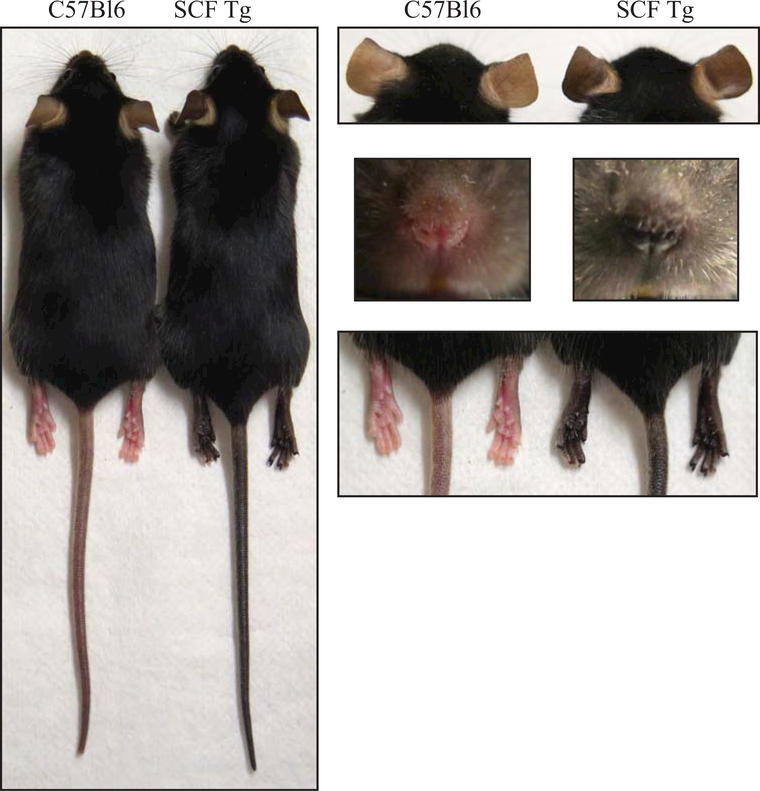
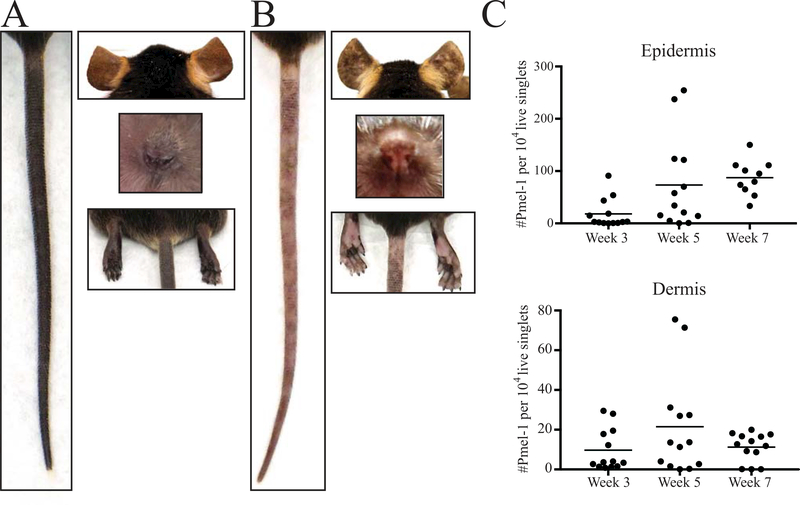
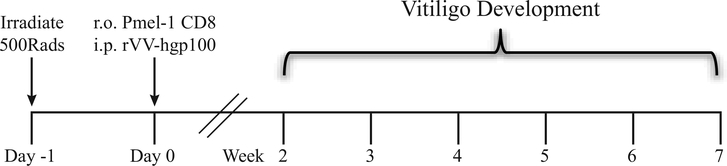
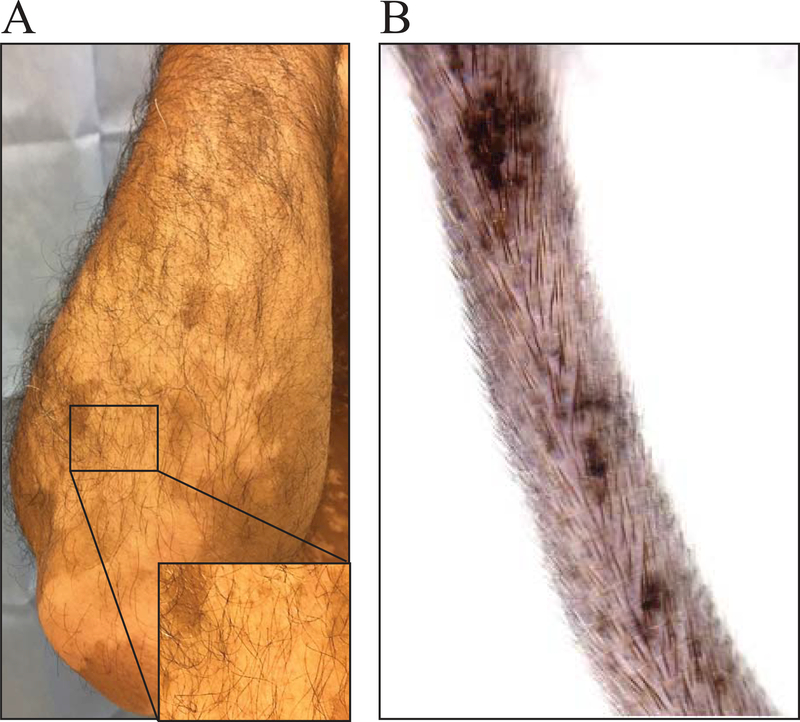
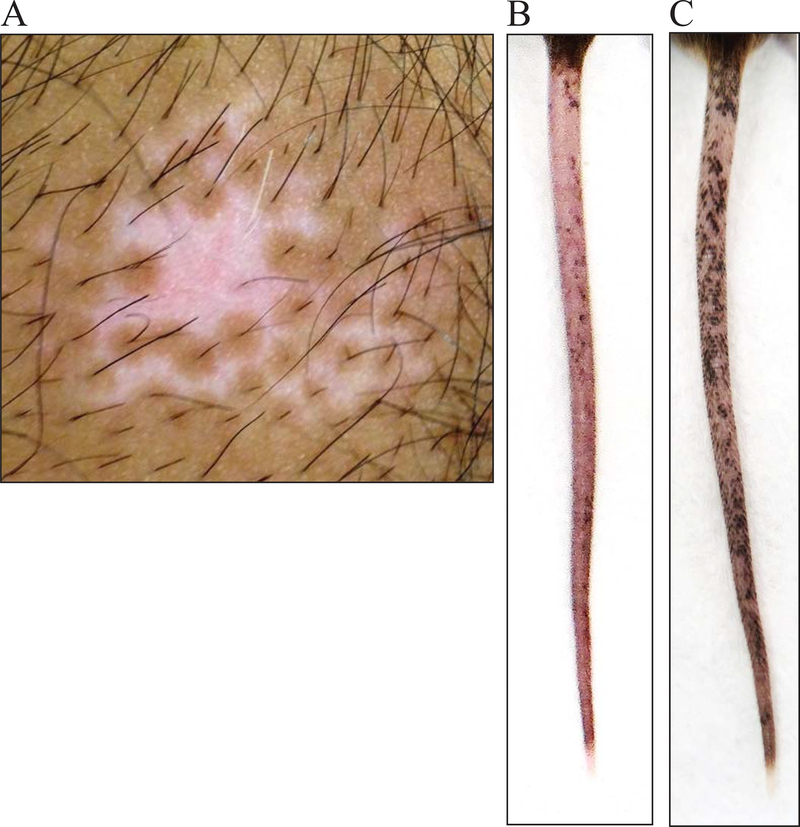
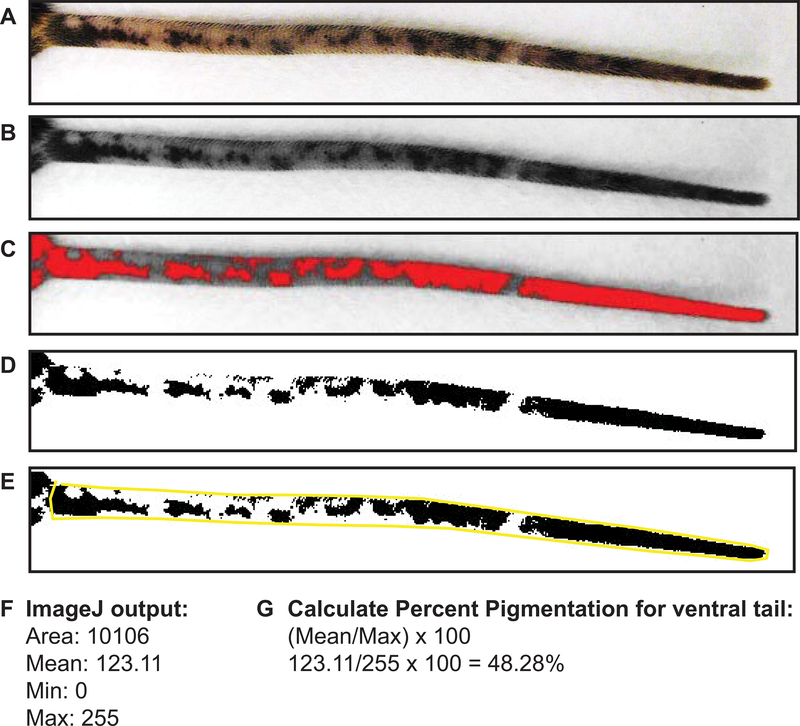
Vitiligo is an autoimmune skin disease in which the pigment-producing melanocytes are destroyed by autoreactive CD8 T cells. As a result, patients develop disfiguring white spots on the skin. This article discusses the first mouse model of vitiligo that develops epidermal depigmentation, similar to disease in human patients. To achieve epidermal depigmentation, mice are genetically engineered to retain melanocytes in the skin epidermis. Induction of disease occurs by adoptive transfer of melanocyte-specific CD8 T cells into recipient mice and the subsequent activation of these T cells using a viral vector. Depigmentation of the epidermis occurs within 5 to 7 weeks in a patchy pattern similar to patients with vitiligo. This article describes the methods of vitiligo induction, quantification of lesion progression and regression, processing of the skin for detailed analysis, and how to use this model to inform clinical studies. © 2018 by John Wiley & Sons, Inc.
白癜风是一种自身免疫性皮肤病,其中产生色素的黑素细胞被自身反应性CD8 T细胞破坏。结果,患者皮肤上会出现毁容性白斑。本文讨论了首个出现表皮色素脱失的白癜风小鼠模型,该模型与人类患者的疾病相似。为了实现表皮色素脱失,对小鼠进行基因工程改造,使其在皮肤表皮中保留黑素细胞。通过将黑素细胞特异性CD8 T细胞过继转移到受体小鼠中,并随后使用病毒载体激活这些T细胞来引发疾病。表皮色素脱失在5至7周内以斑块状模式出现,类似于白癜风患者。本文描述了白癜风诱导方法、病变进展和消退的量化、用于详细分析的皮肤处理方法,以及如何使用该模型为临床研究提供信息。© 2018约翰威立国际出版公司