Harris John E
Department of Medicine, Division of Dermatology, University of Massachusetts Medical School, Worcester, MA, USA.
Immunol Rev. 2016 Jan;269(1):11-25. doi: 10.1111/imr.12369.
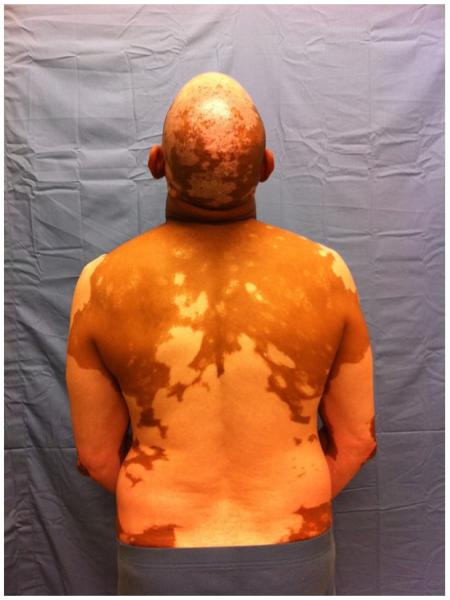
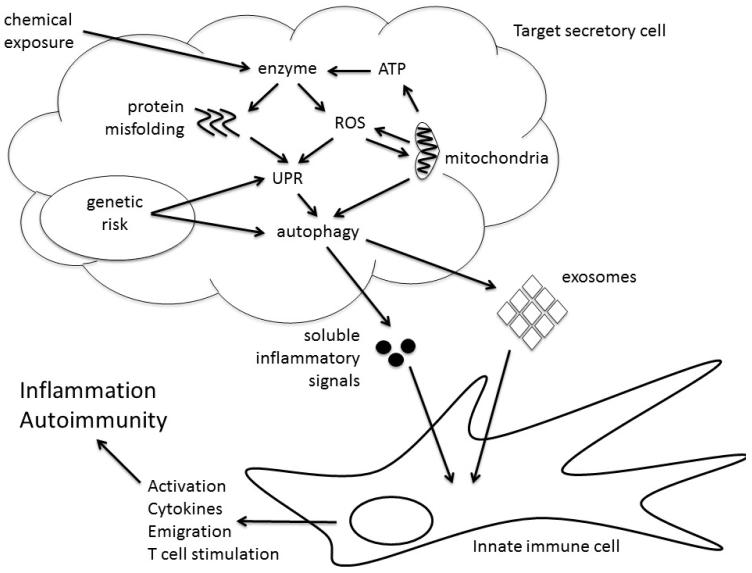
For decades, research in autoimmunity has focused primarily on immune contributions to disease. Yet recent studies report elevated levels of reactive oxygen species and abnormal activation of the unfolded protein response in cells targeted by autoimmunity, implicating cellular stress originating from the target tissue as a contributing factor. A better understanding of this contribution may help to answer important lingering questions in organ-specific autoimmunity, as to what factors initiate disease and what directs its tissue specificity. Vitiligo, an autoimmune disease of the skin, has been the focus of translational research for over 30 years, and both melanocyte stress and immune mechanisms have been thought to be mutually exclusive explanations for pathogenesis. Chemical-induced vitiligo is a unique clinical presentation that reflects the importance of environmental influences on autoimmunity, provides insight into a new paradigm linking cell stress to the immune response, and serves as a template for other autoimmune diseases. In this review, I will discuss the evidence for cell stress contributions to a number of autoimmune diseases, the questions that remain, and how vitiligo, an underappreciated example of organ-specific autoimmunity, helps to answer them.
几十年来,自身免疫性疾病的研究主要集中在免疫对疾病的作用上。然而,最近的研究报告称,在自身免疫攻击的细胞中,活性氧水平升高,未折叠蛋白反应异常激活,这表明源自靶组织的细胞应激是一个促成因素。更好地理解这种作用可能有助于回答器官特异性自身免疫中一些长期存在的重要问题,比如是什么因素引发了疾病,以及是什么决定了其组织特异性。白癜风是一种皮肤自身免疫性疾病,30多年来一直是转化研究的重点,黑素细胞应激和免疫机制一直被认为是发病机制的相互排斥的解释。化学诱导性白癜风是一种独特的临床表现,它反映了环境因素对自身免疫的重要性,为将细胞应激与免疫反应联系起来的新范式提供了见解,并为其他自身免疫性疾病提供了一个模板。在这篇综述中,我将讨论细胞应激对多种自身免疫性疾病作用的证据、仍然存在的问题,以及白癜风(一种未得到充分认识的器官特异性自身免疫的例子)如何有助于回答这些问题。