Department of Biochemistry and Molecular Biomedicine, Faculty of Biology, University of Barcelona, Barcelona, Spain,
Communication and CSR Department, Hospital Clinic of Barcelona, Barcelona, Spain.
Int J Nanomedicine. 2018 Sep 11;13:5301-5320. doi: 10.2147/IJN.S166219. eCollection 2018.
Irinotecan (CPT-11) and SN-38 - its active metabolite - are alkaloid-derived topoisomerase I interactive compounds widely used in various cancer therapy protocols. To solve the problems associated with the instability of their lactone ring at physiological pH and with the extreme insolubility of SN-38, the development of delivery carriers (eg, liposomes) has been considered a subject of unquestionable medical interest. This article focuses on the development of an alternative protocol to the classical lipid-film hydration procedures to obtain a pharmaceutical formulation for SN-38.
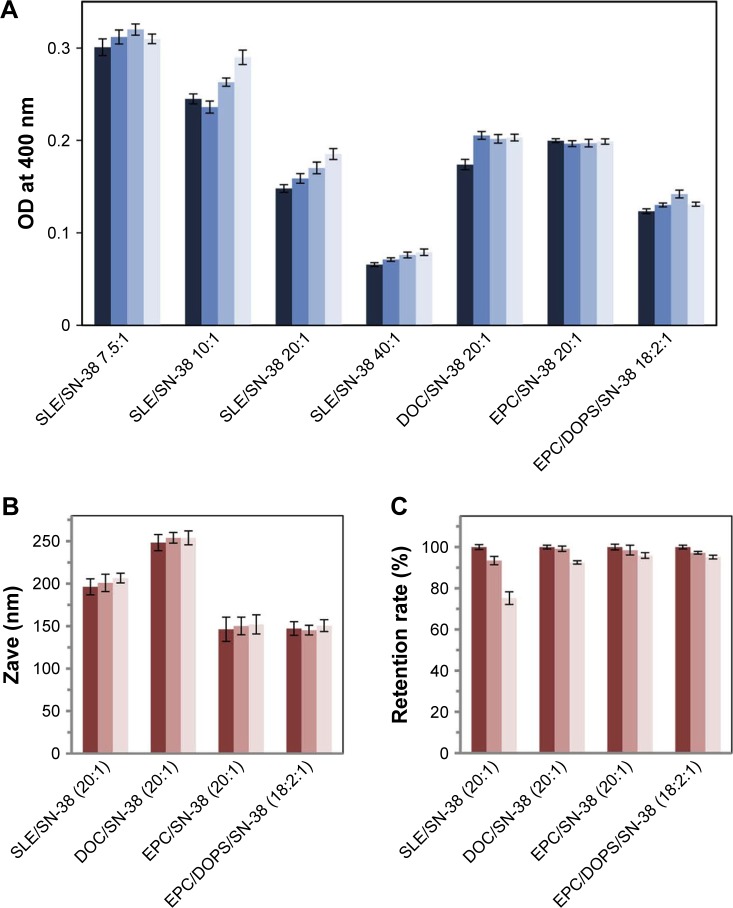
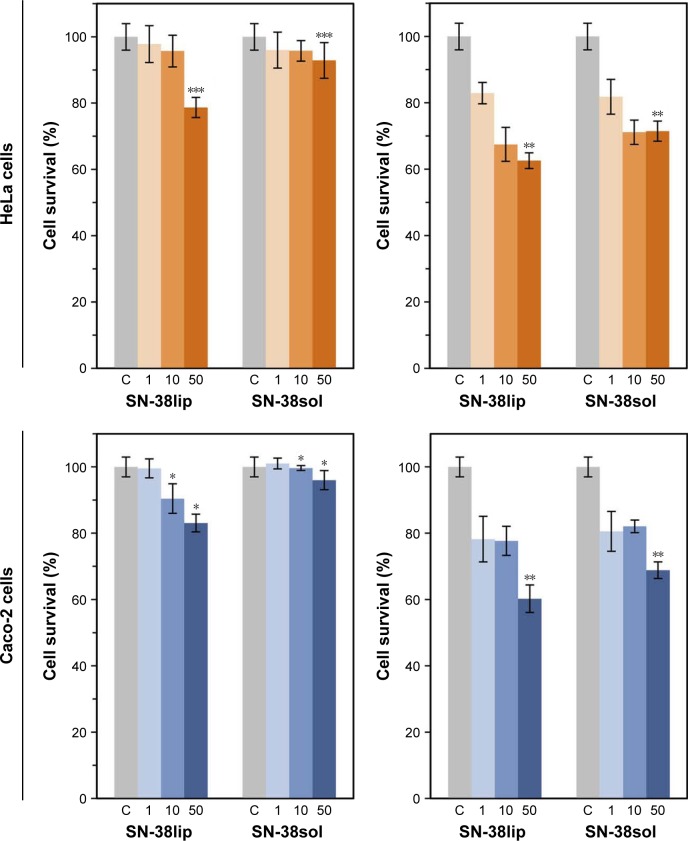
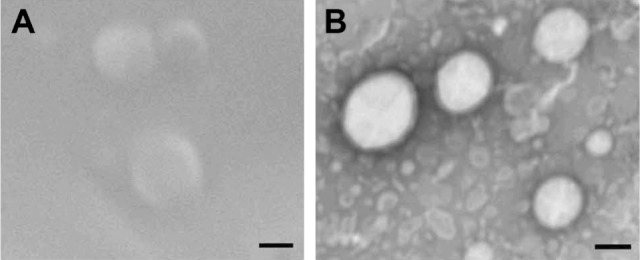
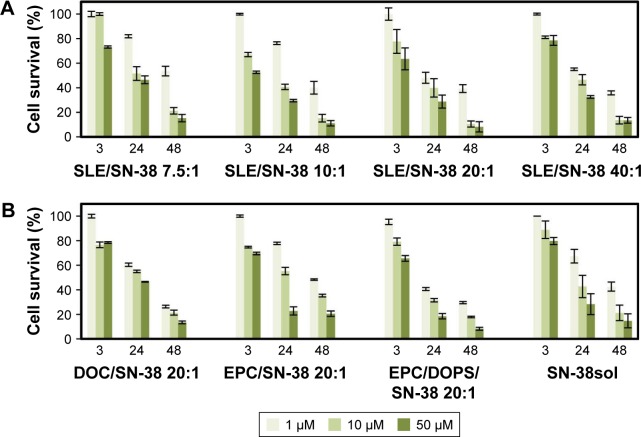
SN-38-loaded liposomes (SN-38lip) were produced by microemulsification, without a prior lipid-film preparation step, and characterized by different methods. Formulation parameters were determined by photon correlation spectroscopy, and the SN-38 entrapment efficiency was evaluated by absorbance spectroscopy. SN-38lip was obtained as a dry, white powder by lyophilization. MTT and LDH assays were conducted to assess the cytotoxic effect of SN-38, both in liposomal (SN-38lip) and solubilized form (SN-38sol); flow cytometry was used to quantify SN-38 uptake and to analyze cell-cycle phase distribution after drug exposure.
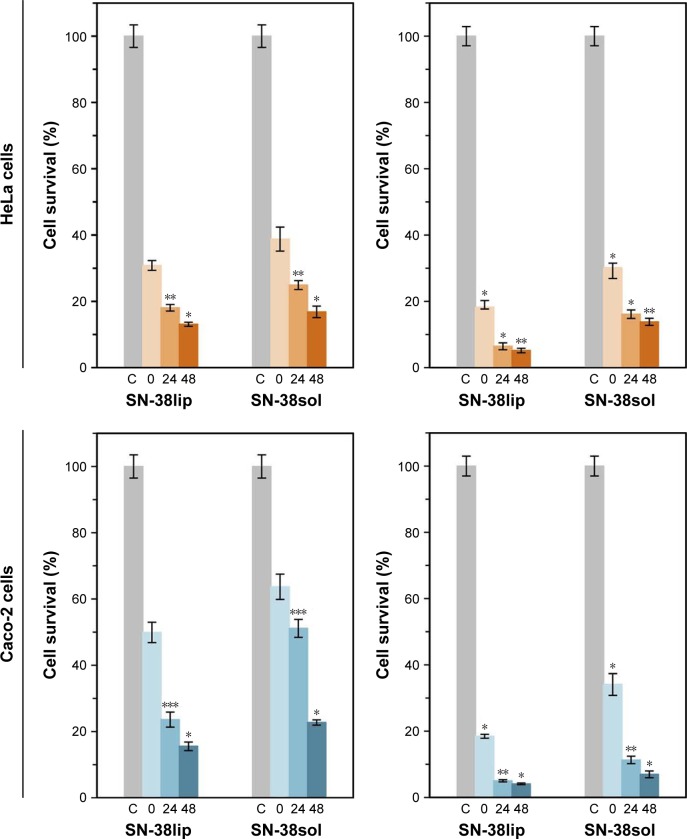
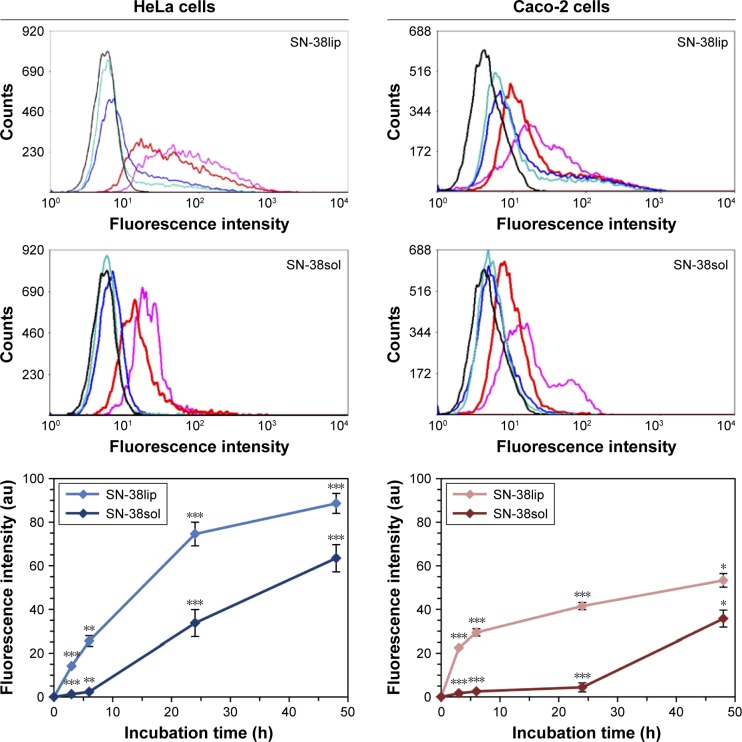
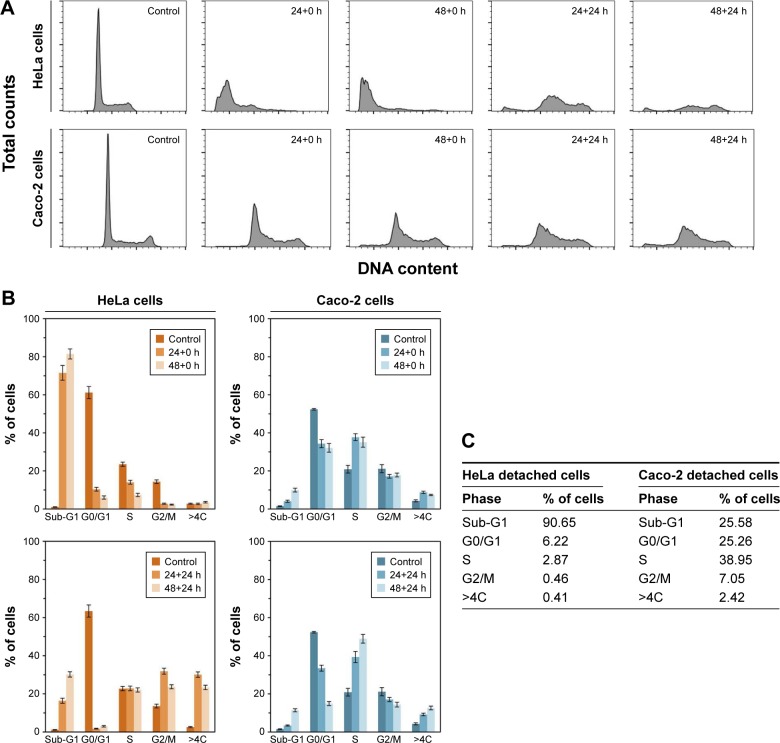
Microfluidic, stable, and controlled sized, negatively charged liposomes, with high SN-38 incorporation efficiency into egg yolk phosphatidylcholine (EPC)/L-α-dioleoyl-phospathidylserine (DOPS) (9:1) vesicles (SN-38lip), were prepared. A lyophilized powder of SN-38lip, easily reconstitutable while retaining physicochemical parameters, was finally obtained. The efficacy of SN-38lip was assessed by in vitro studies with two tumor cell lines (HeLa and Caco-2) and compared with that of SN-38sol. It demonstrated the highest uptake of SN-38lip, in accordance with its highest cytotoxicity effect, in comparison with that of SN-38sol. In addition, different cell-cycle alterations were induced in both cell lines by the liposomal formulation.
The results highlight the potential usefulness of the procured SN-38 liposomal formulation and provide the basis for conducting in vivo studies that allow the development of alternative strategies for colorectal cancer treatment.
伊立替康(CPT-11)和其活性代谢产物 SN-38 是广泛用于各种癌症治疗方案的生物碱衍生拓扑异构酶 I 相互作用化合物。为了解决其内酯环在生理 pH 值下不稳定和 SN-38 极度不溶的问题,已经考虑开发输送载体(例如脂质体),这是一个具有毋庸置疑的医学意义的课题。本文专注于开发一种替代经典脂质膜水化程序的方法,以获得 SN-38 的药物制剂。
通过微乳液法制备 SN-38 载脂质体(SN-38lip),无需预先制备脂质膜步骤,并通过不同方法进行表征。通过光子相关光谱法确定制剂参数,并通过吸收光谱法评估 SN-38 的包封效率。通过冷冻干燥将 SN-38lip 制备成干燥的白色粉末。通过 MTT 和 LDH 测定法评估 SN-38 无论是在脂质体(SN-38lip)还是溶解形式(SN-38sol)中的细胞毒性作用;使用流式细胞术定量 SN-38 的摄取,并分析药物暴露后细胞周期相分布。
制备了具有微流控、稳定和可控粒径、带负电荷的脂质体,具有高 SN-38 整合到蛋黄卵磷脂(EPC)/L-α-二油酰基磷酰丝氨酸(DOPS)(9:1)囊泡(SN-38lip)中的效率。最后获得了一种易于重构成型的 SN-38lip 冻干粉末,同时保留了物理化学参数。通过体外研究两种肿瘤细胞系(HeLa 和 Caco-2)评估 SN-38lip 的功效,并与 SN-38sol 进行比较。与 SN-38sol 相比,它显示了 SN-38lip 的最高摄取率,与最高的细胞毒性作用一致。此外,脂质体制剂在两种细胞系中均引起不同的细胞周期改变。
结果突出了所获得的 SN-38 脂质体制剂的潜在用途,并为进行体内研究提供了基础,这允许开发结直肠癌治疗的替代策略。