Department of Neuroscience, City University of Hong Kong, Kowloon Tong, Hong Kong SAR.
Department of Biomedical Sciences, City University of Hong Kong, Kowloon Tong, Hong Kong SAR.
Int J Nanomedicine. 2020 Oct 28;15:8331-8343. doi: 10.2147/IJN.S263956. eCollection 2020.
Malignant glioma is a fatal brain cancer. Accumulated evidence has demonstrated that exosomes can cross the blood-brain barrier (BBB), suggesting their potential use as drug delivery vehicles to glioma. Therefore, various loading methods of anticancer agents into exosomes have been developed. However, the loading efficiency of anticancer drugs, such as doxorubicin (DOX) and paclitaxel (PTX), into exosomes is relatively low, thus challenging to improve the drug delivery efficiency to glioma cells (GMs) via exosomes.
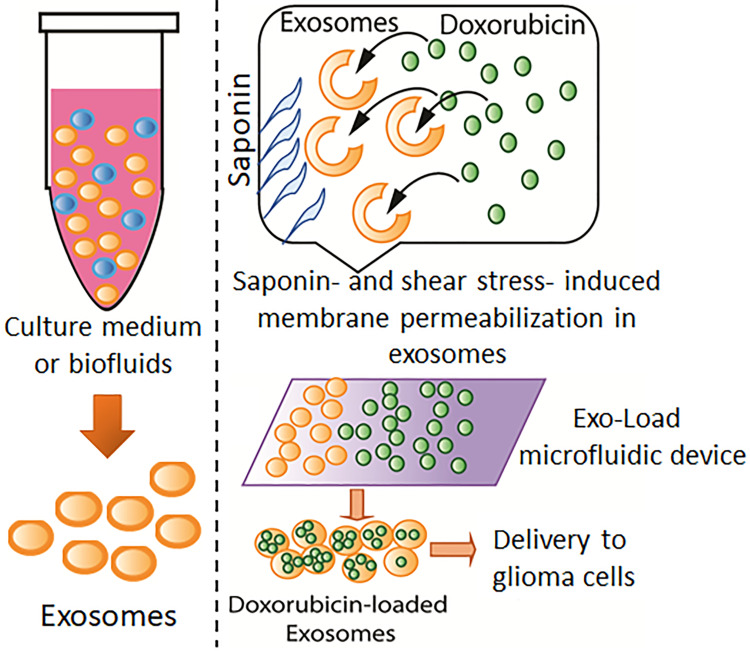
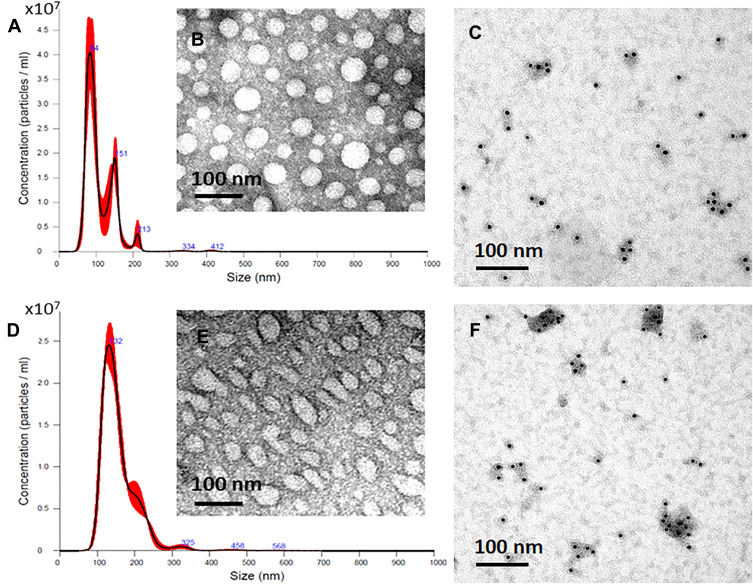
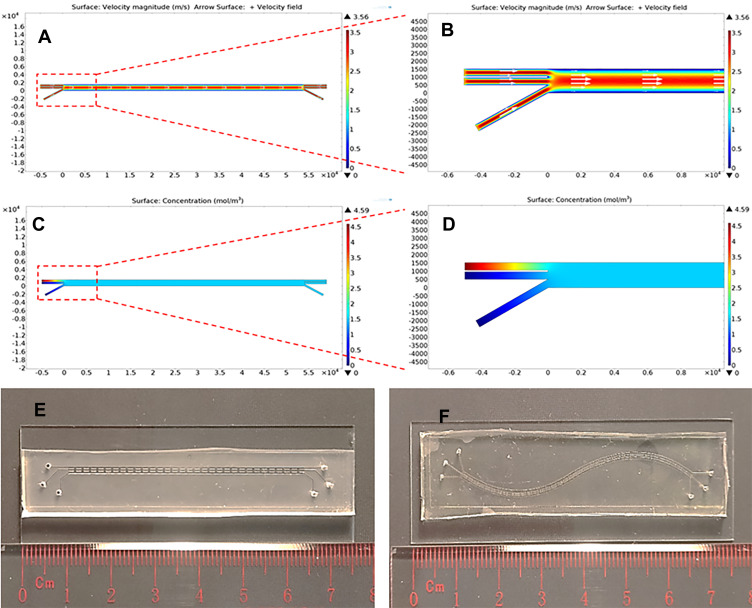
To improve the loading efficiency of doxorubicin into exosomes, a microfluidic device (Exo-Load) was developed. Next, to increase the exosomal delivery of doxorubicin to GMs, autologous exosomes were used for its loading via Exo-Load. Briefly, exosomes from SF7761 stem cells-like- and U251-GMs were isolated and characterized by nano-tracking analysis (NTA), transmission electron microscopy (TEM), and immunogold EM. Finally, doxorubicin was successfully loaded into exosomes with saponin by Exo-Load, and the uptake and functionality of doxorubicin-loaded exosomes for parent GMs were evaluated.
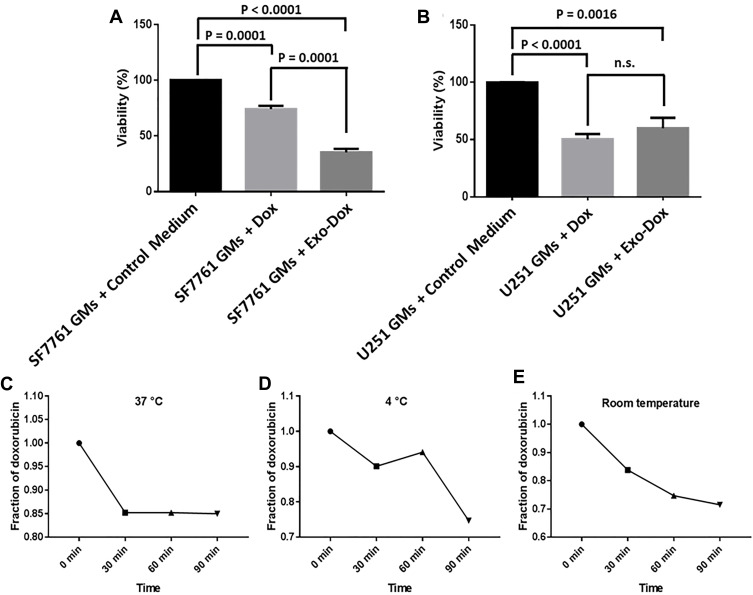
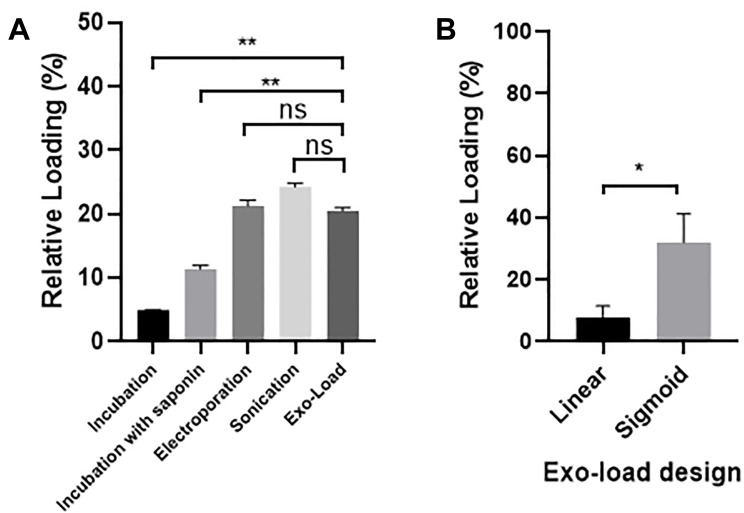
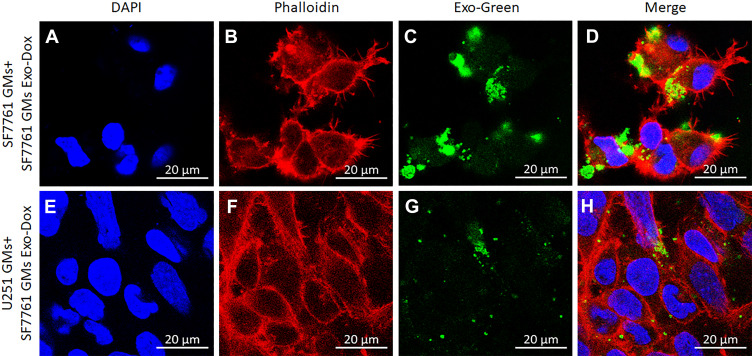
The loading efficiency of DOX into SF7761 stem cells-like- and U251-GMs-derived-exosomes were 19.7% and 7.86% via Exo-Load at the injection flow rate of 50 µL/min, respectively. Interestingly, the loading efficiency of DOX into U251 GMs-derived exosomes was significantly improved to 31.98% by a sigmoid type of Exo-Load at the injection flow rate of 12.5 µL/min. Importantly, DOX-loaded GMs-derived exosomes via Exo-Load inhibited parent GMs' proliferation more than heterologous GMs, supporting exosomes' homing effect.
This study revealed that DOX and PTX could be loaded in exosomes via Exo-Load, demonstrating that Exo-Load could be a potential drug-loading device into exosomes with further optimization. This study also demonstrated that the delivery of DOX to SF7761 GMs via their daughter exosomes was much more efficient rather than U251 GMs-derived exosomes, supporting that the use of autologous exosomes could be better for glioma drug targeting.
恶性脑胶质瘤是一种致命的脑癌。大量证据表明,外泌体可以穿过血脑屏障(BBB),这表明它们有可能被用作递送至脑胶质瘤的药物载体。因此,已经开发出了各种将抗癌药物(如阿霉素(DOX)和紫杉醇(PTX))载入外泌体的方法。然而,抗癌药物(如阿霉素(DOX)和紫杉醇(PTX))载入外泌体的效率相对较低,因此通过外泌体提高递送至脑胶质瘤细胞(GMs)的药物递送效率具有挑战性。
为了提高阿霉素载入外泌体的效率,开发了一种微流控装置(Exo-Load)。接下来,为了增加阿霉素通过外泌体递送至 GMs 的效率,通过 Exo-Load 使用自体外泌体进行载药。简要地说,从 SF7761 干细胞样 GMs 和 U251-GMs 中分离并通过纳米示踪分析(NTA)、透射电子显微镜(TEM)和免疫胶体金电镜对分离的外泌体进行了表征。最后,通过 Exo-Load 成功地用皂素将阿霉素载入外泌体中,并评估了载有阿霉素的外泌体对亲本 GMs 的摄取和功能。
在注射流速为 50µL/min 时,通过 Exo-Load 将 DOX 载入 SF7761 干细胞样和 U251-GMs 衍生的外泌体中的载药效率分别为 19.7%和 7.86%。有趣的是,在注射流速为 12.5µL/min 时,一种类正弦型的 Exo-Load 可将 DOX 载入 U251-GMs 衍生的外泌体中的载药效率显著提高至 31.98%。重要的是,通过 Exo-Load 载入的 GMs 衍生的外泌体对亲本 GMs 的增殖抑制作用大于异源 GMs,支持外泌体的归巢效应。
本研究表明,DOX 和 PTX 可以通过 Exo-Load 载入外泌体,这表明 Exo-Load 可以成为一种有潜力的将药物载入外泌体的设备,通过进一步优化可以提高其效率。本研究还表明,通过其衍生的外泌体将 DOX 递送至 SF7761 GMs 比 U251-GMs 衍生的外泌体更有效,这支持使用自体外泌体进行脑胶质瘤药物靶向治疗可能更好。