National Heart and Lung Institute, Imperial College, Dovehouse Street, London, SW3 6LY, England, UK.
Division of Cardiovascular and Renal Products, Office of New Drugs, Center for Drug Evaluation and Research, US Food and Drug Administration, Silver Spring, MD, USA.
Drug Saf. 2019 Mar;42(3):401-414. doi: 10.1007/s40264-018-0736-1.
Universal QT correction formulas are potentially problematic in corrected QT (QTc) interval comparisons at different heart rates. Instead of individual-specific corrections, population-specific corrections are occasionally used based on QT/RR data pooled from all study subjects.
To investigate the performance of individual-specific and population-specific corrections, a statistical modeling study was performed using QT/RR data of 523 healthy subjects.
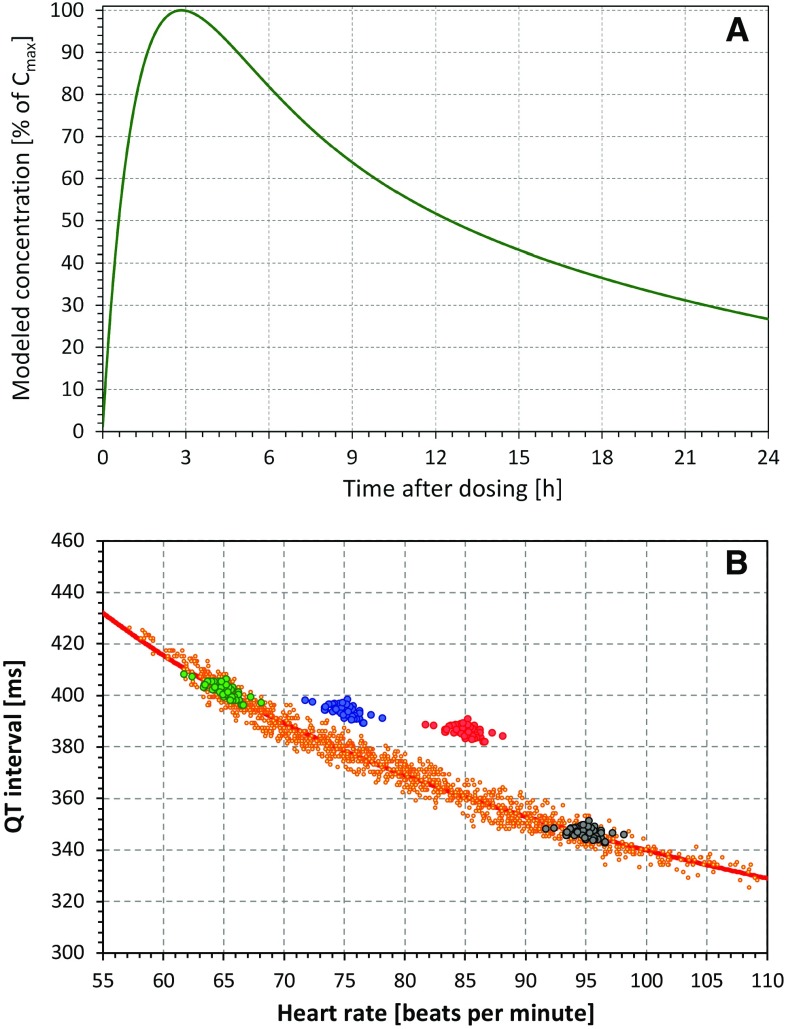
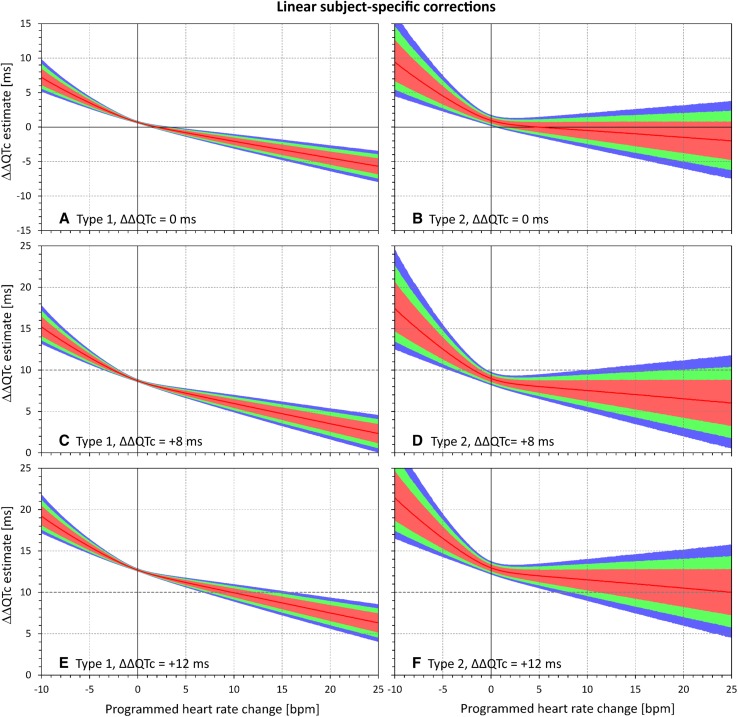
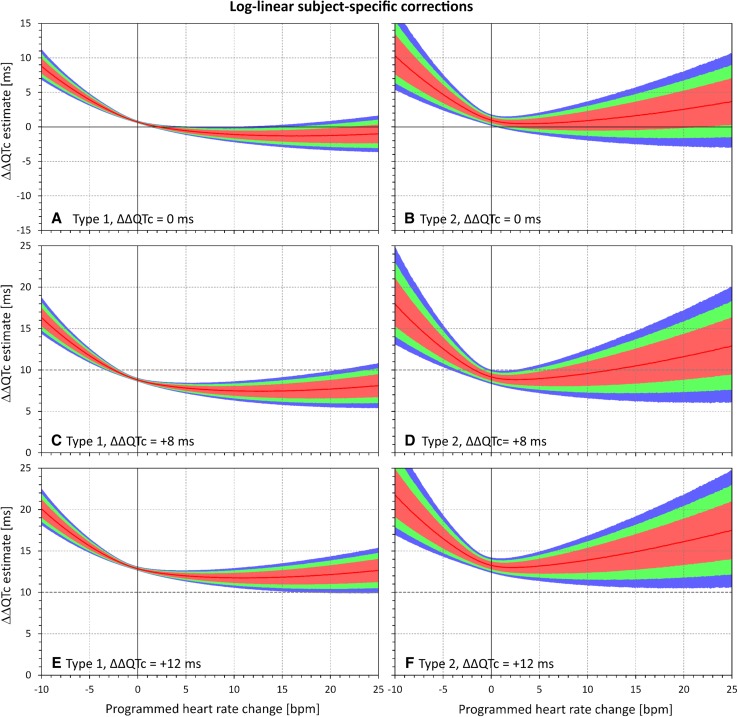
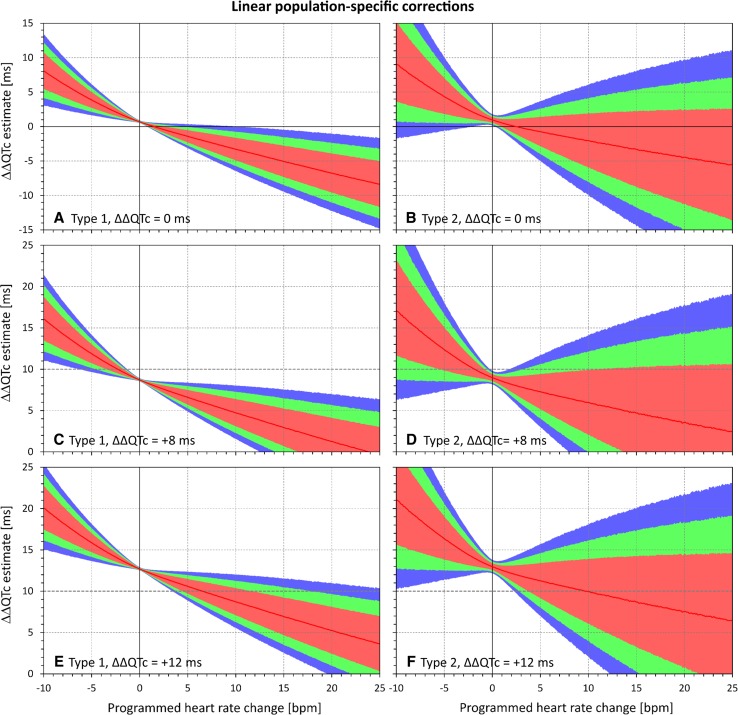
In each subject, full drug-free QT/RR profiles were available, characterized using non-linear regression models. In each subject, 50 baseline QT/RR readings represented baseline data of standard QT studies. Using these data, linear and log-linear heart rate corrections were optimized for each subject and for different groups of ten and 50 subjects. These corrections were applied in random combinations of heart rate changes between - 10 and + 25 beats per minute (bpm) and known QTc interval changes between - 25 and + 25 ms.
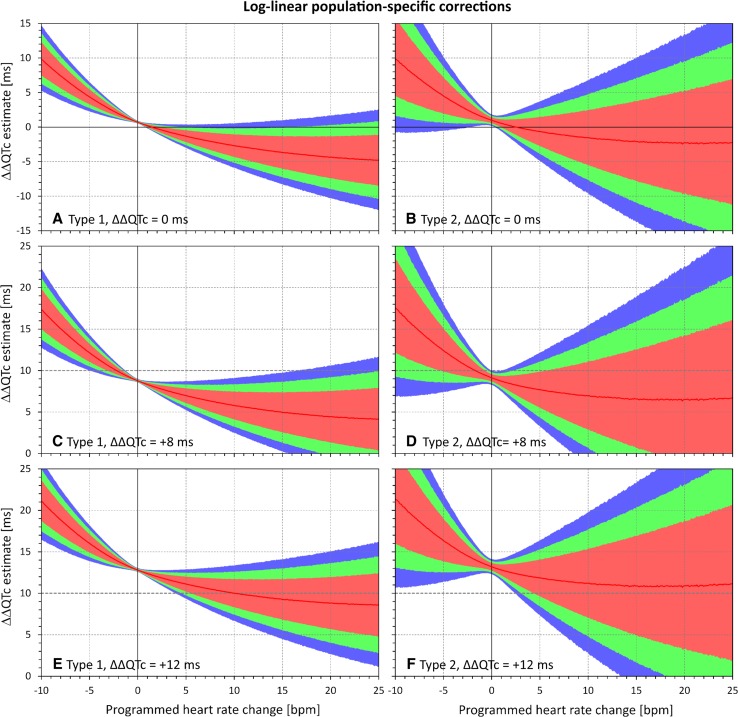
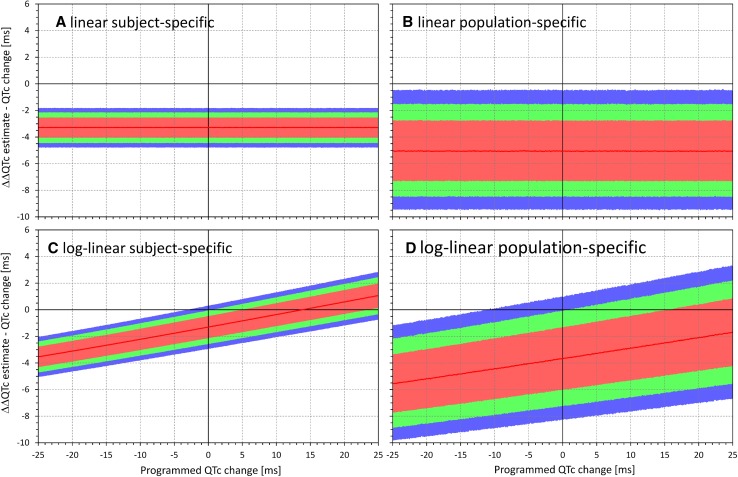
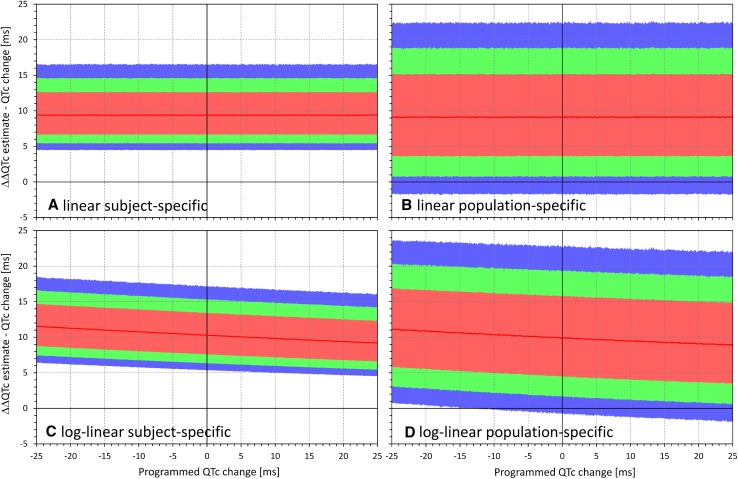
Both the subject-specific and population-specific corrections based on the 50 baseline QT/RR readings tended to underestimate/overestimate the QTc interval changes when heart rate was increasing/decreasing, respectively. The result spread was much wider with population-specific corrections, making the estimates of QTc interval changes practically unpredictable.
Subject-specific heart rate corrections based on limited baseline drug-free data may lead to inconsistent results and, in the presence of underlying heart rate changes, may potentially underestimate or overestimate QTc interval changes. The population-specific corrections lead to results that are much more influenced by the combination of individual QT/RR patterns than by the actual QTc interval changes. Subject-specific heart rate corrections based on full profiles derived from drug-free baseline recordings with wide QT/RR distribution should be used when studying drugs expected to cause heart rate changes.
在不同心率下的校正 QT(QTc)间期比较中,通用 QT 校正公式可能存在问题。除了个体特异性校正外,还偶尔根据来自所有研究对象的 QT/RR 数据进行群体特异性校正。
使用来自 523 名健康受试者的 QT/RR 数据进行统计建模研究,以探讨个体特异性和群体特异性校正的性能。
在每个受试者中,都有完整的无药物 QT/RR 谱可用,并用非线性回归模型对其进行了特征描述。在每个受试者中,50 个基线 QT/RR 读数代表标准 QT 研究的基线数据。使用这些数据,针对每个受试者以及针对 10 名和 50 名受试者的不同组,优化了线性和对数线性心率校正。将这些校正应用于心率变化在 -10 到 +25 次/分钟(bpm)之间以及已知 QTc 间隔变化在 -25 到 +25 毫秒之间的随机组合。
当心率增加/减少时,基于 50 个基线 QT/RR 读数的个体特异性和群体特异性校正都倾向于低估/高估 QTc 间隔变化。群体特异性校正的结果分布范围更广,使得 QTc 间隔变化的估计实际上无法预测。
基于有限的无药物基线数据的个体特异性心率校正可能会导致结果不一致,并且在存在潜在心率变化的情况下,可能会低估或高估 QTc 间隔变化。群体特异性校正导致的结果受个体 QT/RR 模式的组合影响比实际 QTc 间隔变化更大。当研究预期会引起心率变化的药物时,应该使用基于无药物基线记录的全谱并具有广泛 QT/RR 分布的个体特异性心率校正。