INAIL Prosthetic Center, Via Rabuina 14, 40054, Vigorso di Budrio, BO, Italy.
J Neuroeng Rehabil. 2018 Sep 5;15(Suppl 1):61. doi: 10.1186/s12984-018-0403-x.
The literature suggests that optimal levels of gait symmetry might exist for lower-limb amputees. Not only these optimal values are unknown, but we also don't know typical symmetry ratios or which measures of symmetry are essential. Focusing on the symmetries of stance, step, first peak and impulse of the ground reaction force, the aim of this work was to answer to three methodological and three clinical questions. The methodological questions wanted to establish a minimum set of symmetry indexes to study and if there are limitations in their calculations. The clinical questions wanted to establish if typical levels of temporal and loading symmetry exist, and change with the level of amputation and prosthetic components.
Sixty traumatic, K3-K4 amputees were involved in the study: 12 transfemoral mechanical knee users (TFM), 25 C-leg knee users (TFC), and 23 transtibial amputees (TT). Ninety-two percent used the Ossur Variflex foot. Ten healthy subjects were also included. Ground reaction force from both feet were collected with the Novel Pedar-X. Symmetry indexes were calculated and statistically compared with regression analyses and non-parametric analysis of variance among subjects.
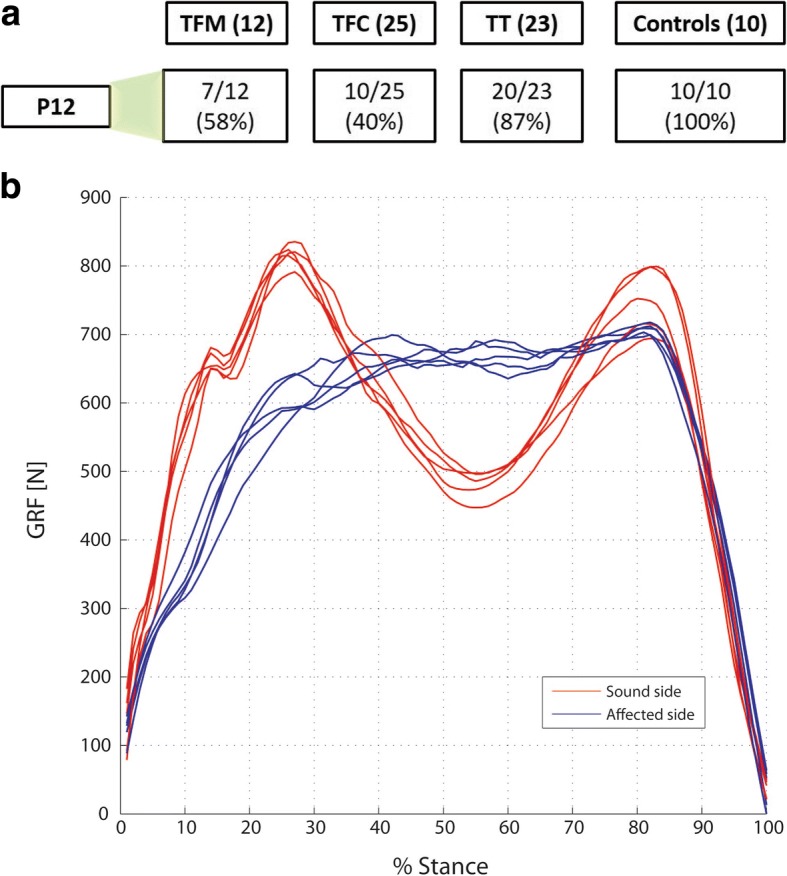
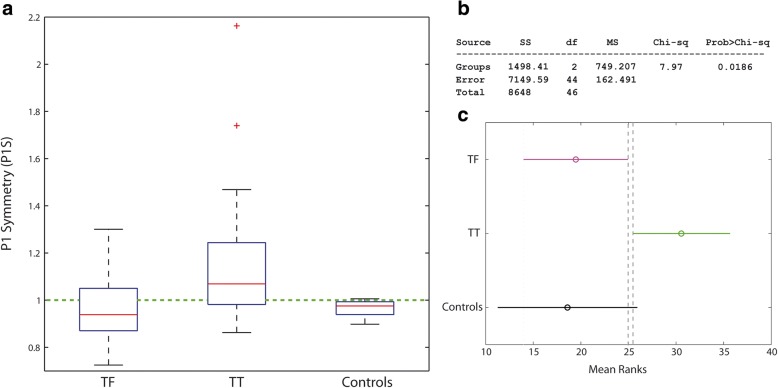
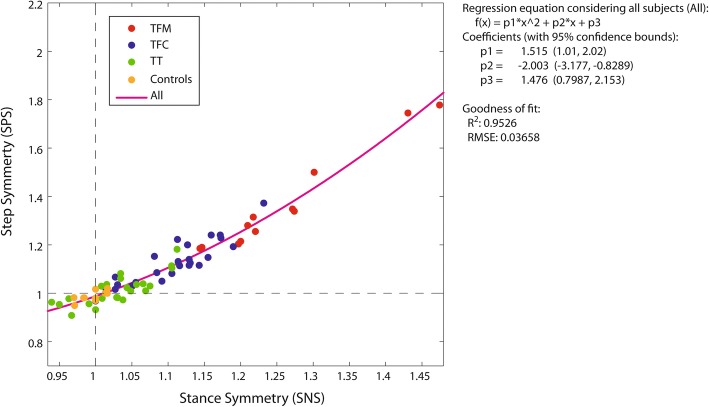
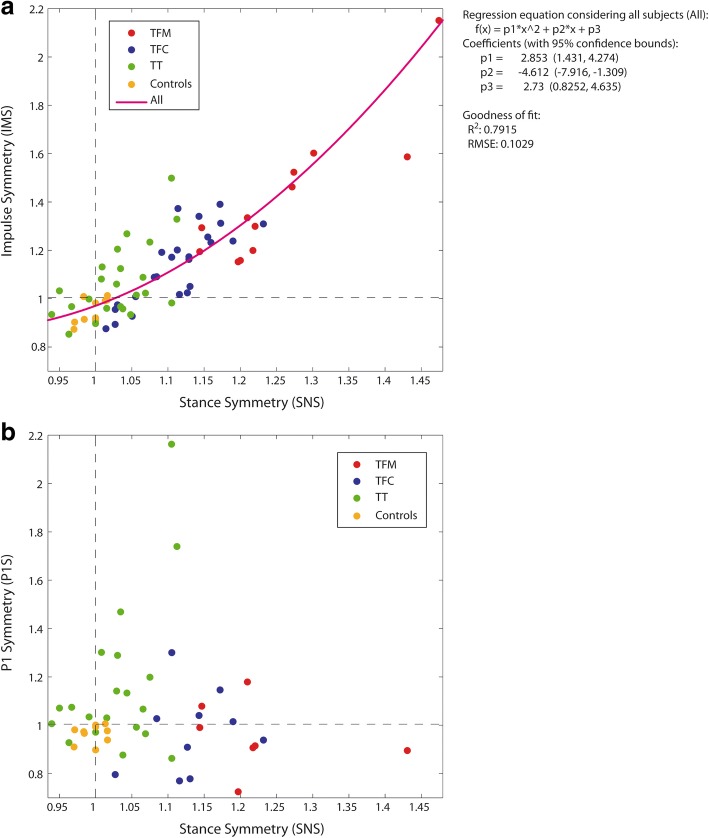
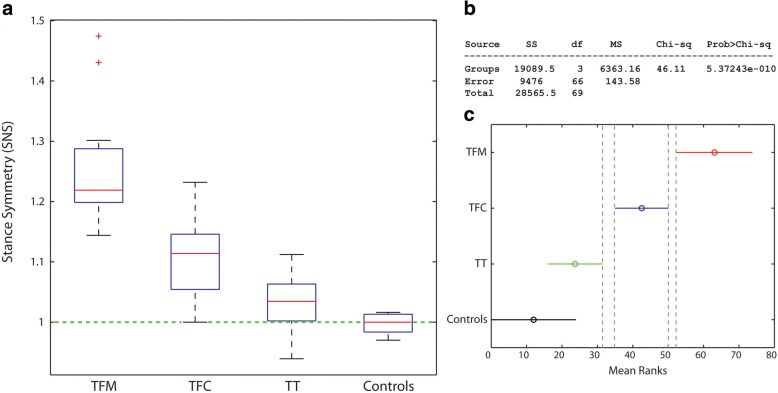
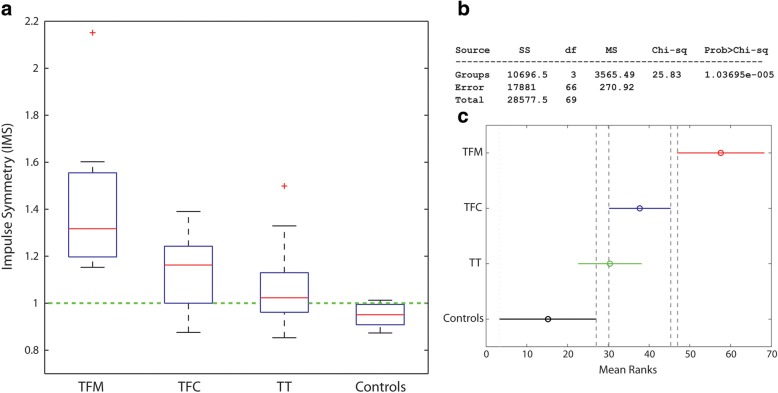
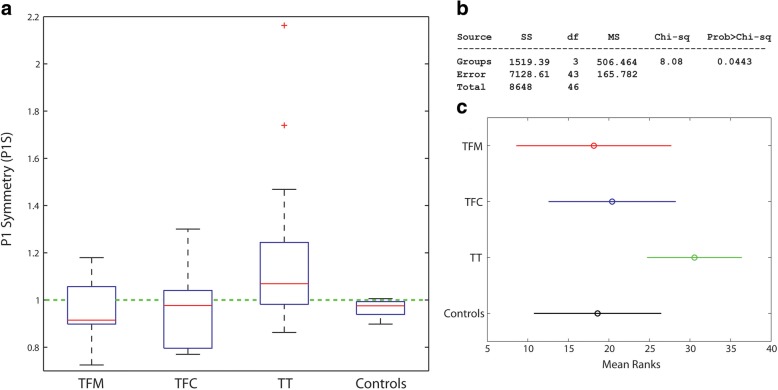
Stance symmetry can be reported instead of step, but it cannot substitute impulse and first peak symmetry. The first peak cannot always be detected on all amputees. Statistically significant differences exist for stance symmetry among all groups, for impulse symmetry between TFM and TFC/TT, for first peak symmetry between transfemoral amputees altogether and TT. Regarding impulse symmetry, 25% of TFC and 43% of TT had a higher impulse on the prosthetic side. Regarding first peak symmetry, 59% of TF and 30% of TT loaded more the prosthetic side.
Typical levels of symmetry for stance, impulse and first peak change with the level of amputation and componentry. Indications exist that C-leg and energy-storage-and-return feet can improve symmetry. Results are suggestive of two mechanisms related to sound side knee osteoarthritis: increased impulse for TF and increased first peak for TT. These results can be useful in clinics to set rehabilitation targets, understand the advancements of a patient during gait retraining, compare and chose components and possibly rehabilitation programs.
文献表明,下肢截肢者可能存在最佳的步态对称性水平。不仅这些最佳值未知,而且我们也不知道典型的对称比或哪些对称度量是必不可少的。本研究重点关注站立、步幅、地面反力第一峰值和冲量的对称性,旨在回答三个方法学和三个临床问题。方法学问题旨在确定一组最小的对称性指标来进行研究,以及这些指标的计算是否存在局限性。临床问题旨在确定是否存在典型的时间和负荷对称性,以及这种对称性是否随截肢和假肢组件的变化而变化。
本研究共纳入 60 例创伤性 K3-K4 截肢患者:12 例接受股骨机械膝(TFM)的患者、25 例接受 C 型小腿膝(TFC)的患者和 23 例接受胫骨截肢的患者(TT)。92%的患者使用奥索 Variflex 脚。还纳入了 10 名健康受试者。使用 Novel Pedar-X 收集双脚的地面反力。计算对称性指标,并通过回归分析和受试者间非参数方差分析进行统计学比较。
站立对称性可以用步幅代替,但不能代替冲量和第一峰值对称性。并非所有截肢者都能检测到第一峰值。所有组之间的站立对称性存在统计学显著差异,TFM 和 TFC/TT 之间的冲量对称性存在差异,TFM 总体和 TT 之间的第一峰值对称性存在差异。关于冲量对称性,25%的 TFC 和 43%的 TT 假肢侧冲量更高。关于第一峰值对称性,59%的 TF 和 30%的 TT 假肢侧负重更多。
站立、冲量和第一峰值的典型对称性水平随截肢和组件的变化而变化。有迹象表明,C 型小腿和储能-返回脚可以改善对称性。结果表明,TF 侧冲量增加和 TT 侧第一峰值增加与健侧膝关节骨关节炎有关。这些结果可用于临床设定康复目标、了解患者在步态再训练过程中的进展、比较和选择组件以及可能的康复方案。