Lab of Medicinal Chemistry, State Key Laboratory of Biotherapy and Cancer Center, West China Hospital, Sichuan University and Collaborative Innovation Center for Biotherapy, 610041, Chengdu, China.
School of Chemical Engineering, Sichuan University, 610041, Chengdu, China.
Cell Death Dis. 2018 Sep 26;9(10):1006. doi: 10.1038/s41419-018-1046-3.
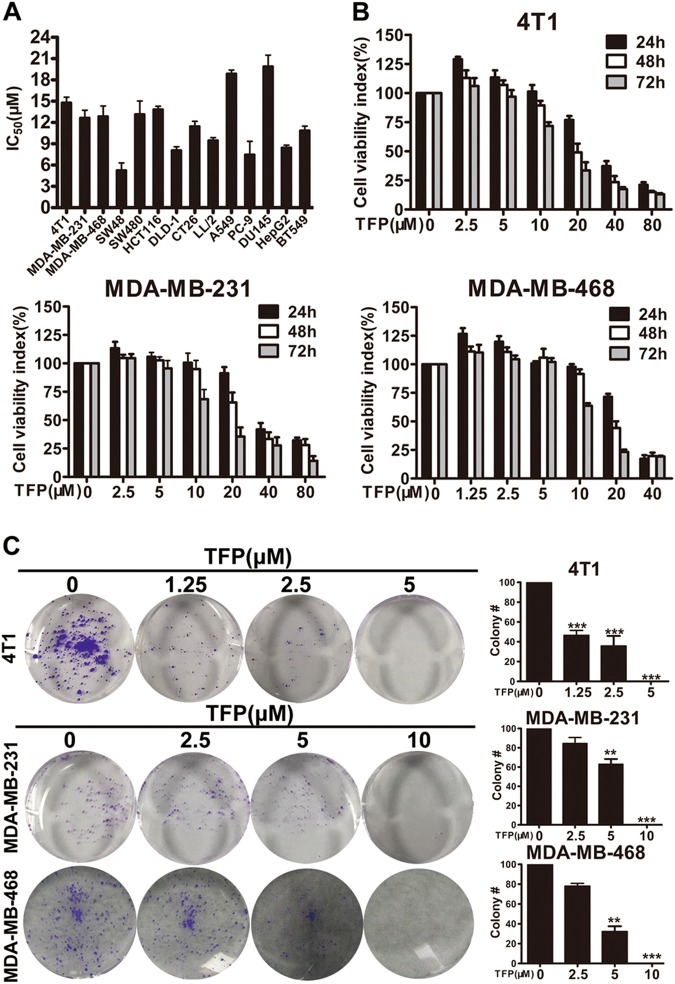
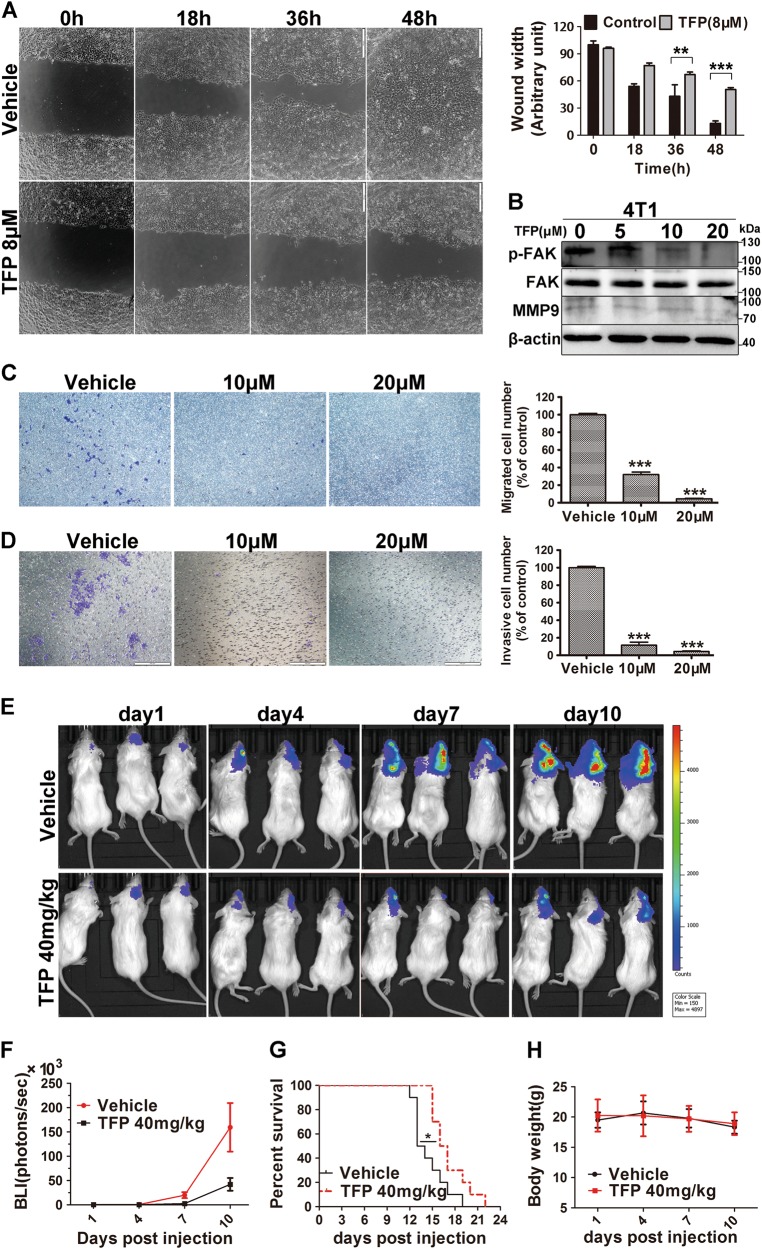
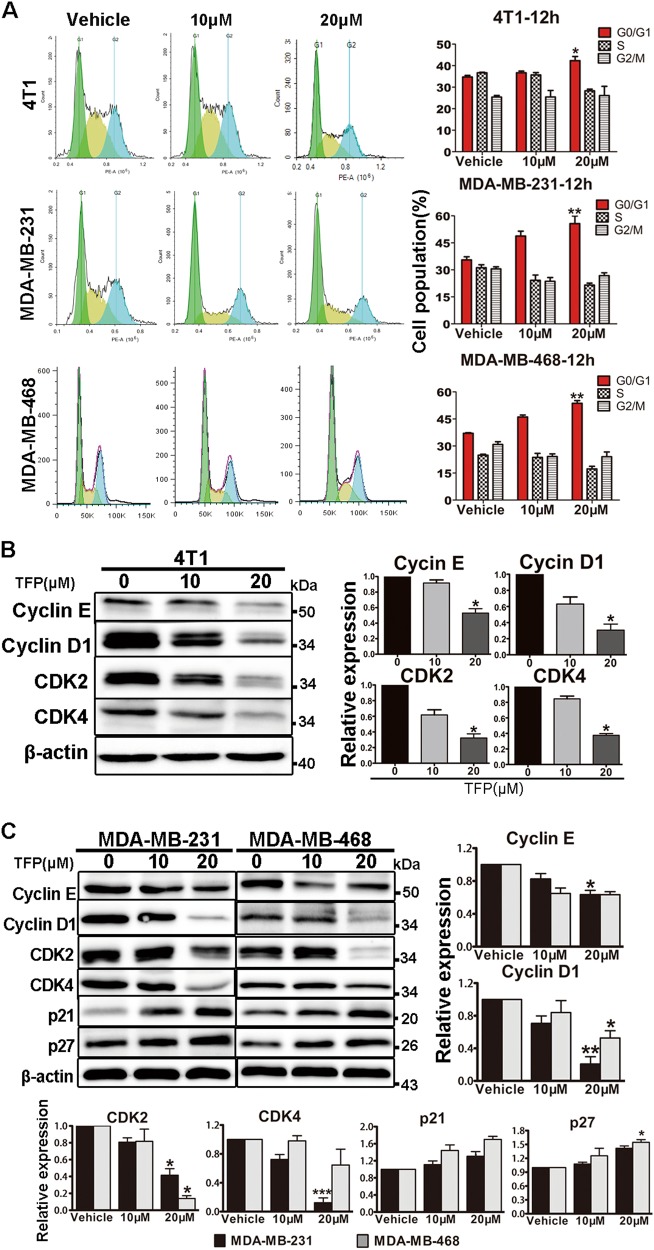
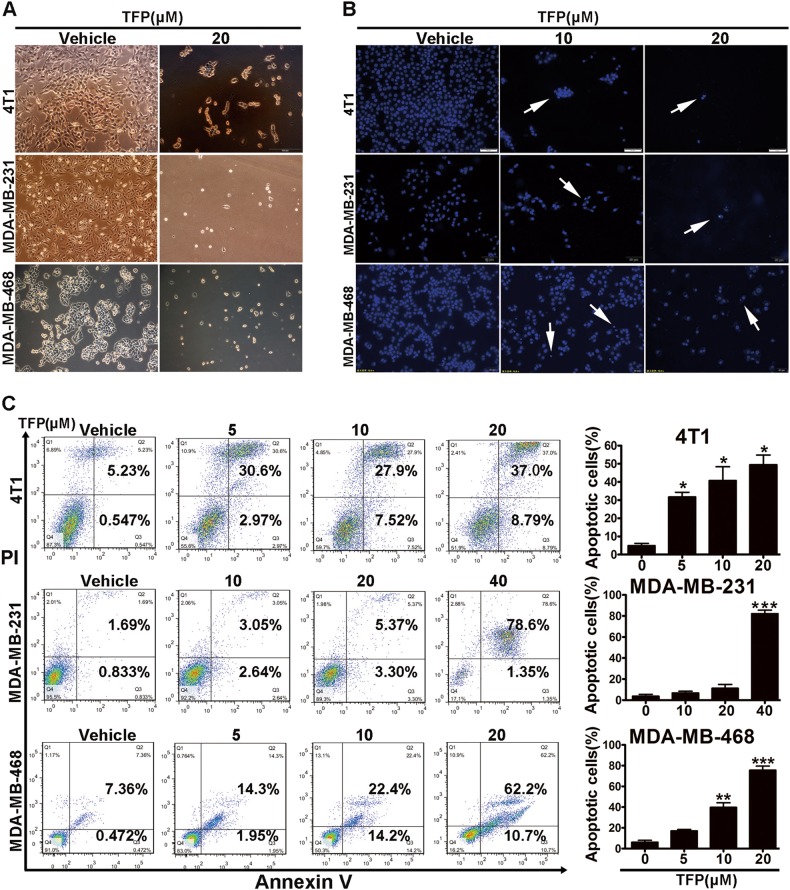
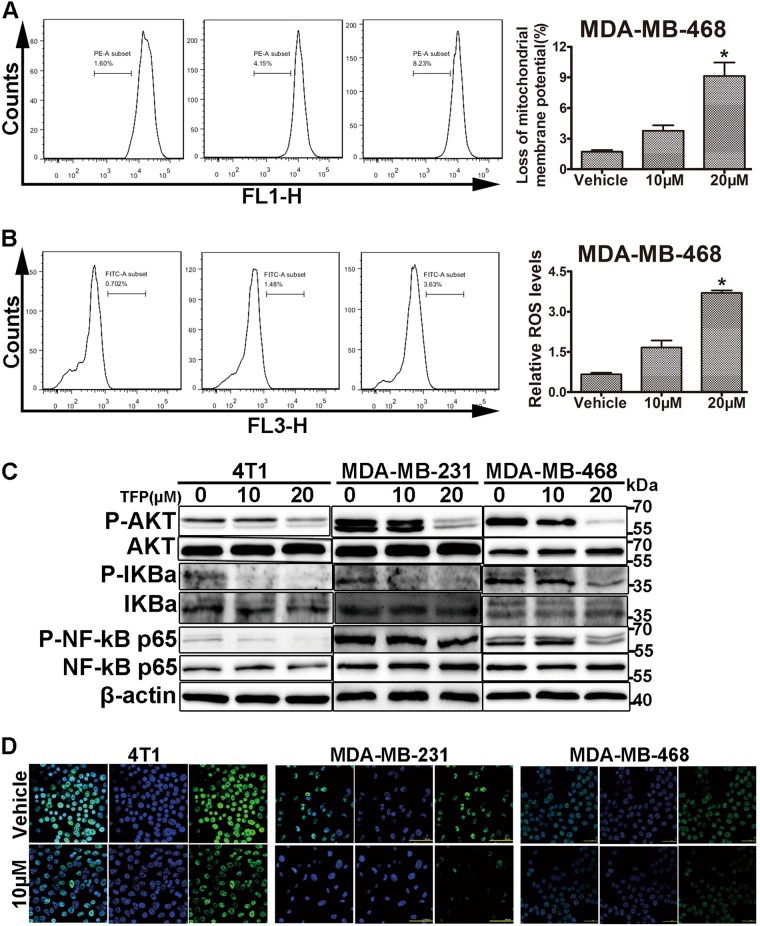
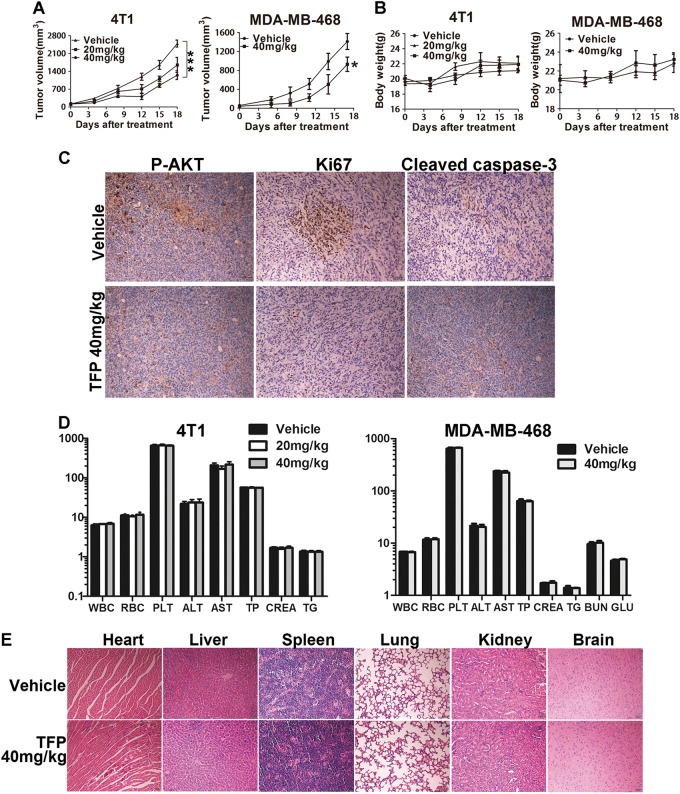
Women with aggressive triple-negative breast cancer (TNBC) are at high risk of brain metastasis, which has no effective therapeutic option partially due to the poor penetration of drugs across the blood-brain barrier. Trifluoperazine (TFP) is an approved antipsychotic drug with good bioavailability in brain and had shown anticancer effect in several types of cancer. It drives us to investigate its activities to suppress TNBC, especially the brain metastasis. In this study, we chose three TNBC cell lines MDA-MB-468, MDA-MB-231, and 4T1 to assess its anticancer activities along with the possible mechanisms. In vitro, it induced G0/G1 cell cycle arrest via decreasing the expression of both cyclinD1/CDK4 and cyclinE/CDK2, and stimulated mitochondria-mediated apoptosis. In vivo, TFP suppressed the growth of subcutaneous xenograft tumor and brain metastasis without causing detectable side effects. Importantly, it prolonged the survival of mice bearing brain metastasis. Immunohistochemical analysis of Ki67 and cleaved caspase-3 indicated TFP could suppress the growth and induce apoptosis of cancer cells in vivo. Taken together, TFP might be a potential available drug for treating TNBC with brain metastasis, which urgently needs novel treatment options.
患有侵袭性三阴性乳腺癌(TNBC)的女性有发生脑转移的高风险,而脑转移目前尚无有效的治疗选择,部分原因是药物难以穿透血脑屏障。三氟拉嗪(TFP)是一种已批准用于治疗精神疾病的药物,其在大脑中有良好的生物利用度,并已在几种类型的癌症中显示出抗癌作用。这促使我们研究其抑制 TNBC,特别是脑转移的作用。在这项研究中,我们选择了三种 TNBC 细胞系 MDA-MB-468、MDA-MB-231 和 4T1,以评估其抗癌活性及其可能的机制。体外实验结果表明,TFP 通过降低 cyclinD1/CDK4 和 cyclinE/CDK2 的表达,诱导 G0/G1 细胞周期停滞,并刺激线粒体介导的细胞凋亡。在体内,TFP 抑制了皮下异种移植瘤和脑转移的生长,而没有引起可检测到的副作用。重要的是,它延长了患有脑转移的小鼠的存活时间。Ki67 和 cleaved caspase-3 的免疫组化分析表明,TFP 可以抑制体内癌细胞的生长并诱导其凋亡。综上所述,TFP 可能是治疗具有脑转移的 TNBC 的一种潜在有效药物,而 TNBC 急需新的治疗选择。