Lv Xiu, Li Jincheng, Zhang Chuhong, Hu Tian, Li Sai, He Sha, Yan Hanxing, Tan Yixi, Lei Mingsheng, Wen Meiling, Zuo Jianhong
The Affiliated Nanhua Hospital, University of South China, Hengyang, Hunan 421001, China.
School of Medicine, University of South China, Hengyang, Hunan 421001, China.
Genes Dis. 2016 Dec 14;4(1):19-24. doi: 10.1016/j.gendis.2016.11.003. eCollection 2017 Mar.
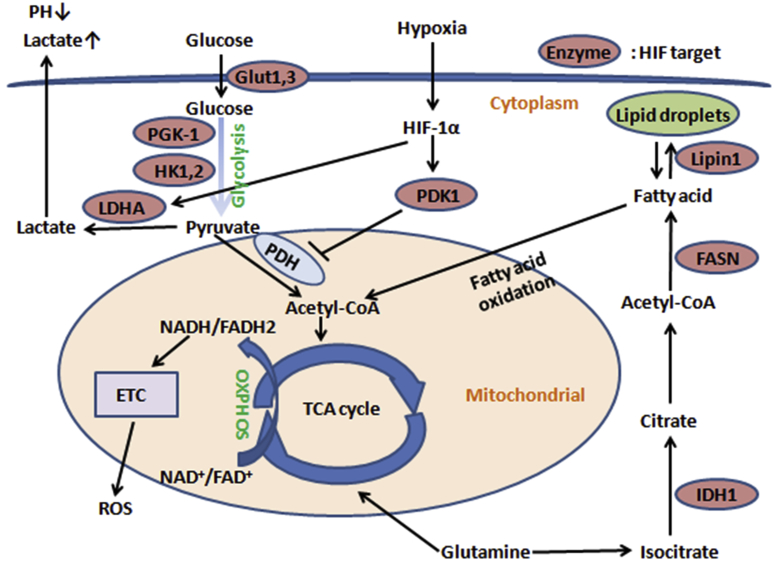
Hypoxia-inducible factor (HIF) is a main heterodimeric transcription factor that regulates the cellular adaptive response to hypoxia by stimulating the transcription of a series of hypoxia-inducible genes. HIF is frequently upregulated in solid tumors, and the overexpression of HIF can promote tumor progression or aggressiveness by blood vessel architecture and altering cellular metabolism. In this review, we focused on the pivotal role of HIF in tumor angiogenesis and energy metabolism. Furthermore, we also emphasized the possibility of HIF pathway as a potential therapeutic target in cancer.
缺氧诱导因子(HIF)是一种主要的异二聚体转录因子,通过刺激一系列缺氧诱导基因的转录来调节细胞对缺氧的适应性反应。HIF在实体瘤中经常上调,并且HIF的过表达可通过血管结构和改变细胞代谢来促进肿瘤进展或侵袭性。在本综述中,我们重点关注了HIF在肿瘤血管生成和能量代谢中的关键作用。此外,我们还强调了HIF通路作为癌症潜在治疗靶点的可能性。