The Key Laboratory of Molecular Epigenetics of MOE, Institute of Genetics and Cytology, School of Life Science, Northeast Normal University, Changchun, China.
People's Hospital of Rizhao, Rizhao, China.
Cancer Sci. 2018 Dec;109(12):3826-3839. doi: 10.1111/cas.13809. Epub 2018 Nov 8.
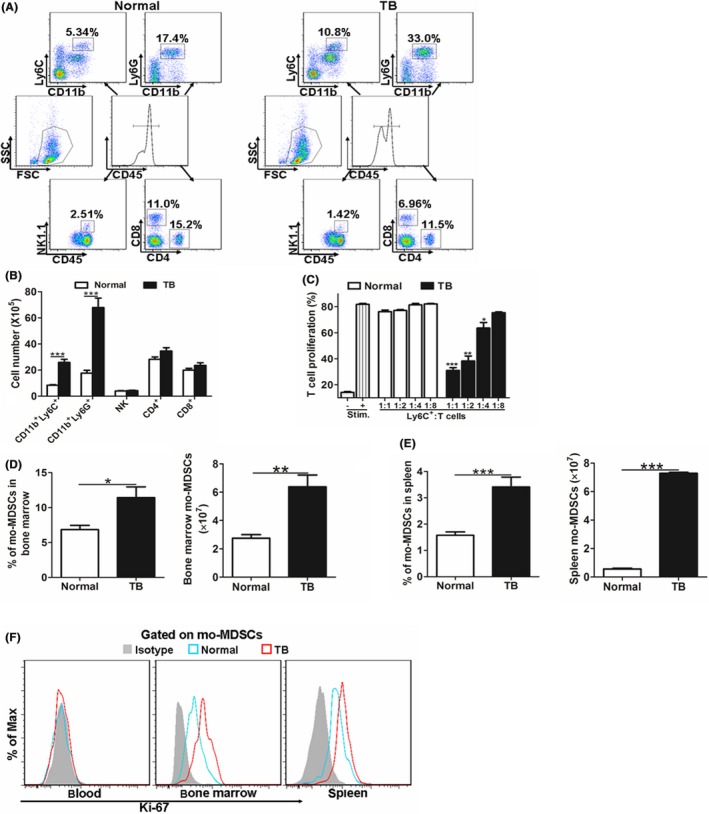
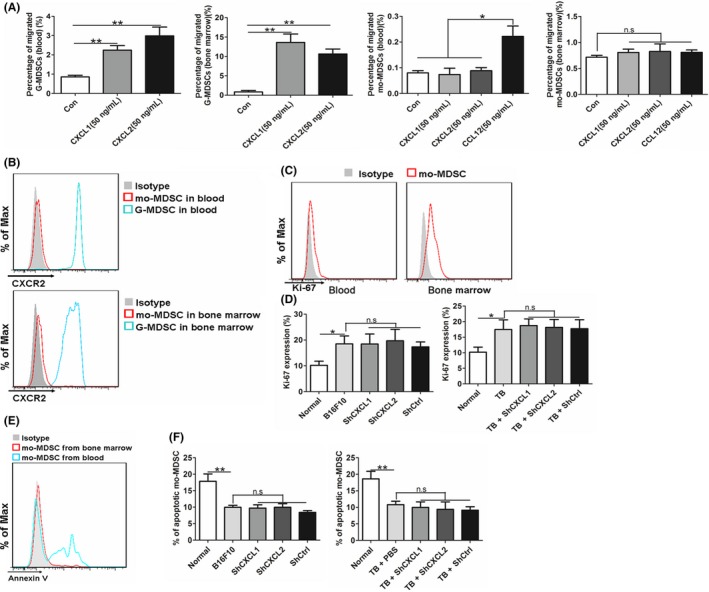
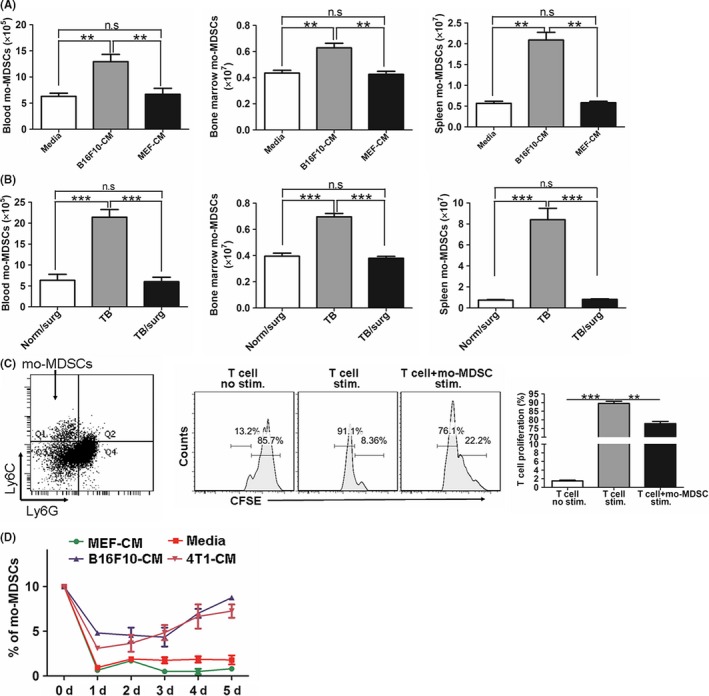
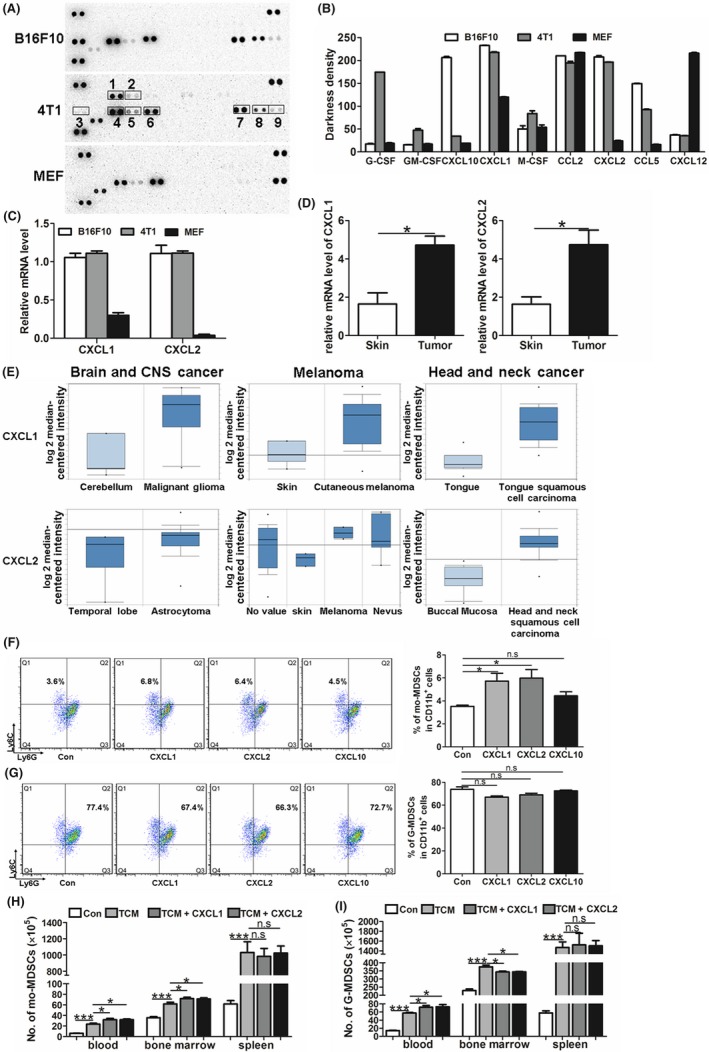
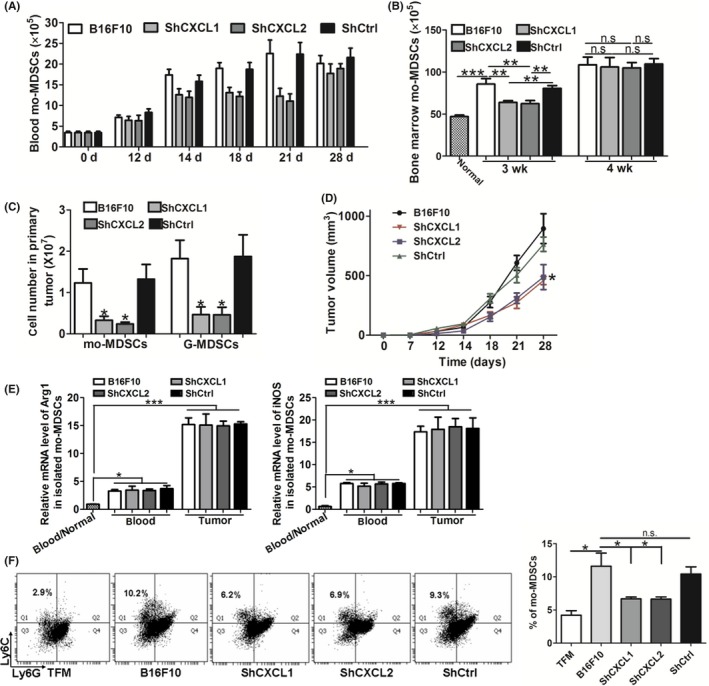
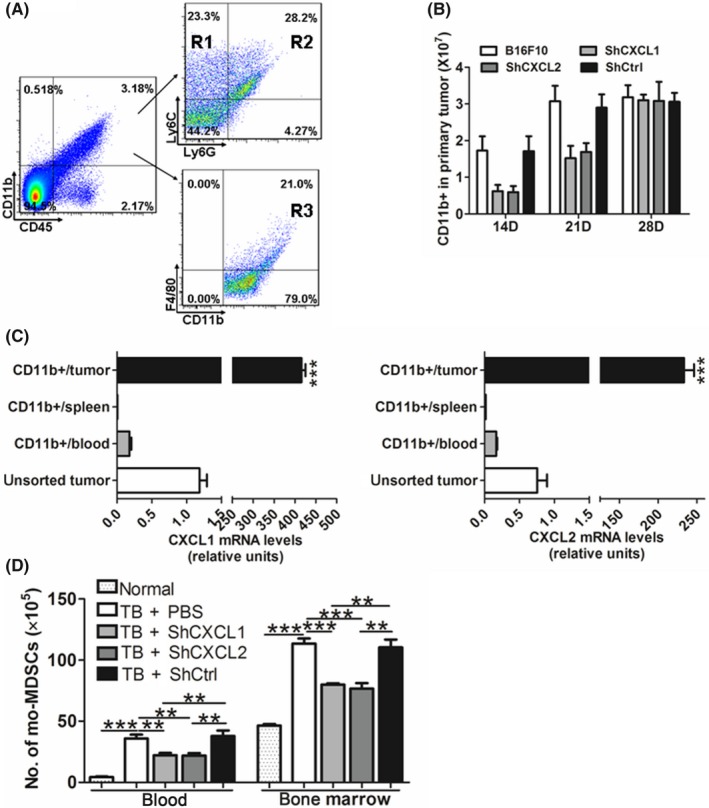
Accumulation of myeloid-derived suppressor cells (MDSC) in tumor-bearing hosts is a hallmark of tumor-associated inflammation, which is thought to be a barrier to immunosurveillance. Multiple factors secreted by tumor cells and tumor stromal cells are reported to be involved in promoting the expansion of MDSC. Herein, we showed that s.c. inoculation of tumor cells and i.v. injection of tumor-conditioned medium increased the number of MDSC. Subsequent investigation elucidated that chemokine (C-X-C motif) ligand 1 (CXCL1) and CXCL2, which were originally characterized as the chemokines of neutrophils, specifically promoted the expansion of monocytic MDSC (mo-MDSC), a subtype of MDSC, in the presence of granulocyte-macrophage colony-stimulating factor. Depletion of CXCL1 or CXCL2 in B16F10 cells or in B16F10-bearing mice noticeably decreased the generation of mo-MDSC in bone marrow. Moreover, we found that, in addition to the tumor cells, tumor-infiltrated CD11b myeloid cells also expressed CXCL1 and CXCL2. Furthermore, CXCL1- and CXCL2-induced increase of mo-MDSC was not correlated with chemotaxis, proliferation or apoptosis of mo-MDSC. These findings show a novel role of CXCL1 and CXCL2 in promoting mo-MDSC generation by favoring the differentiation of bone marrow cells in tumor-bearing conditions, which suggests that inhibition of CXCL1 and CXCL2 could decrease mo-MDSC generation and improve host immunosurveillance.
髓系来源抑制细胞(MDSC)在荷瘤宿主中的积累是肿瘤相关炎症的标志,被认为是免疫监视的障碍。据报道,肿瘤细胞和肿瘤基质细胞分泌的多种因子参与促进 MDSC 的扩增。在此,我们表明,肿瘤细胞的皮下接种和肿瘤条件培养基的静脉注射增加了 MDSC 的数量。随后的研究阐明了趋化因子(C-X-C 基序)配体 1(CXCL1)和 CXCL2,最初被表征为中性粒细胞的趋化因子,在粒细胞-巨噬细胞集落刺激因子存在的情况下,特别促进了单核来源 MDSC(mo-MDSC)的扩增,mo-MDSC 是 MDSC 的一种亚型。在 B16F10 细胞或 B16F10 荷瘤小鼠中耗尽 CXCL1 或 CXCL2 明显减少了骨髓中 mo-MDSC 的生成。此外,我们发现,除了肿瘤细胞外,浸润肿瘤的 CD11b 髓样细胞也表达 CXCL1 和 CXCL2。此外,CXCL1 和 CXCL2 诱导的 mo-MDSC 增加与 mo-MDSC 的趋化、增殖或凋亡无关。这些发现表明 CXCL1 和 CXCL2 在促进 mo-MDSC 生成方面具有新的作用,通过有利于荷瘤条件下骨髓细胞的分化,这表明抑制 CXCL1 和 CXCL2 可能减少 mo-MDSC 的生成并改善宿主免疫监视。