Department of Philosophy and Religious studies, North Carolina State University, Raleigh, North Carolina, United States of America.
Pragmatic Health Ethics Research Unit, Institut de recherches cliniques de Montréal, Montréal, Québec, Canada.
PLoS One. 2018 Oct 1;13(10):e0204631. doi: 10.1371/journal.pone.0204631. eCollection 2018.
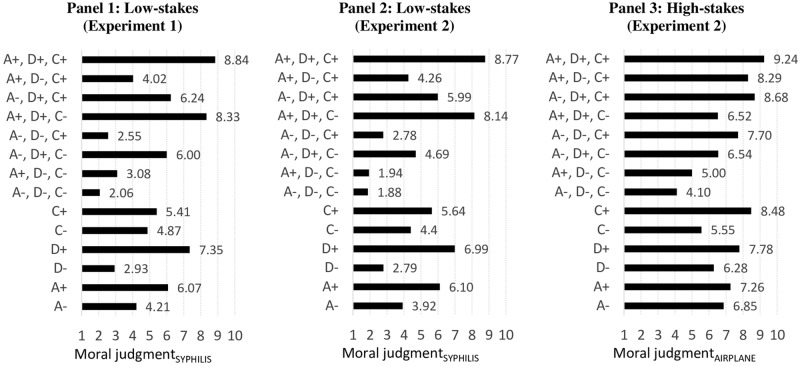
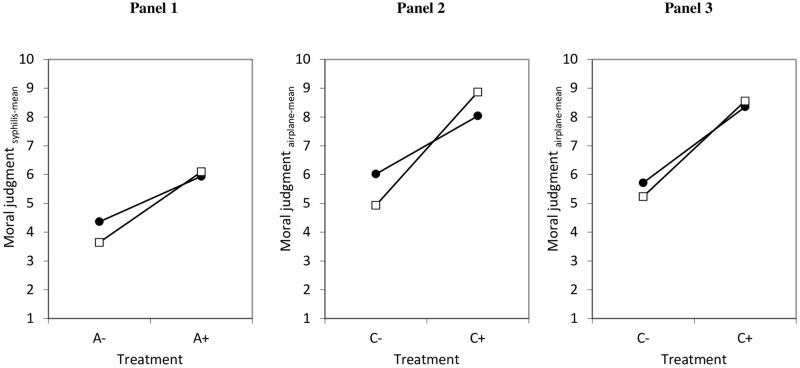
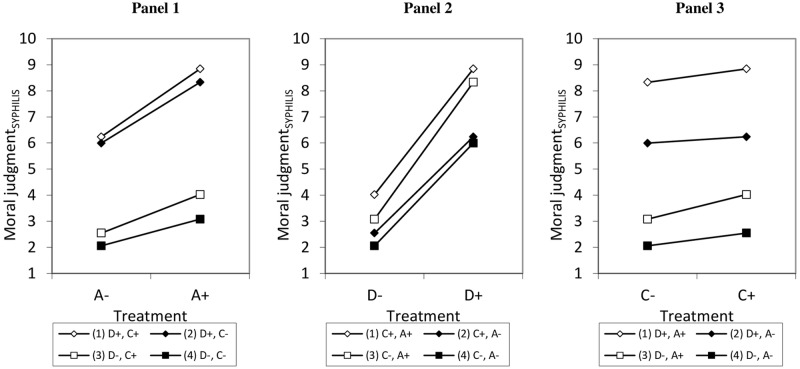
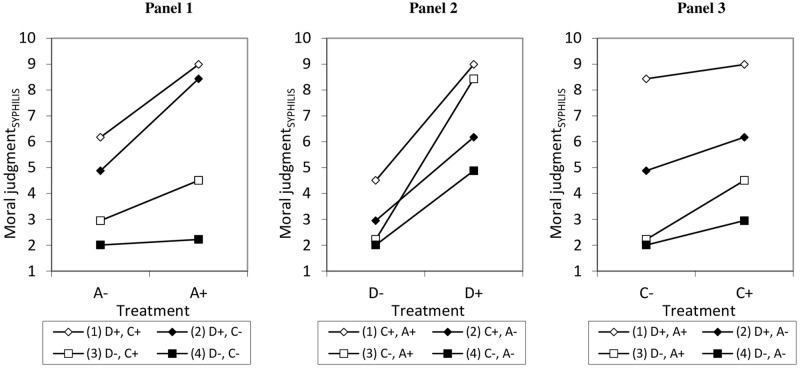
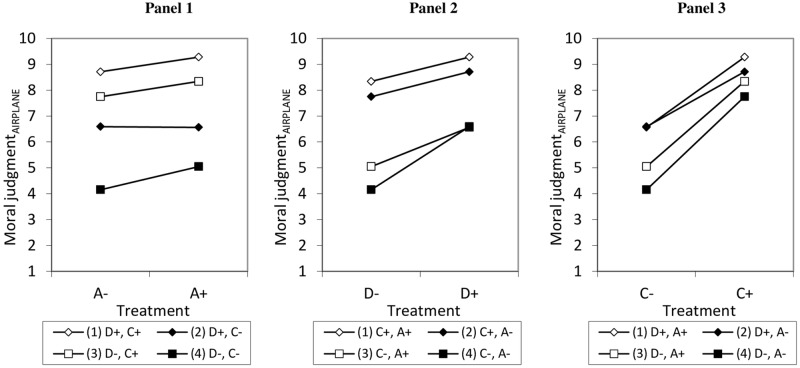
Moral evaluations occur quickly following heuristic-like intuitive processes without effortful deliberation. There are several competing explanations for this. The ADC-model predicts that moral judgment consists in concurrent evaluations of three different intuitive components: the character of a person (Agent-component, A); their actions (Deed-component, D); and the consequences brought about in the situation (Consequences-component, C). Thereby, it explains the intuitive appeal of precepts from three dominant moral theories (virtue ethics, deontology, and consequentialism), and flexible yet stable nature of moral judgment. Insistence on single-component explanations has led to many centuries of debate as to which moral precepts and theories best describe (or should guide) moral evaluation. This study consists of two large-scale experiments and provides a first empirical investigation of predictions yielded by the ADC model. We use vignettes describing different moral situations in which all components of the model are varied simultaneously. Experiment 1 (within-subject design) shows that positive descriptions of the A-, D-, and C-components of moral intuition lead to more positive moral judgments in a situation with low-stakes. Also, interaction effects between the components were discovered. Experiment 2 further investigates these results in a between-subject design. We found that the effects of the A-, D-, and C-components vary in strength in a high-stakes situation. Moreover, sex, age, education, and social status had no effects. However, preferences for precepts in certain moral theories (PPIMT) partially moderated the effects of the A- and C-component. Future research on moral intuitions should consider the simultaneous three-component constitution of moral judgment.
道德评价是在无需费力思考的启发式直觉过程之后迅速发生的。对此有几种相互竞争的解释。ADC 模型预测,道德判断包括对三个不同直觉成分的同时评估:一个人的性格(代理人成分,A);他们的行为(行为成分,D);以及在情境中带来的后果(后果成分,C)。因此,它解释了三个占主导地位的道德理论(美德伦理学、义务论和后果论)的戒律以及道德判断的灵活而稳定的本质的直觉吸引力。坚持单一成分的解释导致了几个世纪以来的争论,即哪些道德戒律和理论最能描述(或指导)道德评价。本研究由两个大规模实验组成,首次对 ADC 模型的预测进行了实证研究。我们使用描述不同道德情境的小插图,同时改变模型的所有成分。实验 1(被试内设计)表明,道德直觉的 A、D 和 C 成分的积极描述会导致低风险情境下更积极的道德判断。此外,还发现了成分之间的交互效应。实验 2 在被试间设计中进一步研究了这些结果。我们发现,在高风险情境下,A、D 和 C 成分的影响强度不同。此外,性别、年龄、教育程度和社会地位没有影响。然而,某些道德理论的戒律偏好(PPIMT)部分调节了 A 和 C 成分的影响。未来关于道德直觉的研究应考虑道德判断的同时三成分构成。