Schoen Clinic Bad Aibling, Kolbermoorer Strasse 72, 83043 Bad Aibling, Germany.
Institute for Regenerative Medicine, University of Zurich, Wagistrasse 12, 8952 Schlieren, Switzerland.
Sensors (Basel). 2018 Sep 28;18(10):3272. doi: 10.3390/s18103272.
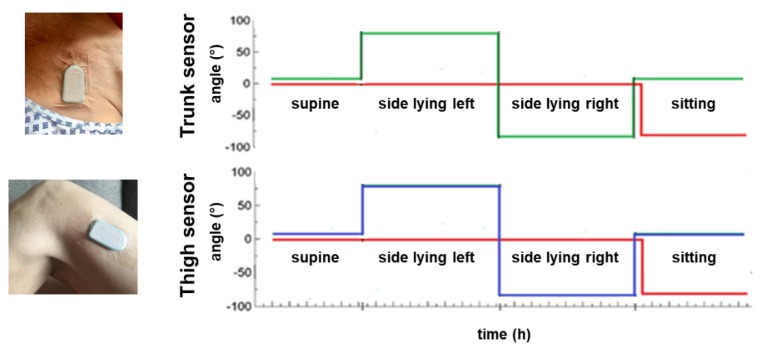
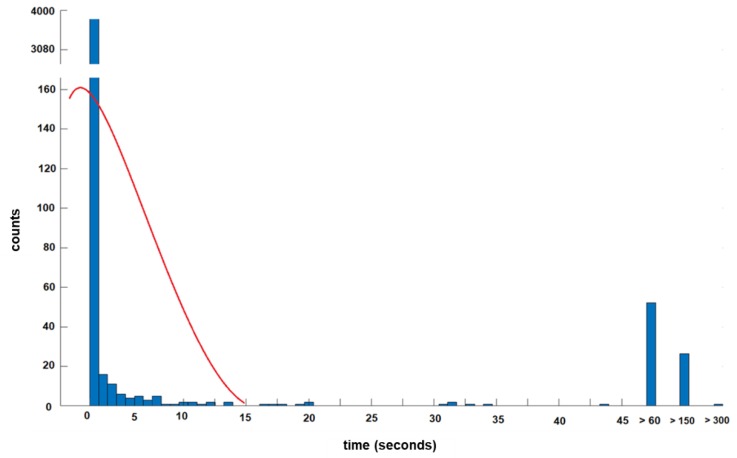
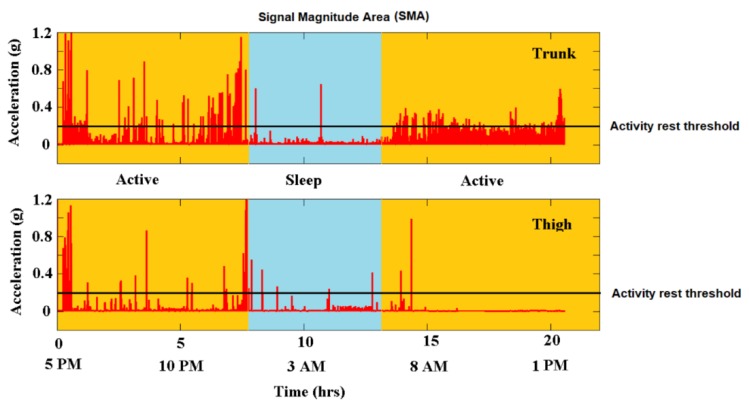
Mobilization, verticalization and position change are mandatory for severely affected neurological patients in early neurorehabilitation in order to improve neurological status and prevent complications. However, with the exception of hospitals and rehabilitation facilities, this activity is not usually monitored and so far the automated monitoring of position changes in immobile patients has not been investigated. Therefore, we investigated whether accelerometers on the upper trunk could reliably detect body position changes in immobile patients. Thirty immobile patients in early neurorehabilitation (Barthel Index ≤ 30) were enrolled. Two tri-axial accelerometers were placed on the upper trunk and on the thigh. Information on the position and position changes of the subject were derived from accelerometer data and compared to standard written documentation in the hospital over 24 h. Frequency and duration of different body positions (supine, sidelying, sitting) were measured. Data are presented as mean ± SEM. Groups were compared using one-way ANOVA or Kruskal-Wallis-test. Differences were considered significant if < 0.05. Trunk sensors detected 100% and thigh sensors 66% of position changes ( = 0.0004) compared to standard care documentation. Furthermore, trunk recording also detected additional spontaneous body position changes that were not documented in standard care (81.8 ± 4.4% of all position changes were documented in standard care documentation) ( < 0.0001). We found that accelerometric trunk sensors are suitable for recording position changes and mobilization of severely affected patients. Our findings suggest that using accelerometers for care documentation is useful for monitoring position changes and mobilization frequencies in and outside of hospital for severely affected neurological patients. Accelerometric sensors may be valuable in monitoring continuation of care plans after intensive neurorehabilitation.
在早期神经康复中,严重神经系统疾病患者必须进行体位移动、垂直化和体位变换,以改善神经功能状态并预防并发症。然而,除了医院和康复机构外,通常不会对这些活动进行监测,到目前为止,还没有研究过对不能活动的患者的体位变换进行自动监测。因此,我们研究了在上躯干上使用加速度计是否可以可靠地检测不能活动的患者的体位变化。招募了 30 名处于早期神经康复中的不能活动的患者(巴氏指数≤30)。在上躯干和大腿上放置了两个三轴加速度计。从加速度计数据中获取有关患者位置和位置变化的信息,并与 24 小时内在医院中的标准书面记录进行比较。测量了不同体位(仰卧位、侧卧位、坐位)的频率和持续时间。数据以平均值±SEM 表示。使用单向方差分析或 Kruskal-Wallis 检验比较组间差异。如果 < 0.05,则认为差异具有统计学意义。与标准护理记录相比,躯干传感器检测到 100%的体位变化,而大腿传感器检测到 66%的体位变化( = 0.0004)。此外,躯干记录还检测到了标准护理记录中未记录的其他自发性体位变化(标准护理记录中记录的所有体位变化的 81.8±4.4%)( < 0.0001)。我们发现,加速度计式躯干传感器适合记录严重影响患者的体位变化和移动。我们的研究结果表明,使用加速度计进行护理记录对于监测严重神经系统疾病患者在医院内外的体位变化和移动频率非常有用。加速度计传感器可能在监测强化神经康复后的护理计划的连续性方面具有价值。