Atluri Rohini, Atmaramani Rahul, Tharaka Gamage, McCallister Thomas, Peng Jian, Diercks David, GhoshMitra Somesree, Ghosh Santaneel
Nano-Bio Engineering Laboratory, Southeast Missouri State University, Cape Girardeau, MO 63701, USA.
Mechanical and Energy Engineering Department, University of North Texas, Denton, TX 76207, USA.
Nanomaterials (Basel). 2018 Sep 29;8(10):774. doi: 10.3390/nano8100774.
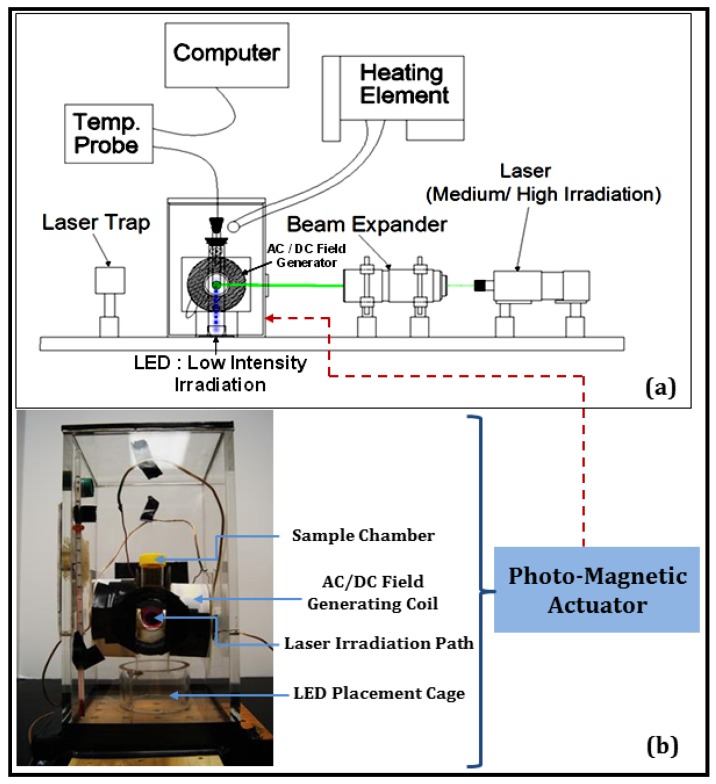
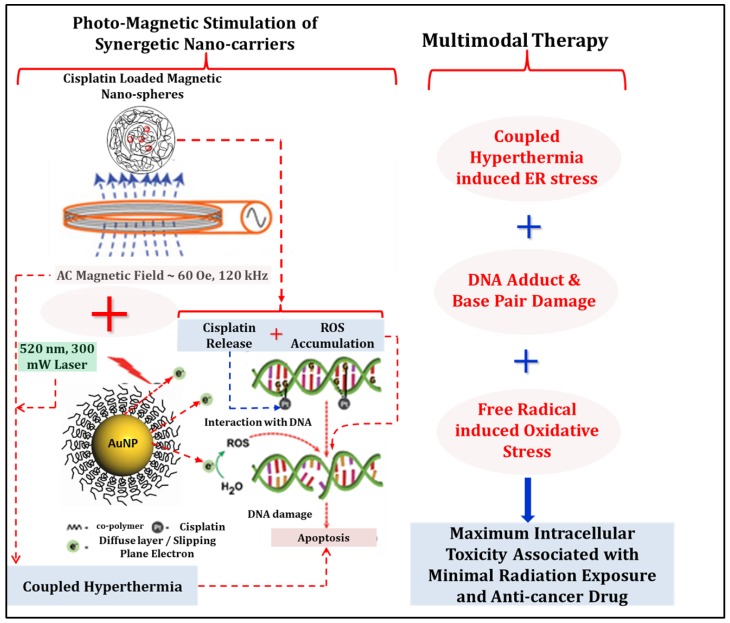
The use of high intensity chemo-radiotherapies has demonstrated only modest improvement in the treatment of high-risk neuroblastomas. Moreover, undesirable drug specific and radiation therapy-incurred side effects enhance the risk of developing into a second cancer at a later stage. In this study, a safer and alternative multimodal therapeutic strategy involving simultaneous optical and oscillating (AC) magnetic field stimulation of a multifunctional nanocarrier system has successfully been implemented to guide neuroblastoma cell destruction. This novel technique permitted the use of low-intensity photo-magnetic irradiation and reduced the required nanoparticle dose level. The combination of released cisplatin from the nanodrug reservoirs and photo-magnetic coupled hyperthermia mediated cytotoxicity led to the complete ablation of the B35 neuroblastoma cells in culture. Our study suggests that smart nanostructure-based photo-magnetic hybrid irradiation is a viable approach to remotely guide neuroblastoma cell destruction, which may be adopted in clinical management post modification to treat aggressive cancers.
高强度化疗放疗在高危神经母细胞瘤治疗中的效果仅显示出适度改善。此外,不良的药物特异性和放疗引发的副作用增加了后期发展为第二种癌症的风险。在本研究中,一种更安全的替代性多模态治疗策略已成功实施,该策略涉及对多功能纳米载体系统同时进行光学和振荡(交流)磁场刺激,以引导神经母细胞瘤细胞破坏。这项新技术允许使用低强度光磁照射,并降低了所需的纳米颗粒剂量水平。从纳米药物储库中释放的顺铂与光磁耦合热疗介导的细胞毒性相结合,导致培养中的B35神经母细胞瘤细胞完全消融。我们的研究表明,基于智能纳米结构的光磁混合照射是远程引导神经母细胞瘤细胞破坏的一种可行方法,经过改进后可用于临床治疗侵袭性癌症。