International Collaboration on Repair Discoveries, University of British Columbia, Vancouver, Canada.
Centre for High-Throughput Biology, University of British Columbia, Vancouver, Canada.
Elife. 2018 Oct 2;7:e39188. doi: 10.7554/eLife.39188.
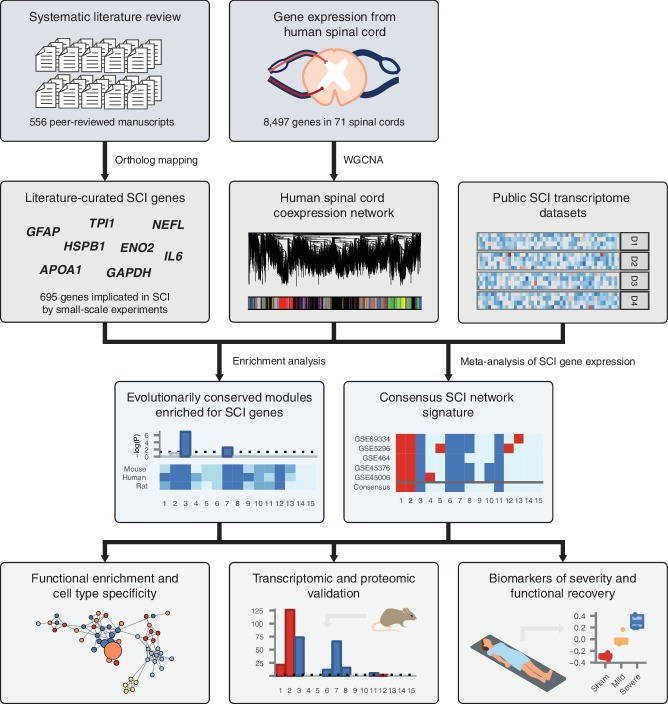
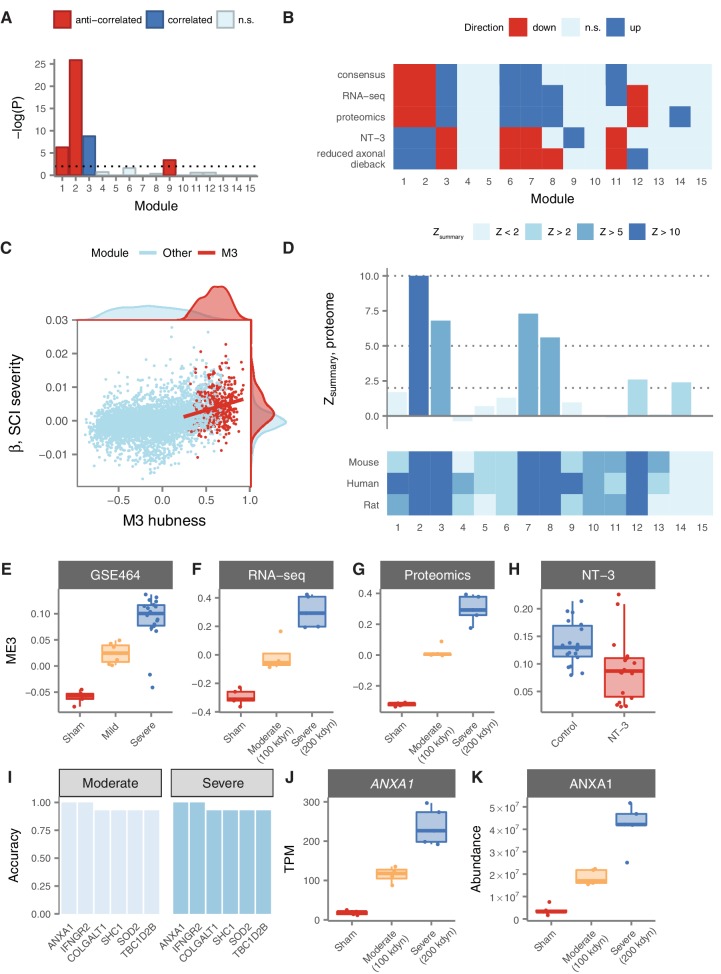
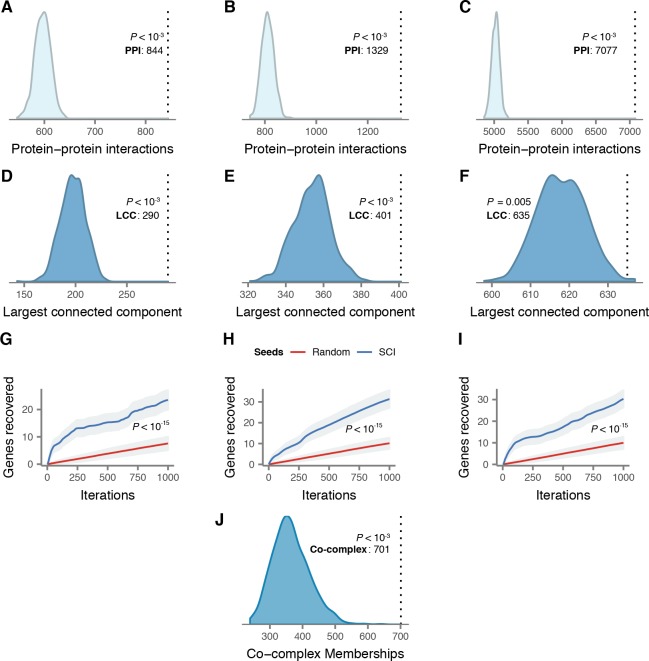
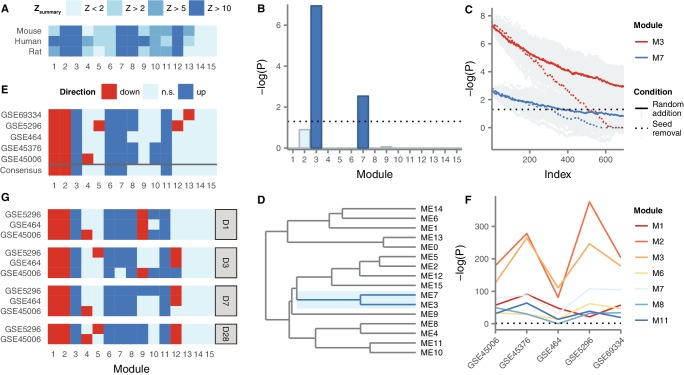
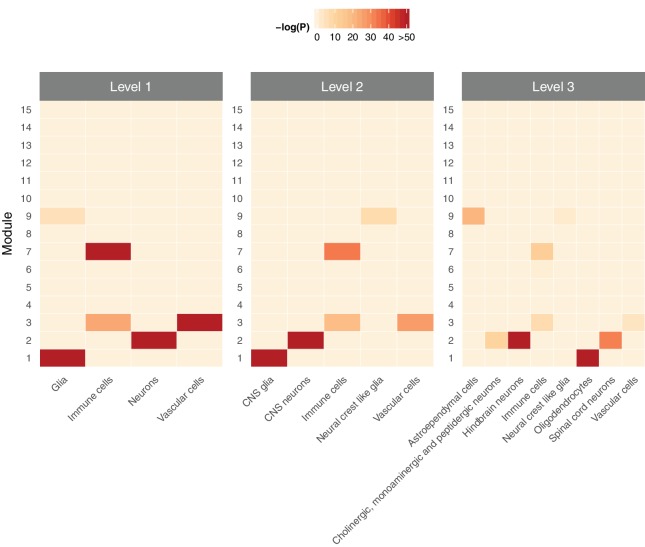
Spinal cord injury (SCI) is a devastating neurological condition for which there are currently no effective treatment options to restore function. A major obstacle to the development of new therapies is our fragmentary understanding of the coordinated pathophysiological processes triggered by damage to the human spinal cord. Here, we describe a systems biology approach to integrate decades of small-scale experiments with unbiased, genome-wide gene expression from the human spinal cord, revealing a gene regulatory network signature of the pathophysiological response to SCI. Our integrative analyses converge on an evolutionarily conserved gene subnetwork enriched for genes associated with the response to SCI by small-scale experiments, and whose expression is upregulated in a severity-dependent manner following injury and downregulated in functional recovery. We validate the severity-dependent upregulation of this subnetwork in rodents in primary transcriptomic and proteomic studies. Our analysis provides systems-level view of the coordinated molecular processes activated in response to SCI.
脊髓损伤 (SCI) 是一种毁灭性的神经系统疾病,目前尚无有效的治疗方法来恢复功能。新疗法发展的主要障碍是我们对人类脊髓损伤引发的协调病理生理过程的零碎理解。在这里,我们描述了一种系统生物学方法,将数十年的小规模实验与人类脊髓的无偏、全基因组基因表达相结合,揭示了 SCI 病理生理反应的基因调控网络特征。我们的综合分析集中在一个进化保守的基因子网络上,该网络富集了与小规模实验中 SCI 反应相关的基因,其表达在损伤后以严重程度依赖的方式上调,并在功能恢复时下调。我们在原发性转录组学和蛋白质组学研究中验证了啮齿动物中该子网络的严重程度依赖性上调。我们的分析提供了对 SCI 反应中激活的协调分子过程的系统水平观察。